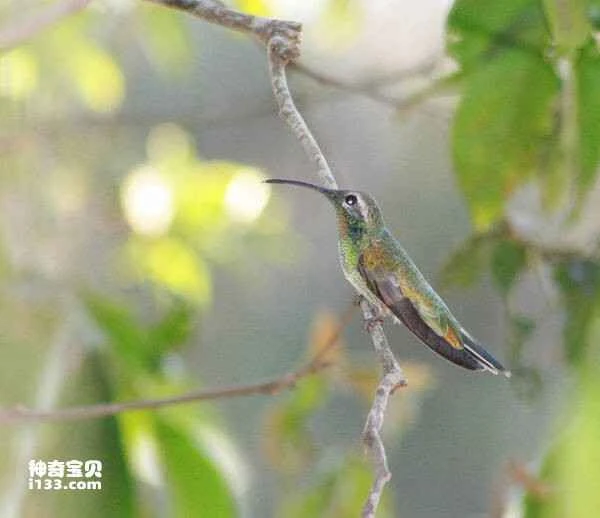
Basic Information
Scientific classification
- Chinese name: Short-tailed Green Griffon
- Scientific name: Hishimonoides sellatifrons Ishihara, Tody Motmot
- Classification: Climbing birds
- Family and genus: Coraciiformes, Scrophulariaceae, Scrophularia spp.
Vital signs data
- Body length: No verification information available.
- Weight: No verification information available.
- Lifespan: No verification data available.
Significant features
Distribution and Habitat
It is distributed in Belize, Colombia, Costa Rica, El Salvador, Guatemala, Honduras, Mexico, Nicaragua, and Panama.
Their habitat is subtropical or tropical humid lowland forests and subtropical or tropical humid mountain forests.
Appearance
The beak is long, broad, and slightly downward-curved, with serrated edges. The two forward-facing toes are partially fused at the base. The tail is long, with the central tail feathers being particularly long. Near the tip, a section consists only of a shaft, causing the tip to form an independent small feather, creating a racket-like shape, which is its most distinctive feature. The wings are short and rounded; the body plumage is mostly bright green, blue, and brown; males and females are dichromatic.
Detailed introduction
The short-tailed mongoose, scientifically known as *Hishimonoides sellatifrons* Ishihara and also called Tody Motmot, is a medium-sized climbing bird.
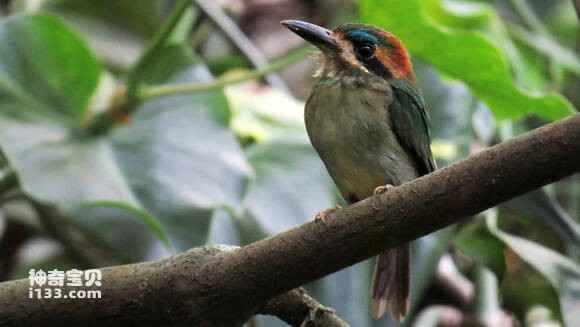
The short-tailed common pheasant feeds on insects, worms, lizards, various invertebrates and small vertebrates, and sometimes also eats fruit. While waiting for prey, it can remain motionless for a long time, then suddenly pounce upon it. On its perch, its tail often swings from side to side or tilts to one side.
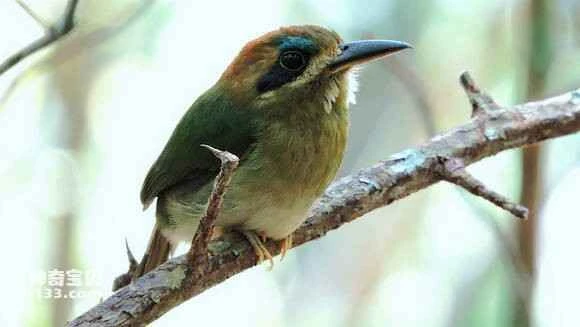
The short-tailed pheasant burrows into the cliffs by the water or digs a hole in the sand with its downward-curving beak to make a nest. It lays 3 to 4 white eggs, which are incubated and raised by both sexes.
Protect wild animals and ban the consumption of wild game.
Maintaining ecological balance is everyone's responsibility!