Basic Information
Scientific classification
- Chinese name: Spotted-waisted Forked-tailed Petrel
- Scientific name: Oceanodroma castro, Harcourt's Storm Petrel, Madeiran storm petrel
- Classification: Waterfowl
- Family and genus: Procellariiformes, Petrelidae, Petrel genus
Vital signs data
- Body length: No verification information available.
- Weight: No verification information available.
- Lifespan: No verification data available.
Significant features
Distribution and Habitat
Distributed in North America (including the United States, Canada, Greenland, Bermuda, Saint Pierre and Miquelon, and the transitional zone between North and Central America within Mexico), Eurasia and North Africa (including all of Europe, Africa north of the Tropic of Cancer, the Arabian Peninsula, and Asia north of the Himalayas-Hengduan Mountains-Minshan Mountains-Qinling Mountains-Huaihe River), Central and Southern Africa (including the southern Arabian Peninsula and the entire African continent south of the Sahara Desert (Tropic of Cancer), and Central America (located between North and South America, including Guatemala, Belize, Honduras, El Salvador, Nicaragua, Costa Rica, Panama, the Bahamas, Cuba, Haiti, and Portugal). The following countries and regions are included: Canada, Dominican Republic, Antigua and Barbuda, Saint Vincent and the Grenadines, Saint Lucia, Barbados, Grenada, Trinidad and Tobago, South America (including Colombia, Venezuela, Guyana, Suriname, Ecuador, Peru, Bolivia, Paraguay, Brazil, Chile, Argentina, Uruguay, and the Falkland Islands), the Galapagos Islands (also known as the Galapagos Islands), and the Pacific Islands (including Taiwan, the Dongsha Islands, Xisha Islands, Zhongsha Islands, and Nansha Islands of China, as well as the Philippines, Brunei, Malaysia, Singapore, Sumatra and Java of Indonesia, and Papua New Guinea).
Appearance
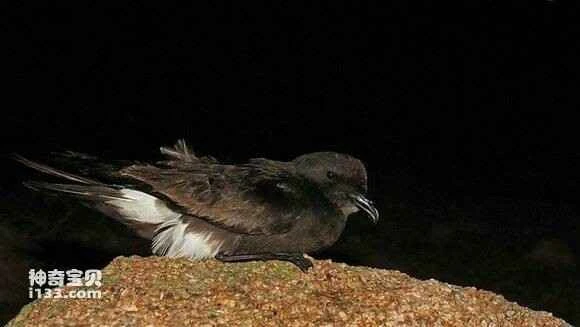
Details are unknown.
Detailed introduction
The Forked-tailed Petrel (Oceanodroma castro, Harcourt's Storm Petrel) is a gregarious bird, usually found in small or loose groups both in nesting areas and at sea, though some species may be solitary. They spend their entire lives at sea, returning to land only for breeding. Except for a few species that come ashore during the day, most return to their nests after dark to reduce predation by gulls, skuas, crows, and birds of prey. They commonly fly close to the sea surface, agile as swallows, sometimes touching the water with their feet as if walking on water. Occasionally, they dive into the water to hunt, but quickly leap out again. They rarely rest on the surface.
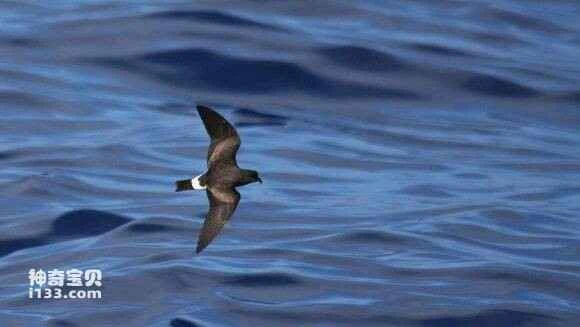
The spotted forktail has a small mouth, allowing it to prey only on small fish and planktonic squid and krill. It often splashes water with its feet or shakes the water with its feet to catch disturbed planktonic animals and small fish. Sometimes it will also follow fishing boats, whale and dolphin pods, or schools of fish to catch fleeing small fish.
Protect wild animals and ban the consumption of wild game.
Maintaining ecological balance is everyone's responsibility!