Basic Information
Scientific classification
- Chinese name: New Zealand Roundtail Shelduck
- Scientific name: Pterodroma pycrofti, Pycroft's Petrel
- Classification: Waterfowl
- Family and genus: Procellariiformes, Procellariiidae, *Rhynchus*
Vital signs data
- Body length: No verification information available.
- Weight: No verification information available.
- Lifespan: No verification data available.
Significant features
It is endemic to the Chatham Islands of New Zealand.
Distribution and Habitat
It is endemic to the Chatham Islands of New Zealand and is now limited to a 218-hectare area on the South-East Island.
Appearance
The New Zealand Roundtail Shearling's head, back, and upper wings are grey, with a darker grey on the shoulders and underside of the upper wings, forming an M-shape. The forehead is greyish-white with variegated markings, and the upper body is white. The underwings are white, with darker tips and edges on the primary feathers. There is a black stripe at the base of the underwing.
Detailed introduction
The New Zealand round-tailed petrel (scientific name Pterodroma axillaris) is a medium-sized round-tailed petrel.
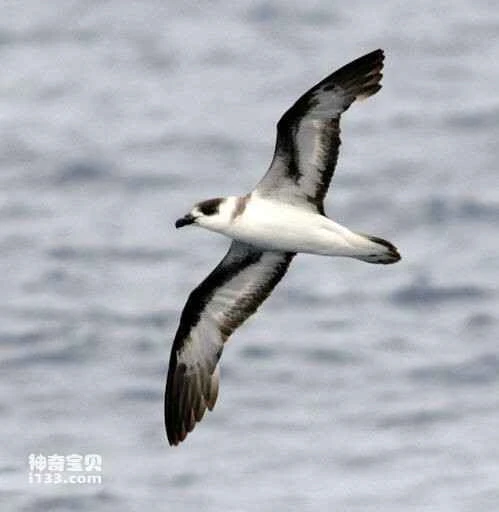
The New Zealand Roundtail Shearling spends its time at sea outside the breeding season, feeding on squid, small fish, and mollusks; it only returns to shore during the breeding season. The New Zealand Roundtail Shearling nests in the canopy, constructed of leaves. The female lays one egg between December and January. The chicks molt between May and June.
The New Zealand Roundtail Shearling's population is estimated at around 1,000, and it is currently endangered. After human colonization of the Chatham Islands, threats such as hunting, predation by invasive species, and loss of forest habitat limited them to the southeastern islands. They also compete with the Broad-billed Sawfinch for nesting space. Conservation efforts officially began in the late 1980s. The initial focus was on identifying New Zealand Roundtail Shearling nests and the reasons for declining breeding rates. When it was discovered that their breeding rate was affected by the Broad-billed Sawfinch, measures were implemented to protect their nests and chicks. Between 2005 and 2006, 83% of the chicks from 155 known breeding pairs successfully molted. Chicks were also relocated to areas free from predators.
Protect wild animals and ban the consumption of wild game.
Maintaining ecological balance is everyone's responsibility!