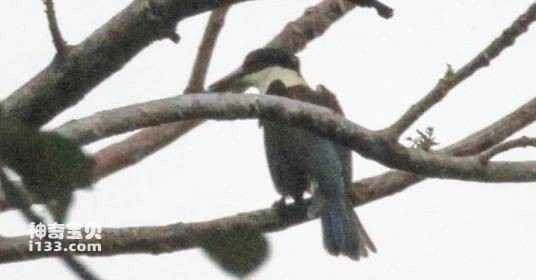
Basic Information
Scientific classification
- Chinese name: Flagwing Night Hawk
- Scientific name: Standard-winged Nightjar (Macrodipteryx longipennis)
- Classification: Climbing birds
- Genus and family: Order Noctuidae, Family Noctuidae, Genus *Symplocos*
Vital signs data
- Body length: 20-23 cm
- Weight: No verification information available.
- Lifespan: No verification data available.
Significant features
Distribution and Habitat
They are mostly distributed in the dry savannahs of Africa, from Senegal to Ethiopia.
Appearance
It measures 20-23 cm in length. It has a short, large beak, a tubular nose, long, pointed wings with soft feathers and distinct spots, and a convex tail. Outside of the breeding season, male and female Flagwing Nightjars are not significantly different.
Detailed introduction
The Standard-winged Nightjar, scientifically known as Macrodipteryx longipennis, is a unique bird with four wings that lives in the savanna and forests of Africa.
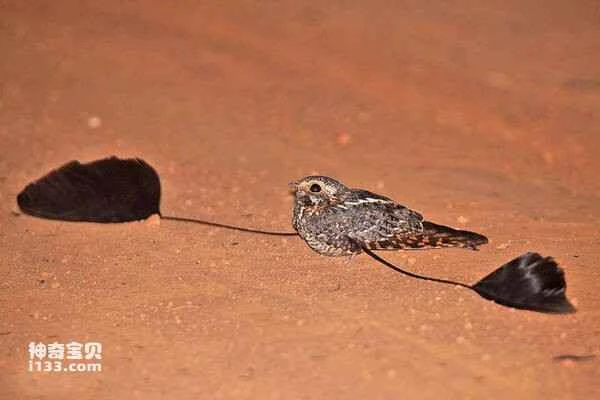
The flag-winged nightjar does not build nests; it lays two oblong eggs directly on the ground. They fly at dusk, often taking flight as quietly and lightly as moths at sunset. While in flight, they open their wide beaks to prey on moths and beetles. During the day, they rest on the ground.
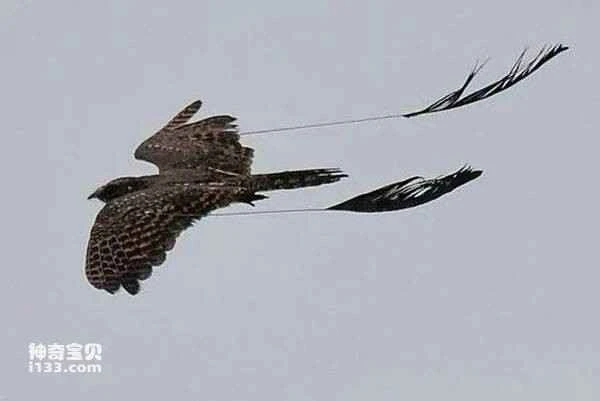
During the breeding season, male Flagwing Nightjars develop a long feather on each wing—a single flight feather extending up to 38 centimeters from the center of the wing, with a bare shaft extending 20 centimeters or more from the base. In normal flight, this feather trails behind. During courtship displays, the male rapidly flaps its wings, raising the two long feathers like two flags. Since there are no muscles controlling these feathers, they flutter in the wind. Males without these two "flags" are not accepted by females. Although these two long feathers are important for courtship, they are cumbersome for the Flagwing Nightjar in other ways. As soon as the breeding season ends, the male quickly pecks these two long feathers out.
Protect wild animals and ban the consumption of wild game.
Maintaining ecological balance is everyone's responsibility!