Basic Information
Scientific classification
- Chinese name: Australian Copperhead Snake
- Scientific name: Austrelaps superbus
- Classification: Squamata
- Family and genus: Cobra family, Cobra genus
Vital signs data
- Body length: Adults are typically 0.9–1.5 meters in total length, with most individuals between 1–1.2 meters, making them medium to long in size.
- Weight: Weight varies depending on individual size, sex and nutritional status, with most adults weighing several hundred grams.
- Lifespan: There is no precise data on lifespan in the wild, but it is generally estimated to be over 10 years, and may survive even longer under good captive conditions.
Significant features
Its head and neck are often copper or reddish-brown, adapted to the cool and humid environment of southeastern Australia. It is one of the few Australian venomous snakes that can remain active even at lower temperatures. Its venom has neurotoxic and myotoxic effects.
Distribution and Habitat
They are mainly distributed in temperate and cool temperate regions of southeastern Australia, including southern New South Wales, Victoria, southeastern South Australia, and Tasmania. They prefer grasslands, shrublands, farmlands, and open forest edges near streams, rivers, lakes, and swamps, and often use fallen logs, piles of stones, and artificial structures as hiding places.
Appearance
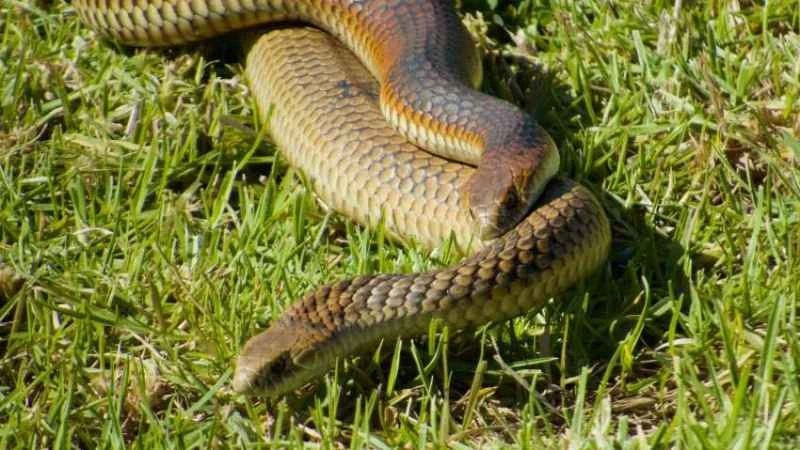
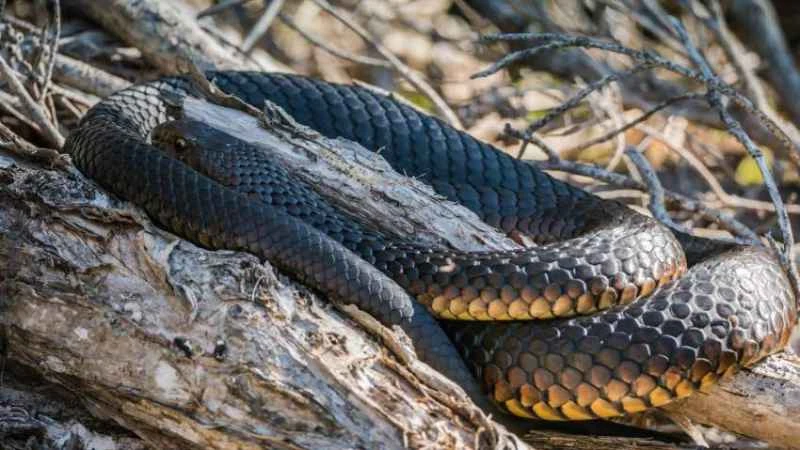
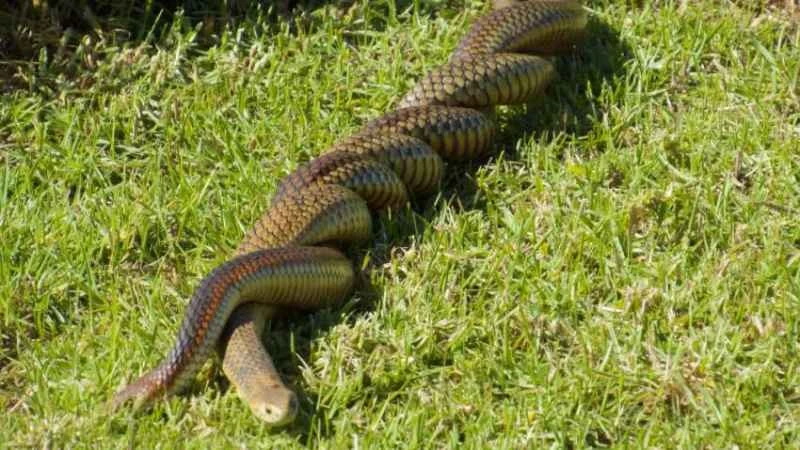
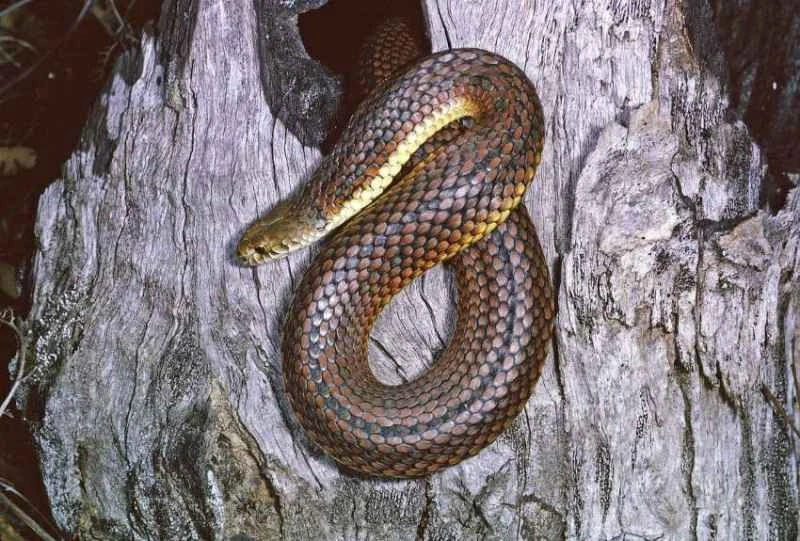
Medium-sized and robust, with a slightly broad wedge-shaped head that is clearly distinguishable from the neck; the back is usually dark gray, slate gray, olive brown, or dark brown, while the head and neck have copper or reddish-brown hues, and the belly is mostly cream, grayish-white, or pale yellowish-brown. The scales on the body surface have a medium luster, and the overall color is dark, which is beneficial for camouflage against the backdrop of wet grass and fallen leaves.
Detailed introduction
The Australian Copperhead Snake (commonly referring to the Australian Copperhead, scientifically known as *Austrelaps superbus* ) is a medium-sized, highly venomous snake with front grooved fangs, adapted to cool climates. It belongs to the genus *Austrelaps* in the family Elapidae. It is mainly distributed in the temperate regions of southeastern Australia, particularly in grasslands and scrublands near wetlands, streams, and swamps. Unlike many Australian venomous snakes that live in the hot inland areas, the Australian Copperhead Snake can remain active even in lower temperatures, making it one of the few native venomous snakes that remains relatively active during the cooler seasons.
Classification and nomenclature
The Australian copperhead snake belongs to the class Reptilia, order Squamata, suborder Serpentes, family Elapidae, and genus Austrelaps . This genus currently includes several species, collectively known as the "Australian copperhead snake," primarily distributed in southeastern Australia and Tasmania. Among them, *Austrelaps superbus *, often called the "common Australian copperhead snake" or "lowland copperhead snake," is one of the most representative species. The English name "Copperhead" derives from the metallic sheen of its head and neck, which often displays a copper, brownish-red hue, contrasting with the darker base color of its body.
Appearance features
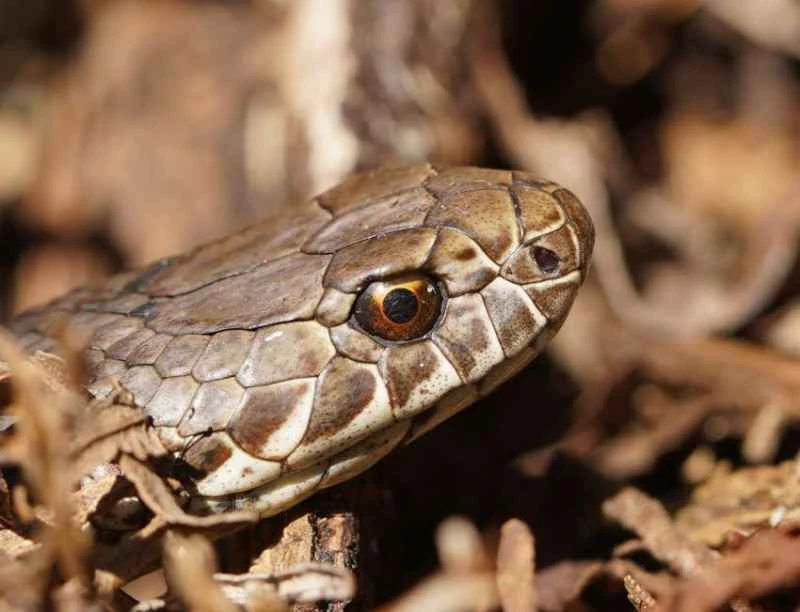
The Australian copperhead snake is medium to long in size, with a relatively robust body, though not as short and stout as the death snake. Its head is slightly wedge-shaped, clearly distinguishable from the neck, but not as extremely triangular as that of a viper. The eyes are medium-sized with round pupils. The back color varies considerably, commonly being dark gray, slate gray, olive brown, or dark brown, while the head and neck often have a prominent copper or reddish-brown hue, hence the name "copperhead." Some individuals may have blurred horizontal bands or color transitions on their bodies, while the underside is mostly cream, grayish-white, or pale yellowish-brown, sometimes with darker tinges near the sides. The scales have a moderate sheen, giving the overall impression of a "dark-toned, coppery-toned head and neck," providing excellent camouflage against wetland and grassy backgrounds.
Distribution range and habitat
The Australian copperhead snake is mainly distributed in the temperate and cool-temperate regions of southeastern Australia, including southern New South Wales, most of Victoria, the southeastern corner of South Australia, and Tasmania. It is highly dependent on water sources, and its typical habitats include grasslands and scrublands along streams and rivers, the periphery of swamps and wetlands, wet grasslands next to farmland and pastures, and areas with high soil moisture in forest edges and open woodlands. The Australian copperhead snake can move among grass and rocks on the ground, and also uses fallen logs, piles of stones, burrows, and man-made structures (such as breakwaters and farmland drainage ditches) as hiding places.
Lifestyle Habits and Behaviors
The Australian copperhead snake is primarily diurnal, but may be more active in the early morning and evening during the hot summer months. Unlike many Australian venomous snakes that prefer high temperatures, it can maintain some activity in lower temperatures and may be observed in the cool spring, autumn, and even mild winter weather. It is generally elusive and cautious, usually choosing to retreat rather than attack when disturbed; however, when cornered, trampled, grasped, or persistently provoked, it will coil its body, raise its forequarters, hiss, and prepare to bite. While its attack speed is not as "lightning fast" as the taipan, it is still quite rapid, and its venom has significant neurotoxic and myotoxic effects, making it medically significant for humans.
feeding habits
The Australian copperhead snake has a wide diet, primarily preying on amphibians, especially frogs and tadpoles, playing a crucial role in controlling frog populations in wetlands and along streams. It also preys on fish, small reptiles (such as lizards and small snakes), small mammals, and occasionally birds and invertebrates. In aquatic environments, it swims in shallow water or lies in ambush among the vegetation along the bank, catching frogs and small fish. In grasslands and scrublands, it hunts by combining slow movement with short-range ambushes. Its highly venomous venom quickly subdues struggling prey, which is then swallowed whole.
Reproduction and life cycle
The Australian copperhead snake is an ovoviviparous (broadly defined) venomous snake. The young snakes complete most of their embryonic development inside the female's body, ultimately being born as live larvae. The breeding season typically lasts from spring to early summer. During this period, males increase their activity range to search for females, and brief male-female fights may occur. After mating, the female gives birth to larvae several months later, with litters typically ranging from 7 to 20, depending on the female's size and health. Newborn larvae are short in length, but their markings and body shape are similar to adults. They also possess fully functional fangs and venom glands, and soon after birth, they can independently hunt small amphibians and lizards. Precise data on their lifespan in the wild is limited, but it is generally estimated to exceed 10 years, and they may live even longer in captivity with favorable conditions.
Relationship with humans
Because the Australian copperhead snake prefers environments that overlap with human activity, such as wetlands, streams, and farmland edges, it is frequently found in ditches, embankments, and overgrown areas near farms, pastures, and rural residences. For local residents, it is both a potential danger and an important predator for controlling frogs and small rodents. Australian copperhead snakes generally do not attack humans proactively; most bites are related to accidentally stepping on them, handling them with bare hands, or attempting to strike them. Symptoms after a bite may include localized pain, swelling, sweating, nausea, muscle pain, weakness, and abnormal blood clotting. Monitoring in a hospital and administration of appropriate antivenom may be necessary. Proper prevention includes wearing sturdy shoes and long pants in snake-prone areas, avoiding walking barefoot on wet grass, not disturbing rocks or fallen trees with bare hands, and maintaining a safe distance and contacting professionals if a snake is spotted.
Protecting the status quo and threats
In current assessments, the Australian copperhead snake is generally listed as "Least Concern" on the IUCN Red List, with its overall population considered relatively stable. It has a relatively wide distribution range and can survive to some extent in lightly modified landscapes such as farmland and pasture. However, local populations may still be affected by wetland drainage, habitat fragmentation, road hazard, chemical pollution, and deliberate hunting by humans out of fear. In the future, protecting key wetland and stream ecosystems, maintaining riparian vegetation, reducing pesticide and heavy metal pollution, and educating the public about the Australian copperhead snake's role in the ecosystem will help ensure the long-term survival of this cool-temperate venomous snake species in the landscape of southeastern Australia.
Frequently Asked Questions
Q1: How potent is the venom of the Australian copperhead snake? What happens if you are bitten?
The Australian copperhead snake is a highly venomous snake. Its venom has neurotoxic and myotoxic effects, which can cause local pain, swelling, general malaise, muscle pain, abnormal blood clotting, and potential organ damage. Although it is not as "terrifying" as the taipan, a bite still requires immediate medical attention for evaluation by a professional doctor to determine whether antivenom is needed.
Q2: Will the Australian copperhead snake attack people on its own initiative?
Generally, Australian copperhead snakes are secretive and cautious, tending to retreat quietly when encountering humans rather than attacking proactively. Most bite incidents are related to accidental stepping, handling with bare hands, or attempts to drive them away with sticks. As long as distance is maintained and they are not deliberately provoked, they usually will not bite.
Q3: Why can Australian copperhead snakes still be seen in cool weather?
Unlike many tropical and subtropical venomous snakes that require high temperatures to be active, the Australian copperhead snake is adapted to the cool and humid climate of southeastern Australia and is more tolerant of lower temperatures. Therefore, on warmer days in spring, autumn, and even some winter months, there is still a chance to observe them basking in the sun or moving slowly.
Q4: In areas where the copperhead snake is found in Australia, how can residents reduce the risk of being bitten by the snake?
Practical preventative measures include: keeping the lawns around the yard and house neatly trimmed to reduce debris and prey such as rats; wearing closed-toe shoes and long pants when near streams and swamps; carrying a flashlight when going out at night; not moving rocks, wood, or piles of weeds by hand; and keeping your distance when you spot a snake, allowing it to leave on its own or contacting local snake catchers and wildlife agencies.


