Basic Information
Scientific classification
- Chinese name:林鸱
- Scientific name: Nyctibius griseus, potoo
- Classification: Climbing birds
- Family: Nighthawks, Wood Owls, Corinthus
Vital signs data
- Body length: Approximately 40 centimeters
- Weight: No verification information available.
- Lifespan: No verification data available.
Significant features
Skilled at camouflage, it is known as the master of disguise in the animal kingdom.
Distribution and Habitat
Distributed in the Americas, Central and Southern Asia. Live specimens have been captured in Guangxi, my country. They inhabit Jamaica, Hispaniola, and southern Mexico, extending to the jungles of Trinidad and Tobago, Peru, and northern Argentina.
Appearance
It is grayish-brown with mottled markings and measures 40 cm (16 inches) in length.
Detailed introduction
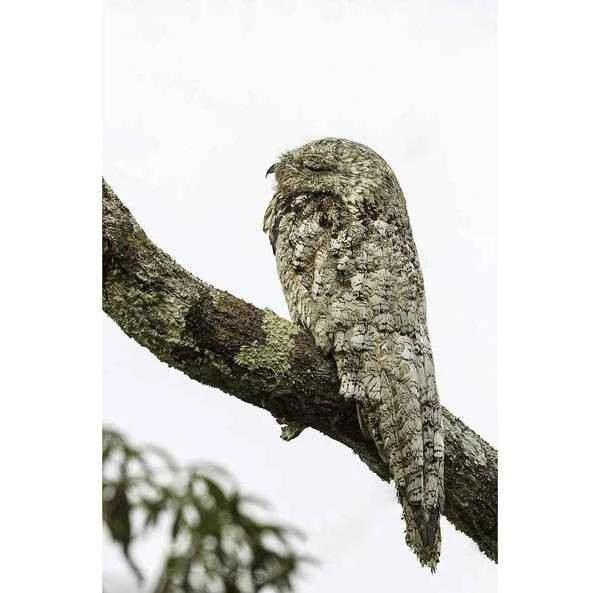
The wood owl is a highly nocturnal bird and is generally not active during the day. During the day, they perch on branches with their eyes half-closed. Wood owls use the patterns on their feathers to camouflage themselves as tree stumps, and when they detect danger, they adopt a "frozen" posture to make themselves look even more like a broken tree stump to avoid danger. The change from a perching posture to a "frozen" posture is very difficult to detect.
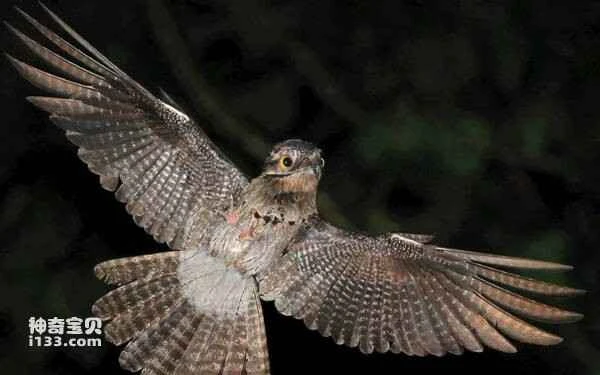
Northern wood owls hunt at dusk and night, primarily feeding on insects. Their typical hunting method involves perching on branches, waiting for insects to pass by, and then suddenly swooping down to catch them. They occasionally fly into vegetation to catch insects, but rarely attempt to obtain prey on the ground. Beetles are a major component of their diet, but they sometimes also prey on moths, grasshoppers, and termites. Small birds have even been found in the stomach of a northern wood owl. They swallow insects whole, rarely shaking or crushing their food.
Like most nocturnal birds, wood owls have loud calls, which vary from species to species, used for display and territorial defense. The great wood owl's call is a hoarse bark and rumble, while smaller species have a harsh syllable.
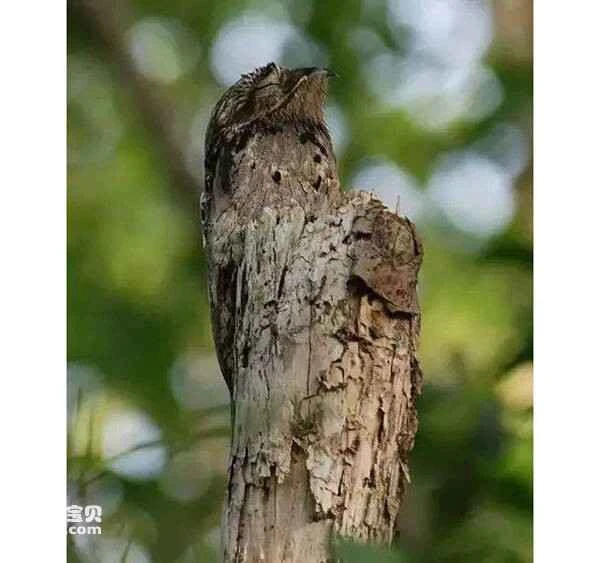
Wood owls do not build nests. They lay a single egg in the nest, either on the top of a tree stump or in a crevices of a large tree. The eggs are white with gray, brown, or purple markings. In common wood owls, the male incubates the eggs during the day, while the female does so at night. In great wood owls, the male usually also incubates the eggs during the day. The incubation period in common wood owls is at least 30 days, while the period for the chicks to grow their flight feathers is 40-60 days in all species. The chicks are fed food regurgitated by their parents. During incubation and chick raising, the adult birds' plumage provides excellent camouflage, making them difficult to spot. Wood owls are monogamous, with both parents sharing responsibility for incubation and raising the chicks. They do not build any form of nest, but lay their eggs directly on the branches or tops of tree stumps. Wood owl eggs are white with purplish-brown spots. The male typically incubates the eggs during the day, while the female and male share the responsibilities at night. The eggs take about a month to incubate, and the chicks live for about two months. The chicks have white feathers. When the chicks grow up and can no longer hide under their parents, they will imitate their parents by adopting a "frozen" posture to disguise themselves as tree stumps.
Protect wild animals and ban the consumption of wild game.
Maintaining ecological balance is everyone's responsibility!