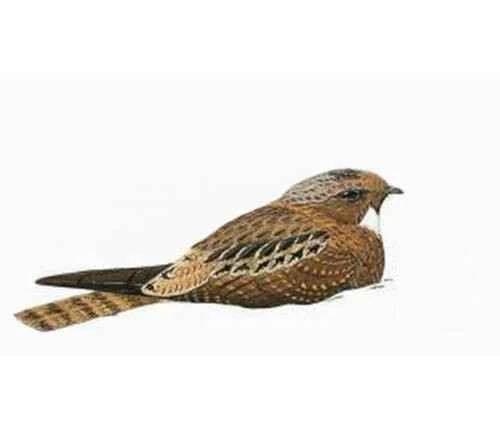
Basic Information
Scientific classification
- Chinese name: Philippine Frogmouth
- Scientific name: Philippine Frogmouth, *Batrachostomus septimus*
- Classification: Climbing birds
- Family and genus: Order Noctuidae, Family Frogmouthidae, Genus *Asiaticus*
Vital signs data
- Body length: No verification information available.
- Weight: No verification information available.
- Lifespan: No verification data available.
Significant features
Distribution and Habitat
Distributed in the islands of the Pacific Ocean (including Taiwan Province of China, the Dongsha Islands, Xisha Islands, Zhongsha Islands, Nansha Islands, as well as the Philippines, Brunei, Malaysia, Singapore, Sumatra and Java in Indonesia, and Papua New Guinea).
They can be found throughout the Philippine archipelago and typically live in lowland forests.
Appearance
Details are unknown.
Detailed introduction
The Philippine Frogmouth, scientifically known as *Batrachostomus septimus*, has unknown habits.
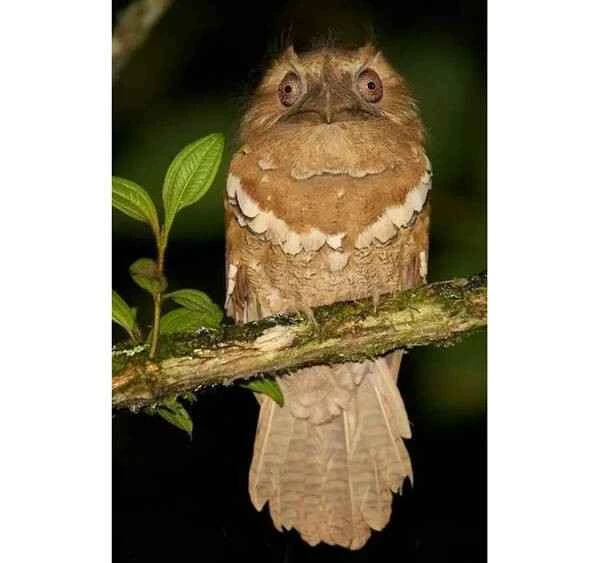
Little is known about the Philippine frogmouth because it is nocturnal and makes no noise. It feeds on locusts, cicadas, crickets, and beetles.
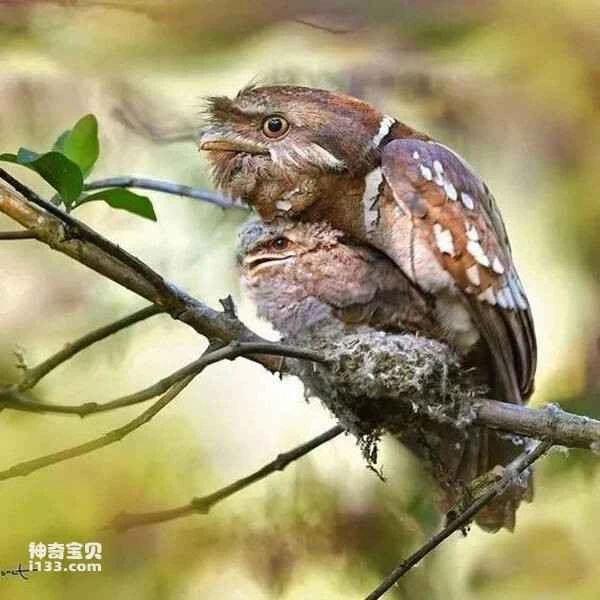
The Philippine frogmouth builds its nest on horizontal branches 2-5 meters above the ground, using the parents' own feathers and incorporating spider silk, moss, and lichen. The female lays one egg per season; the male incubates the egg during the day, while the female incubates it at night.
Protect wild animals and ban the consumption of wild game.
Maintaining ecological balance is everyone's responsibility!