Basic Information
Scientific classification
- Chinese name: Bee-sucking bird
- Scientific name: Bee Hummingbird, also known as Dwarf Hummingbird, Melisuga helenae, or Zunzuncito
- Classification: Climbing birds
- Family and genus: Apodiformes, Hummingbird family, Beehives
Vital signs data
- Body length: 5.5-6.1 cm
- Weight: 1.95-2.6g
- Lifespan: No verification data available.
Significant features
It is the smallest species of hummingbird.
Distribution and Habitat
Origin: Cuba. Discontinuously distributed in Havana, Andia, Guanacaveves Peninsula, Zapata Swamp, Mova, Mayari, Guantanamo coast and nearby Isla de la Juventus.
Vagrant bird distribution: Bahamas.
They mainly inhabit mature forests and forest edges with dense thickets, vines and epiphytes, and are also active in valleys, gardens and marshes, but are most commonly found in open fields.
Appearance
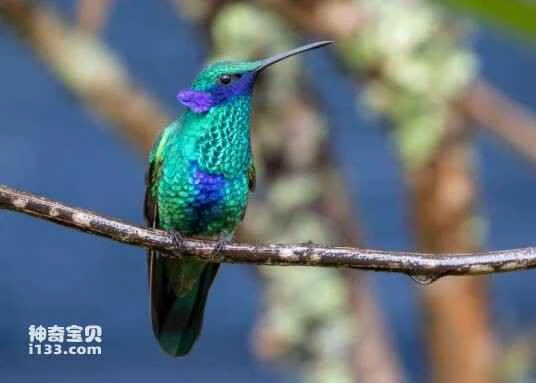
Adult females have bluish-green upper body feathers and white or light gray underbody feathers, with white wingtips on the outer tail feathers. Females are slightly larger than males.
Outside of the breeding season, the male and female birds show little difference in color. The male's upper body feathers are tinged with blue, and the wingtips of its outer tail feathers are black with blue spots.
During the breeding season, adult males have a bright pink head, chin, and throat, with iridescent neck patches extending to the sides of the neck. The upperparts are bluish, while the underparts are primarily greyish-white. These colorful plumage features only appear during the breeding season, are short-lived, and soon fall off.
Size measurements: Weight ♂ 1.95g, ♀ 2.6g; Body length ♂ 55.1mm, ♀ 61.2mm; Wingspan 32.5mm.
Detailed introduction
The bee hummingbird (scientific name: Mellisuga helenae), also known as the Zunzuncito, is one of the smallest birds in the world and the smallest warm-blooded animal.
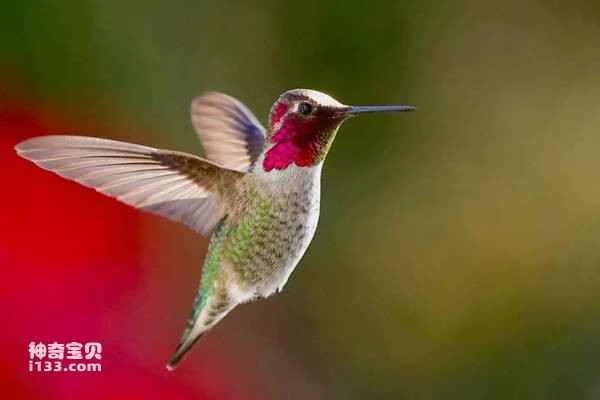
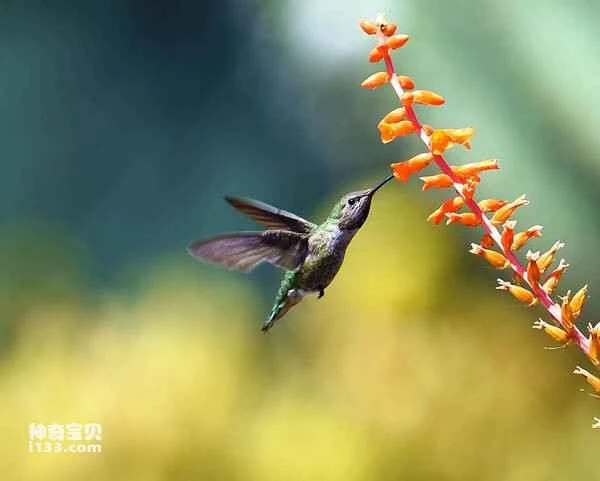
Bee hummingbirds actively seek out and protect high-quality food sources. Males mark out their foraging territories and drive away other males and large insects, such as bumblebees and hawk moths, that intrude. They feed on the nectar of various flowers, particularly those with a sucrose concentration of 15-30%. When collecting nectar, they hover horizontally over the flower, insert their beaks into the blossom, and suck the nectar with their long tongues. They also eat small spiders and insects, often hunting at night. During the nesting season, females can catch over 2,000 insects daily; insect protein intake is crucial for feeding their offspring during the breeding season. Bee hummingbirds are very active and must forage extensively to replenish their energy expenditure, typically consuming half their body weight in food and eight times their body weight in water daily.
Although small in size, the hummingbird can flap its wings in a figure-eight pattern about 80 times per second. It can fly back and forth and hover in the air with great agility. When courting and showing off, its wingbeat frequency can reach 200 times per second.
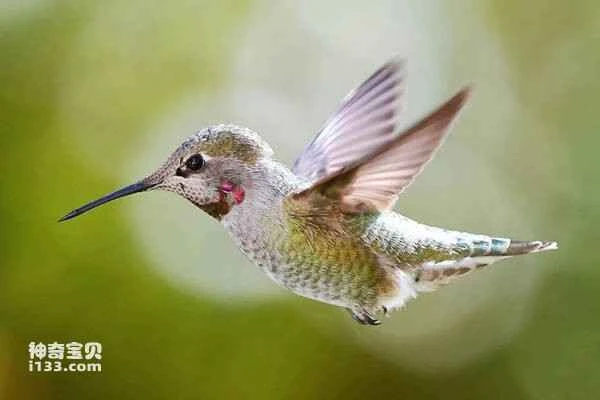
The hummingbird's call is a high-pitched song composed of repeated simple monotones, each lasting less than a second, sounding like "chirp, twitter." The monotones in the song sequence can vary between males in different courtship locations.
The hummingbird's breeding season is from March to June, at the end of the rainy season and the beginning of the dry season, when many trees and shrubs are in bloom. Outside of the breeding season, the bird is usually solitary. The male's actual involvement in the breeding process is only mating with the female; they do not migrate or roost together, and this species does not have pairing relationships. After mating, the female immediately separates from the male, who does not participate in nest selection, construction, or raising offspring. The female weaves plant fibers (3 cm in diameter) together to construct a small, cup-shaped nest, which is camouflaged with moss. The nesting material is generally soft plant fibers, animal hair, and feathers, and the nest structure is reinforced with spider silk and other adhesive materials. These nests are typically placed on low, slender branches 0.9–6 meters above the ground, surrounded by trees or shrubs for shelter.
Each clutch contains two eggs, which are white, about the size of a pea, and no more than 6 millimeters long. The incubation period is 14 to 16 days. The female raises the chicks alone, feeding them after being fed by the female. The chicks grow their feathers and leave the nest in about 18 to 38 days and can reproduce in about one year.
Due to habitat destruction and reduction, the population of hummingbirds has declined historically. Large areas of Cuba's natural vegetation have been developed into farmland and pastures, leaving only 15-20% of the country in its natural state. Meanwhile, the ever-expanding production of cocoa, coffee, and tobacco poses a serious threat to their habitat.
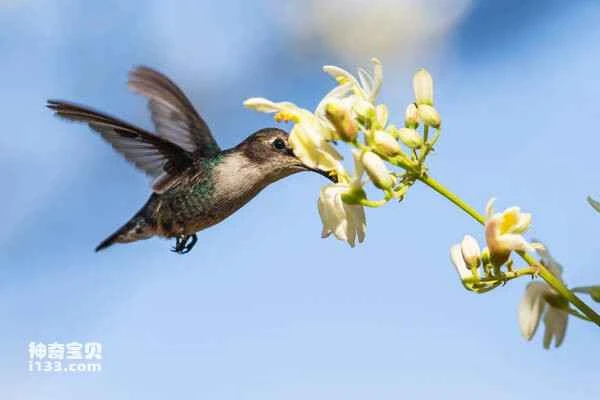
The world's smallest bird: The smallest bird is the hummingbird of the Isla de la Juventus in Cuba. The male measures 57 millimeters in length, half of which is comprised of its beak and tail, while the female is slightly larger at 1.6 grams. (Guinness World Records)
Protect wild animals and ban the consumption of wild game.
Maintaining ecological balance is everyone's responsibility!