
Basic Information
Scientific classification
- Chinese name: White-rumped Forked-tailed Petrel
- Scientific name: Oceanodroma leucorhoa, Leach's Storm Petrel
- Classification: Waterfowl
- Family and genus: Procellariiformes, Petrelidae, Petrel genus
Vital signs data
- Body length: 19-25 cm
- Weight: About 41g
- Lifespan: No verification data available.
Significant features
The waist is white, forming a "V" shape, and is divided into two parts at the bottom by a thin black center line.
Distribution and Habitat
It is distributed in the North Pacific and Atlantic Oceans, extending from north to south to Brazil and the southern tip of Africa.
Inhabiting open ocean, rarely flying to land, during the breeding season they roost on rocks or grass piles on the coast and nearby sea, and on high ground of islands. They are typical oceanic seabirds, living entirely at sea except during the breeding season. They are active in cold-water oceans in summer and in subtropical oceans in winter.
Appearance
The White-rumped Petrel is a small seabird. It has long, pointed wings. It has one primary flight feather, the second being the longest, and twelve secondary flight feathers. It has a forked tail with twelve tail feathers. Its legs are relatively weak, with rounded tarsi and relatively long toes. The hind toe is present but small and positioned high, not on the same plane as the other toes. The bill is slender and slightly long, rounded at the base, and laterally compressed at the tip, with both the upper and lower mandibles curving downwards into hooks.
The feathers are thick and soft. The upperparts are dark brown with a slight gray tinge. The underparts are pale dark brown. The forehead, cheeks, and throat are paler with a slight gray tinge. The inner secondary flight feathers have white edges, and the primary flight feathers are dark brown with pale gray inner webs. The greater and median coverts are brown, and the lesser coverts are dark brown, thus forming a distinct pale wing band. The tail feathers are black; the short upper tail coverts are brown with white tips; the long upper tail coverts are white; the undertail coverts are dark brown, paler on the sides, and white.
The iris is dark brown, and the mouth and feet are black.
Juveniles are similar to adults, but the wing coverts and inner secondary flight feathers have wider white edges.
Size measurements: Weight 41 g; Body length 190-250 mm; Wing length 155-160 mm; Bill length 15-17 mm; Tail length 75 mm; Tarsus length 25 mm.
Detailed introduction
The White-rumped Forktail Petrel (scientific name: Oceanodroma leucorhoa), also known as Leach's Storm Petrel, is a small seabird with five subspecies.
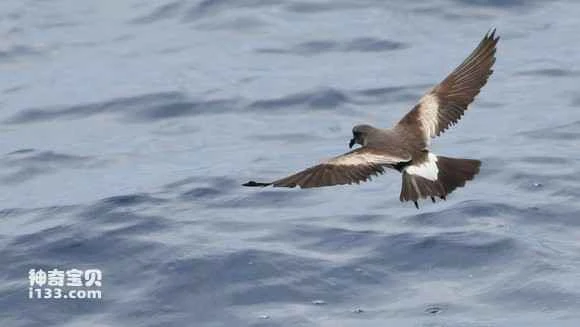
White-rumped Petrels typically arrive at their breeding grounds from early to mid-May, and begin migrating south from their northern breeding grounds to the southern seas in late September and early October. They are gregarious and excellent fliers, spending most of their time flying and moving in flocks over the sea, only resting, sleeping, and foraging on the surface. During the breeding season, they are active only at night; after hatching, they are active both day and night. They are quick on land and take off easily, even on flat ground and at sea. They often fly low over the sea, flapping their wings quickly and powerfully, constantly changing direction and occasionally slapping the water with their feet. They can also suddenly swoop down from the air to the water to grab food.
The diet of the white-rumped fork-tailed petrel mainly includes small fish, squid, planktonic crustaceans, and their entrails. Sometimes it also follows marine mammals, feeding on scraps or feces. Its main food sources are shrimp, other small crustaceans, mollusks, and surface-dwelling plankton. It also eats discarded fish and fish entrails from ships. Its foraging method involves gliding low over the water while keeping its head down, and when it spots usable food, it suddenly drops to the surface to grab it. It can peck at food by dipping its head into the water or grab it with its feet, especially when it finds a large amount of food, it often uses its feet to grab it. It can also swim while foraging.
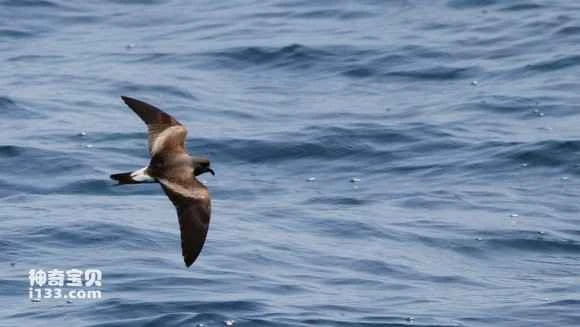
The White-rumped Petrel breeds on cold-water coasts and islands from May to August, with monogamous pairs. They often nest in flocks, with nests close together in large groups and prime nesting locations. They nest on relatively flat, soft ground on rocky coasts and islands, and also on small forested islets. The nest is usually placed in a burrow dug by the parents. The burrow entrance is semi-circular and usually concealed under tree roots, shrubs, or grass. The nest is constructed by dipping 5-12 cm into the ground from the burrow entrance, then excavating and enlarging it parallel to the ground to form a small chamber 12-13 cm in diameter and 7.5 cm high. The nest is then placed inside this chamber. The nest is very simple, usually containing only a little dry grass and leaves; occasionally, eggs are laid directly on bare ground.
Each clutch contains one egg, which is oval-shaped, white or off-white with small red or violet spots, measuring 30.5-35 mm × 22-26 mm, with an average of 32.5 mm × 24 mm. Egg-laying occurs from late May to early July, varying by region. Both parents take turns incubating the egg, mostly at night, for 42-50 days or 35 days. After hatching, the chicks are covered in down feathers, but for the first few days, the parents still take turns warming them in the nest. Afterward, the chicks remain alone in the nest, with the parents returning each night to feed them. The chicks are fed an oily liquid refluxed from the parents' stomachs. After approximately 70 days of feeding by the parents, the chicks have completely molted, grown full plumage, and are capable of flight, leaving the nest burrow in September or October.
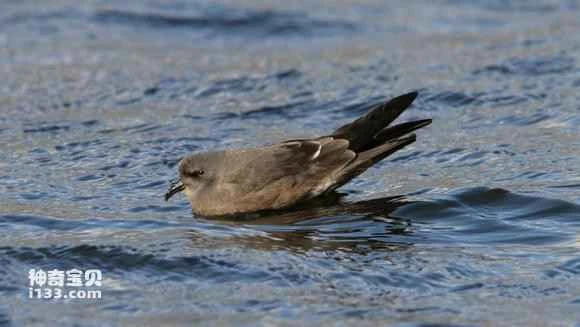
The white-rumped petrel faces considerable predation risks on its breeding islands, a factor that significantly impacts its breeding success and is closely linked to the presence of cats on these islands. Savannah cats have been prevalent in large numbers before the white-rumped petrel chicks are fully fledged, and their presence is also linked to the extinction of the white-rumped petrel in some of its former habitats. The entry of foxes into areas previously inhabited only by seabirds has contributed to the extinction of the white-rumped petrel on numerous Alaskan islands. House mice are also suspected of entering the petrel's nests and preying on the eggs, affecting the species' population, but the extent of this impact remains unclear.
The White-rumped Petrel has faced heavy predation from its native predators. In 1997, during the breeding season in Newfoundland, herring gulls killed nearly 49,000 adult petrels, compared to a breeding population of approximately 270,000 pairs in 2000. Scientific research has shown that predation disturbances to the White-rumped Petrel's breeding grounds cause significant population declines and are a major cause of reduced breeding success. A 2004 study found that weekly disturbances halved nest hatching rates, while daily disturbances resulted in a 56% reduction. Egg abandonment accounted for 91% of all reasons for decreased breeding rates, and this occurred only in pairs within disturbed populations.
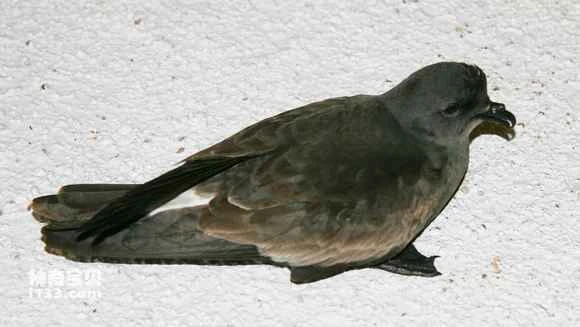
The foraging range during the breeding season overlaps with five of the seven breeding grounds in the western Atlantic, which are adjacent to offshore oil and gas operations. Three of these breeding grounds have shown a significant decline in recent decades (Hedd et al., 2018). Attraction disturbances to lights and flares, and subsequent collisions with oil rigs, pose a risk of population decline for the White-rumped Forktail (Hedd et al., 2018). Pollution from large oil spills can pose a very serious threat, although these risks may only affect populations in a small area due to the species' wide distribution. Small leaks of hydrocarbons and synthetic drilling fluids are relatively common (2003) and contribute to chronic oil pollution in the ocean (National Research Council 1985).
It is listed as one of the nine most important marine bird ranges in Europe, including Iceland, Ireland, and the United Kingdom. Within the European Union, it is listed as one of 25 special protected areas in France, Ireland, Spain, and the United Kingdom. Various countries, including the United Kingdom, have introduced artificial nest boxes into breeding populations to reduce predation risks and facilitate monitoring of breeding success (2008).
It is listed in the "List of Terrestrial Wild Animals of Beneficial or Important Economic and Scientific Research Value under State Protection" issued by the State Forestry Administration of China on August 1, 2000.
It is included in Appendix II of the Berne Convention.
Listed in Annex I of the EU Wild Bird Protection Directive.
Listed as Vulnerable (VU) in the IUCN Red List of Threatened Species 2018 ver 3.1.
Protect wild animals and ban the consumption of wild game.
Maintaining ecological balance is everyone's responsibility!


