Basic Information
Scientific classification
- Chinese name: Black-tailed Swallow
- Scientific name: Oceanites oceanicus, Wilson's Storm-Petrel
- Classification: Waterfowl
- Family and genus: Procellariiformes, Petrelidae, Petrel genus
Vital signs data
- Body length: Approximately 17 centimeters
- Weight: No verification information available.
- Lifespan: No verification data available.
Significant features
Distribution and Habitat
They are found in oceans worldwide. Records show they have been observed in the South China Sea, migrating near Hong Kong (Lamont, 1992). Some white-rumped petrels seen in Hong Kong waters may be of this species.
Appearance
A small (17 cm) dark brown petrel. The tail is unforked, with white rump and undertail coverts. The wings are broad and short, lacking distinct angles on both the leading and trailing edges. The tail is short, and the legs extend beyond the tail during flight. The dark flight feathers contrast sharply with the pale wing coverts.
Iris - brown; mouth - brown; feet - black, webbed feet yellow.
Calls: When the flock of birds is feeding, they occasionally make a chirping, complaining sound like sparrows.
Detailed introduction
The Storm-Petrel (scientific name: Oceanites oceanicus, also known as Wilson's Storm-Petrel) is a species of bird.
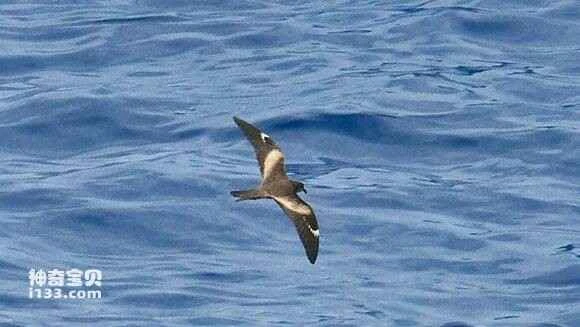
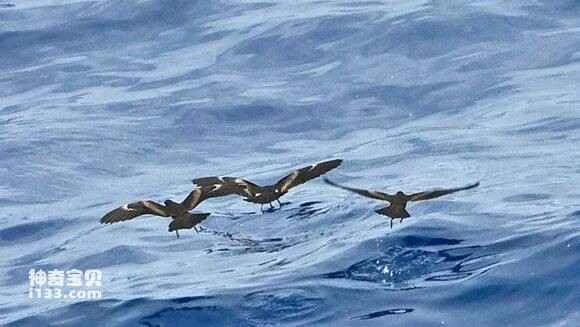
The Black-tailed Petrel lives alone or in small groups. It flies low with loose wingbeats, occasionally gliding briefly, sometimes tilting or tumbling. When feeding, it hovers in the air flapping its wings or dangling its feet to slap the water's surface. It often follows ships. It nests in rock crevices or underground, mostly on isolated islands.
Protect wild animals and ban the consumption of wild game.
Maintaining ecological balance is everyone's responsibility!