Basic Information
Scientific classification
- Chinese name: Ye Hailong
- Scientific name: Phycodurus eques
- Classification: Small fish
- Family: Syngnathidae Phycodurus
Vital signs data
- Body length: 20–35 cm
- Weight: Small nearshore fish, varies with individual (usually <100 g)
- Lifespan: Approximately 6–10 years in the wild (estimated)
Significant features
Extremely well-developed leaf-like appendages; mimicking seaweed; male brooding (tail brooding area); swiftly sucking to prey on small crustaceans.
Distribution and Habitat
Temperate waters near the coast of South Australia and Western Australia; a zone where giant kelp forests, brown algae belts, seagrass beds, and rocky reefs intermingle, 3–30 m.
Appearance
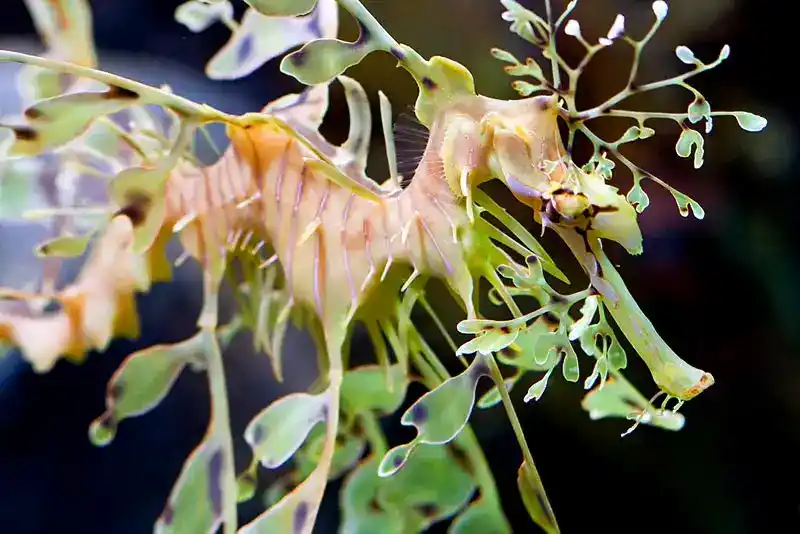
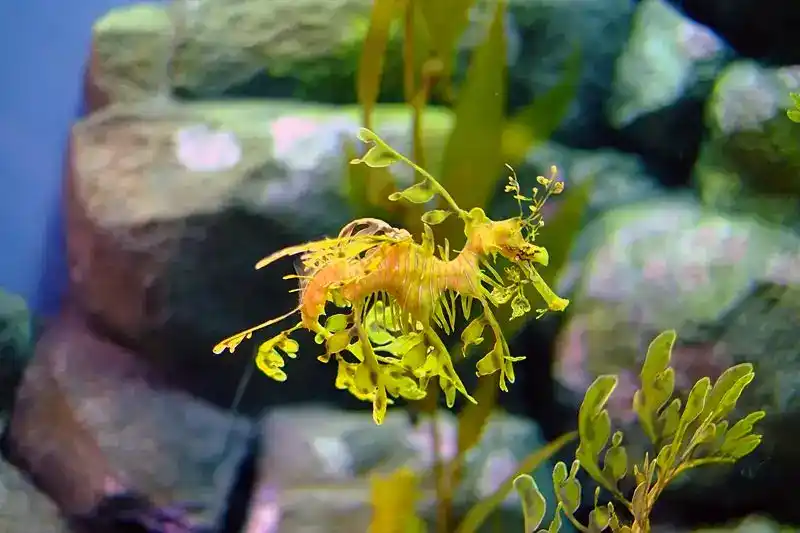
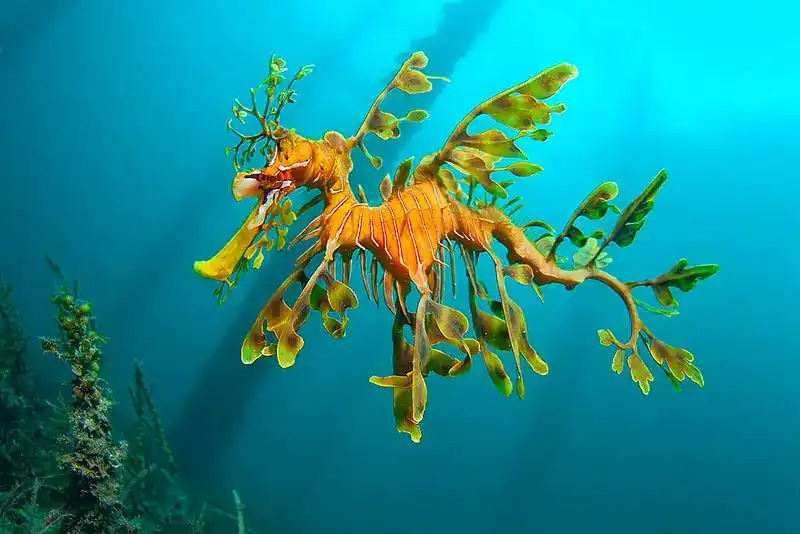
Yellow-green to brown base with fine lines; long snout and small mouth; small, transparent dorsal fin; bony plates on the body surface.
Detailed introduction
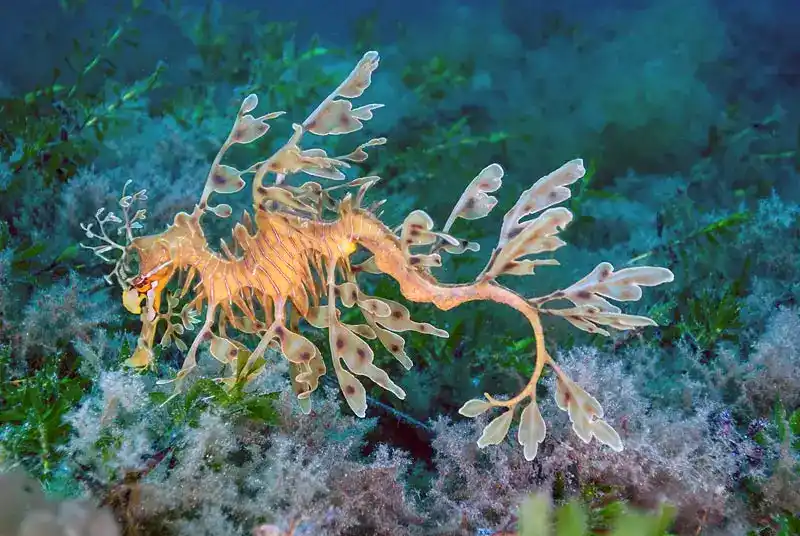
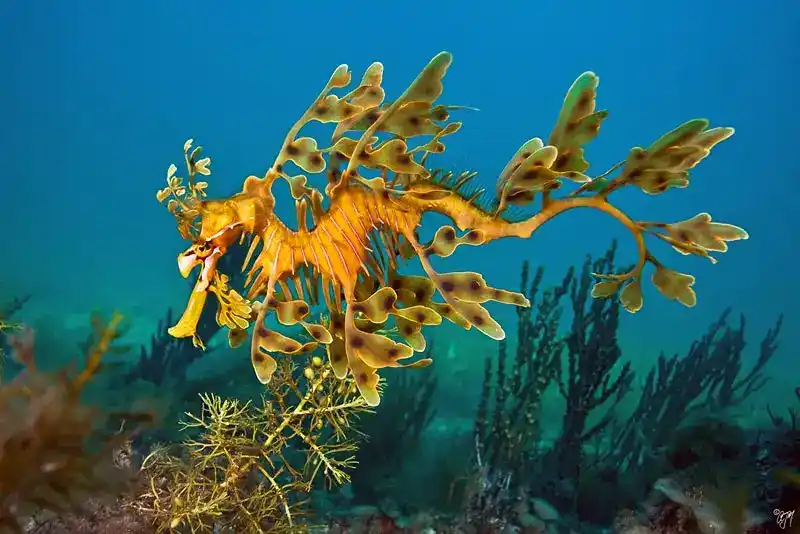
Leafy seadragons ( Phycodurus eques ) belong to the family Syngnathidae and are known for their intricate leaf-like flaps all over their bodies, resembling floating seaweed. They belong to the same genus as seahorses and needlefish, the "Seadragon-Seahorse Group," and possess a unique male-led breeding system: the female lays her eggs in the male's brood patch at the tail, where the male fertilizes and carries the eggs to incubate them until the fry hatch.
Ecology and Biology
Diet: Primarily feeds on small crustaceans (copepods, amphipods, mysids) and planktonic larvae, ingesting them by nibbling .
Behavior: The body sways gently with the aquatic plants/seaweed, relying on camouflage to avoid predators; it swims relatively slowly and often stays at the edge of seaweed forests and seagrass beds.
Reproduction: Males carry hundreds of eggs in the brood area on their tails (commonly ~120–300 ), with a gestation period of several weeks.
Morphology and Recognition
Leaf-like appendages are distributed throughout the head, body, and fin margins, and are yellowish-green to brown in color with fine lines.
It has an extremely long snout , a small mouth without teeth; and a small, transparent dorsal fin, which is mainly used for propulsion and fine-tuning.
It has no pelvic fins and small pectoral fins; its body surface has bony plate rings (a typical feature of the Syngnathidae family).
Body size and lifespan
Body length: usually 20–35 cm .
Lifespan: 6–10 years in the field (significant environmental differences).
Distribution and Habitat
It is endemic to the temperate waters off the coast of South and Western Australia , and is often found in kelp forests, brown algae belts, seagrass beds , and rocky reef areas, generally at depths of 3–30 m .
Conservation and Threats
Threats: Habitat degradation (kelp forest decline, harbor construction), collection for tourism and ornamental trade, and accidental capture.
Protection: Many species in Australia are legally protected , and harvesting bans and habitat protection are implemented; diving tourism adopts non-distraction guidelines.
IUCN: Near Threat (NT) (subject to the latest authoritative assessment).
Frequently Asked Questions
Q1: How to distinguish it from "Phyllopteryx/Seahorse"? The leafy seahorse has more developed leaf-like flaps and looks more like "floating seaweed"; the grassy seahorse ( Phyllopteryx ) has fewer leaf ornaments and a more slender body.
Q2: Can they be artificially raised? It is not recommended. They have a specific diet, poor transport and adaptability, and are prohibited from being collected/traded by laws in many places.
Q3: Precautions for viewing and photography? Maintain a suitable distance , avoid touching and direct sunlight; comply with local marine park/protected area regulations.
Q4: What are the advantages of male parenting? Males carrying eggs increases embryo survival and allows females to lay eggs again in a short period of time, thus improving reproductive efficiency.


