Basic Information
Scientific classification
- Chinese name: Jackal
- scientific name:
- Order: Carnivora
- Genus and species: Jackal, American jackal
Vital signs data
- Body length: 50-60 cm
- Weight: 10-15 kg
- Lifespan: 10-14 years
Significant features
The fur color ranges from golden to gray and black. Golden jackals typically have golden or light brown fur, while black-backed jackals have a distinctive black stripe along their backs, making them quite unique in appearance.
Distribution and Habitat
Golden Jackal (Canis aureus): Widely distributed, living in Africa, South Asia, and Southeast Europe. The golden jackal is highly adaptable and can survive in various environments.
Black-backed Jackal (Canis mesomelas): Mainly distributed in South Africa and surrounding areas, characterized by black back hair, and prefers dry grasslands and shrublands.
Side-striped Jackal (Canis adustus): Distributed in Central and Southern Africa, mainly inhabiting forests and shrublands.
Appearance
Medium size
Detailed introduction
The jackal is a highly intelligent and adaptable animal, often overlooked yet playing a vital role in the ecosystem. A predator and scavenger, the jackal can survive in a variety of environments and is widely recognized for its agile hunting skills and remarkable survival abilities. If you are interested in this mysterious and fascinating animal, then you've come to the right place! In this article, we will discuss various aspects of the jackal in detail, including its species, size, habitat, diet, reproduction, and predators.
Table of contents
What kind of animal is a jackal?
Species classification of jackals
Jackal 's size and physical characteristics
Habitat of jackals: Where do they live?
Distribution range of jackals : Africa, Asia, and the Middle East.
Ideal habitat for jackals
Behavioral characteristics of jackals : Are they predators or scavengers?
The social structure of jackals : solitary or social?
jackal hunting and foraging techniques
The role of jackals in the ecosystem
The jackal's diet: a combination of carrion feeding and hunting.
What do jackals eat?
What are the food preferences of jackals : carnivores or omnivores?
How do jackals maintain ecological balance?
Jackal reproduction and family life
Jackal reproductive habits
The growth process of jackal cubs
Family structure and social behavior of jackals
The natural enemy of jackals: Who is hunting jackals?
The natural enemy of jackals
How do jackals defend themselves against predators?
The Relationship Between Jackals and Humans: Cultural Significance and Conflict
The image of jackals in myths and folk tales
The interaction between jackals and humans
Conflict between jackals as livestock predators and humans
The current state of jackal conservation: What threats do they face?
The survival threat to jackals
Protective efforts and strategies for jackals
Jackal vs. American Jackal: Their Differences and Similarities
Species classification
Body shape and appearance
Habitat and Distribution
Behavior and social structure
Food and Eating Habits
Reproduction
Natural enemies and defense
The culture and human interaction of jackals and American jackals
1. What kind of animal is a jackal ?
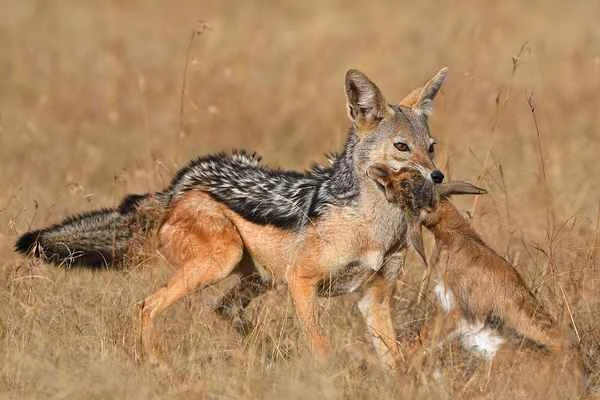
The jackal is a species of canid, belonging to the genus *Canis* , and is in the same family as wolves, dogs, and coyotes. Although relatively small in size, they are extremely agile and highly adaptable. Jackals are typically known for their strong survival abilities and skillful hunting techniques.
Species classification of jackals
Golden Jackal ( Canis aureus ): Widely distributed, living in Africa, South Asia, and Southeast Europe. The golden jackal is highly adaptable and can survive in various environments.
Black- backed Jackal ( Canis mesomelas ): Mainly distributed in South Africa and surrounding areas, characterized by black back hair, and prefers dry grasslands and shrublands.
Side-striped Jackal ( Canis adustus ): Distributed in Central and Southern Africa, mainly inhabiting forests and shrublands.
Jackal 's size and physical characteristics
Jackals are medium-sized, typically weighing between 10-15 kg (22-33 lbs) and standing about 50-60 cm (20-24 inches) tall at the shoulder. Their fur color ranges from golden to gray or black. Golden jackals usually have golden or light brown fur, while black-backed jackals have a distinctive black stripe along their backs.
2. Habitat of jackals : Where do they live?
Jackals are highly adaptable animals that can survive in a wide variety of habitats. From arid deserts to humid grasslands, forests, and even the outskirts of cities, jackals can be found everywhere.
Distribution range of jackals : Africa, Asia, and the Middle East.
Golden Jackal : Found throughout Africa, from Egypt to South Africa, and extending into parts of India, Pakistan, and Southeast Asia.
Black-backed jackal : mainly distributed in South Africa, Namibia and Botswana, prefers dry grassland and shrubland environments.
Side-striped jackal : It mainly lives in the forests and scrublands of Central and Southern Africa and has high requirements for its habitat.
Ideal habitat for jackals
Jackals prefer to live in grasslands , scrublands , forests , and semi-deserts . The golden jackal is the most adaptable and can live in a variety of environments, including near cities, wetlands, and grasslands, while the black-backed jackal prefers open, arid areas.
3. Behavioral characteristics of jackals : Are they predators or scavengers?
Jackals are both predators and scavengers, possessing great flexibility and survival skills. Their behavior and dietary habits are highly complex, which is why they can adapt to different environments.
The social structure of jackals : solitary or social?
Solitary behavior : Many golden jackals prefer to live alone, especially in areas with abundant habitat.
Social behavior : Black-backed jackals are more socialized, usually forming small family groups to forage and raise their young together.
jackal hunting and foraging techniques
Jackals primarily prey on small mammals, such as rodents , birds , and reptiles , and sometimes even young antelopes and gazelles . They also scavenge the carcasses of other predators or forage for food at night.
The role of jackals in the ecosystem
As scavengers, jackals help clean up the environment, consume dead animal carcasses, and reduce the spread of disease. As predators, they also control the populations of small mammals, maintaining ecological balance.
4. The diet of jackals : a combination of carrion feeding and hunting.
Jackals are omnivorous animals with a very flexible diet that can be adjusted according to changes in the environment and resources.
What do jackals eat?
Carnivores : Jackals prey on small mammals, such as rodents and birds .
Carrion eaters : Jackals also eat the carcasses left behind by other predators (such as lions and hyenas).
Omnivorous : They sometimes eat fruits , insects and bird eggs , especially when food is scarce.
How do jackals maintain ecological balance?
Through predation and scavenging, jackals play a vital role in the ecosystem. They not only control the populations of small animals but also clean up carcasses in the environment and prevent the spread of disease.
5. The reproduction and family life of jackals
The reproductive behavior of jackals is quite interesting. They are typically monogamous and share the care of their cubs. The social structure of jackals is relatively complex, with strong cooperation among family members.
Jackal reproductive habits
The breeding season for jackals typically occurs during the colder months, with a higher breeding rate in spring. Most jackal pairs maintain long-term partnerships.
The growth process of jackal cubs
A jackal typically has 2-6 cubs per litter. Newborn cubs are completely dependent on their mother's care, their eyes are closed, and they are physically weak. As they grow, the parents will work together to care for and protect them.
Family structure and social behavior of jackals
In social groups, the social structure of jackals is typically dominated by alpha males and females. They share responsibility for raising cubs, hunting, and defending territory.
6. The natural enemies of jackals : Who hunts jackals ?
Although jackals are very agile and nimble, they are not invincible. Many large predators will also hunt jackals , especially cubs.
The natural enemy of jackals
Lions , leopards , and hyenas are the main natural enemies of jackals . Jackal cubs, in particular, are more likely to become prey for these large predators.
Birds of prey such as falcons may also prey on jackal cubs.
How do jackals defend themselves against predators?
Jackals rely on agile movements, group cooperation, and vocalizations to avoid predators. They typically escape threats by hiding, running quickly, or using their habitat for cover.
7. The Relationship Between Jackals and Humans: Cultural Significance and Conflict
Jackals hold a special place and symbolic meaning in many cultures. In mythology, they are often associated with cunning or resilience .
The image of jackals in myths and folk tales
In Egyptian mythology, Anubis is the god of death and the afterlife, usually depicted with the head of a jackal . The jackal thus became a symbol of death and rebirth.
The interaction between jackals and humans
Although jackals sometimes attack small livestock, they also help clean the environment and reduce the spread of disease. In agrarian societies, jackals were sometimes seen as pests, but were also respected as nature's scavengers.
8. Current status of jackal conservation: What threats do they face?
Most jackal species are not endangered, but their survival is facing increasing threats due to habitat loss, poaching, and conflict with humans.
The survival threat to jackals
Habitat loss : Agricultural development and urban expansion have led to the loss of habitat for jackals.
Poaching : Some jackal species are illegally hunted for their fur.
Diseases : Diseases transmitted by livestock can also affect jackal populations.
Protective efforts and strategies for jackals
To protect jackals , many regions have implemented habitat protection measures and strengthened surveillance of them . At the same time, educating the public about the important role of jackals in the ecosystem is currently an important means of protecting them .
9. Jackal vs. American Jackal : Their Differences and Similarities
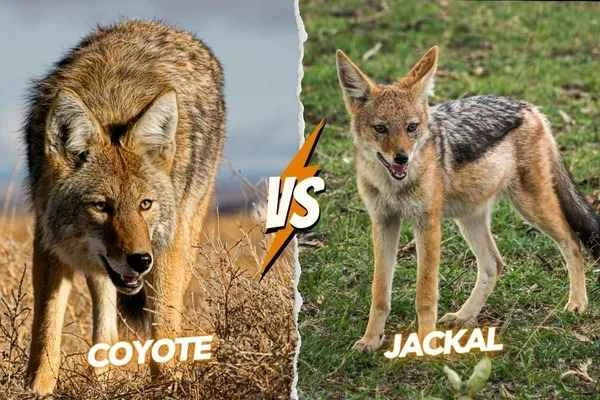
Although jackals and coyotes both belong to the Canidae family, they are two distinct animals with their own unique characteristics, habits, and habitats. By comparing these two animals, we can better understand their differences and connections.
1. Species classification
Jackal
Jackals belong to the Canidae family and the genus Canis . Common species include the golden jackal ( Canis aureus ), the black-backed jackal ( Canis mesomelas ), and the side-striped jackal ( Canis adustus ).
Jackals are mainly distributed in Africa, Asia, and the Middle East.
Coyote
The American jackal belongs to the Canidae family, genus Canis , and its scientific name is Canis latrans .
Coyotes ( scientific name Canis latrans ), also known asAmerican jackals ,prairie wolves , oraardvarks.
The American dhole is mainly distributed in North America, especially the United States, Canada, and Mexico. In recent years, due to habitat changes,the American dhole has gradually expanded to other regions, including urban environments.
2. Body shape and appearance
Jackal
Jackals are relatively small, weighing approximately 10-15 kg (22-33 lbs) and standing 50-60 cm (20-24 inches) tall at the shoulder. Jackals have a wide range of coat colors, typically golden, gray, or black, with some having a distinctive black band of fur on their backs, especially the black-backed jackal.
American jackal
American jackals are slightly larger than jackals,with adults weighing approximately 12-25 kg (26-55 lbs) and standing about 60-75 cm (24-30 inches) tall at theshoulder . They typically have gray, brown, or light yellow fur, sharper facial features, and large, erect ears.
3. Habitat and Distribution
Jackal
Jackals adapt to a variety of environments, mainly inhabiting grasslands, forests, scrublands, and deserts in Africa , Asia , and the Middle East .
Different species of jackals have different habitat preferences. For example, the golden jackal prefers open grasslands and forest edges, while the black-backed jackal prefers arid regions.
American jackal
The American dhole is native to North America , primarily distributed in the grasslands, forests, and deserts of the United States, Canada, and Mexico. Due to its strong adaptability,the American dhole has gradually expanded into urban and agricultural areas.
4. Behavior and social structure
Jackal
Jackals sometimes live alone, but sometimes they form small family groups or temporary social groups. Golden jackals are usually more independent, while black-backed jackals prefer to live in groups, forming small families.
Jackals are typically very alert, active at night, and possess strong territorial and social traits, especially during the breeding season.
American jackal
American jackals are highly social animals, typically living in family groups dominated by a pair of alpha males and females, with clear division of labor and cooperation among members.American jackal groups hunt, breed, and defend their territory together.
American jackals are also nocturnal animals with a very strong ability to adapt, enabling them to survive in a variety of environments, including urban and suburban areas.
5. Food and Eating Habits
Jackal
Jackals are omnivorous , preying on small mammals, birds, and insects, as well as fruits and carrion. They are adept at scavenging and play a scavenging role in the ecosystem.
They typically hunt small animals in groups, but will also steal the carcasses of other predators.
American jackal
American jackals are primarily carnivorous , preying on small mammals such as rabbits and rodents. They are also scavengers, consuming the carcasses left behind by larger predators.
American jackals are very intelligent and sometimes use "strategic" hunting methods, such as working in groups to catch large prey or using "bait" to trap prey.
6. Reproduction
Jackal
Jackal breeding typically occurs in winter or early spring, with litters containing 2-6 cubs. Jackals are monogamous animals, with both parents sharing the responsibility of caring for their young.
After birth, cubs need to be fed and protected by their parents to grow up. Jackal cubs usually begin to forage independently after 2-3 months.
American jackal
American jackals are also monogamous , and their breeding season is usually in the spring. Each litter typically has 4-7 pups, and during the breeding season, both the mother and fatherof the American jackalwill share the responsibility of caring for the pups.
American jackal pups begin eating solid food at around 10 weeks old and become completely independent after 6 months.
7. Natural Enemies and Defense
Jackal
Although jackals are in the middle of the food chain, their cubs are vulnerable to predators such as lions , leopards , and hyenas . Adult jackals use speed, stealth, and group cooperation to avoid predators.
American jackal
American jackals also face threats from large predators such as wolves , black bears , and mountain lions . They defend themselves against these predators by forming cooperative groups, increasing alertness, and escaping quickly.
8. Culture and Human Interactions of Dholes andAmerican Dholes
Jackal
Jackals have symbolic meanings in many cultures; for example, in Egyptian mythology , they are often associated with Anubis, the god of death. They are also seen as intelligent and cunning animals.
Jackals are sometimes considered pests because they attack livestock, but they also play a role in the ecosystem by cleaning up carrion and controlling small animals.
American jackal
The American jackal is more well-known in North American culture, especially in the American West and Mexico, whereit is often seen as a symbol of freedom and cunning. Its image also appears in many indigenous legends and folktales.
American jackals interact with humans primarily through conflicts arising from the hunting of livestock, but they are sometimes seen as "scavengers" in nature.
in conclusion
While jackals andAmerican jackals share many similarities, such as belonging to the canid family and preying on small mammals, they differ significantly in habitat, behavior, size, and distribution. Jackals are highly adaptable and widely distributed across Africa and Asia, whileAmerican jackals primarily inhabit North America and exhibit more cooperative pack behavior. Both jackals andAmerican jackals play vital roles in ecosystems, acting as scavengers and predators in nature, helping to maintain ecological balance.
Jackals are "nimble hunters" in nature, maintaining ecological balance not only through predation and scavenging, but also holding a place in human history and culture. This article aims to help readers gain a better understanding of these mysterious and adaptable animals, enabling them to better protect them and ensure their continued vital role in the natural world.
Frequently Asked Questions
Frequently Asked Questions (FAQ)
What's the difference between a jackal and a coyote?
Although jackals and coyotes both belong to the Canidae family, they differ significantly in size, behavior, and habitat. Coyotes are typically larger and primarily found in North America, while jackals are smaller and have a wider range of habitats, particularly in Africa and Asia.
What do jackals eat?
Jackals are omnivorous animals, mainly preying on small mammals, birds, reptiles, etc., but also eating carrion, insects and fruit.
Do jackals attack humans?
Jackals typically avoid contact with humans and will not attack them unprovoked. However, if a jackal is infected with diseases such as rabies, it may pose a threat.
How do jackals reproduce?
Jackals are generally monogamous and will care for their cubs after the breeding season. Each litter of jackals consists of 2-6 cubs, which are raised by both parents.
Who is the natural enemy of the jackal ?
The natural enemies of jackals include large predators such as lions, leopards, and hyenas, and jackal cubs are particularly vulnerable to these predators.