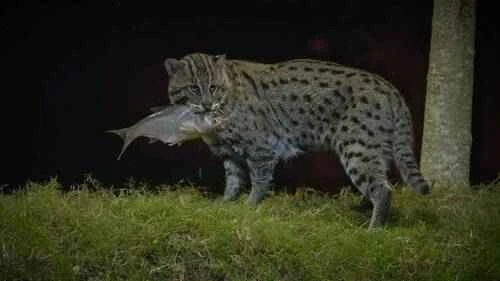
Basic Information
Scientific classification
- Chinese name: Fishing Cat
- Scientific name: Catfish
- Order: Carnivora
- Family and genus: Felinae, Leopard cat
Vital signs data
- Body length: 57-78 cm
- Weight: 5-16 kg
- Lifespan: 15-20 years
Significant features
It is nocturnal and skilled at fishing in the water, hence its name.
Distribution and Habitat
It is mainly distributed in Nepal, India, Myanmar, Thailand, and Indonesia. In China, it is only found in Taiwan Province. It inhabits shrublands in forested areas, reed beds along rivers, and evergreen forests on tropical coasts. It prefers to be active near water.
Appearance
Fishing cats are medium-sized, with adults measuring approximately 57-78 cm in length and weighing 5-16 kg. They have a sturdy build, covered in thick fur that is typically greyish-green or brown with black spots and stripes. The fishing cat's fur is not only effectively waterproof, but it also has a short, flat tail.
Detailed introduction
Fishing cat: One of the most endangered small to medium-sized cat species in Asia.
The fishing cat ( Prionailurus viverrinus ) is one of the most widely distributed wild cat species in Asia, inhabiting wetlands, swamps, and coastal rivers. Known for its unique fishing skills, this small to medium-sized cat faces a serious threat of extinction. This article will introduce the fishing cat's characteristics, habitat, reasons for endangerment, and conservation measures to help raise awareness of this species.
Characteristics and Habits of the Fishing Cat
1. External features
Fishing cats are medium-sized, with adults measuring approximately 57-78 cm in length and weighing 5-16 kg. They have a sturdy build, covered in thick fur that is typically greyish-green or brown with black spots and stripes. The fishing cat's fur is not only effectively waterproof, but its short, flat tail also helps it maintain balance in the water.
2. Living habits
Fishing cats are best known for their fishing abilities . They are among the few felines that exclusively feed on fish. Fishing cats are typically active at night or dusk, and are extremely skilled swimmers, even able to catch prey underwater. Besides fish, they also prey on frogs, crustaceans, birds, and small mammals.
3. Habitat
Fishing cats are mainly distributed in wetlands, mangroves, swamps, and riverbanks in South and Southeast Asia. Because they depend on water sources, their habitats are typically closely linked to water bodies. However, with the rapid disappearance of wetlands, the fishing cat's living space is also severely threatened.
The endangered status and causes of the fishing cat
1. Habitat destruction
The most significant extinction risk to the fishing cat stems from habitat destruction . Human activities have led to the large-scale development of wetlands for agriculture, cities, and industrial areas, and the wetlands, mangroves, and swamps on which the fishing cat depends are rapidly diminishing. Particularly in South Asian countries, climate change has resulted in frequent floods and river overflows, further reducing the fishing cat's habitat.
2. Illegal hunting and trade
Fishing cat pelts are considered valuable in some areas, leading to frequent illegal hunting . Furthermore, fishing cats face the threat of the wildlife trade, being illegally captured and sold, further reducing their wild population.
3. Conflict between humans and fishing cats
Fishing cats are often considered a threat to farmland and aquaculture ponds because they prey on fish, waterfowl, and other crops and livestock. Local residents sometimes set traps or hunt fishing cats outright to protect their livelihoods. This conflict between humans and fishing cats further exacerbates their endangered status.
Current Status and Measures for the Conservation of Fishing Cats
1. International protection level
The fishing cat is listed as an " Endangered " species by the International Union for Conservation of Nature (IUCN) and is included in Appendix II of the Convention on International Trade in Endangered Species of Wild Fauna and Flora (CITES), prohibiting its international trade. Despite this, the conservation situation of the fishing cat remains worrying, especially in countries where wetland protection is inadequate.
2. Wetland protection and habitat restoration
Because fishing cats are highly dependent on wetlands, protecting and restoring wetlands is crucial for their survival. In recent years, some countries have strengthened wetland protection and established wetland nature reserves , providing fishing cats with relatively safe habitats. However, the limited area of these reserves is still insufficient to fully ensure the stability of the fishing cat population.
3. Raising public awareness and community participation
Raising public awareness of the endangered status of the fishing cat is crucial for its conservation. Public awareness campaigns and educational activities can help more people understand the fishing cat's ecological value and its survival crisis, reducing conflict with humans. Furthermore, the participation of local communities is essential, encouraging farmers and fishermen to adopt eco-friendly farming and aquaculture practices to minimize habitat destruction for the fishing cat.
4. Scientific Research and Monitoring
Scientists are intensifying population monitoring and ecological research on fishing cats, using GPS tracking technology and monitoring equipment to further understand their activity range, reproductive behavior, and population dynamics. This data will help develop more effective conservation strategies.
The fishing cat is one of Asia's most iconic and endangered small-to-medium-sized felines, distinguished by its unique fishing skills. However, due to habitat loss, illegal hunting, and conflict between humans and fishing cats, they are facing an unprecedented survival crisis. Protecting the fishing cat is not just about protecting a wild animal, but also about maintaining the balance of wetland ecosystems. Through global cooperation and public participation, we still have a chance to save this precious species.
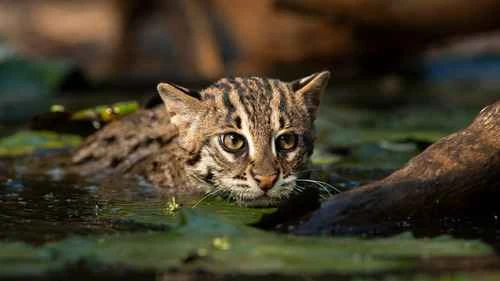
Several animals resemble fishing cats in appearance or lifestyle. Here are some animals that look like fishing cats:
1. Plains cat (Princess cat, Prionailurus bengalensis )
Appearance : Similar to the fishing cat, the plains cat also has spotted markings and gray-brown fur. It is slightly smaller and usually more slender.
Habitat : Distributed in various habitats in Asia, including forests, grasslands and farmlands. They mainly feed on small mammals, but are not as focused on fishing as the fishing cat.
Similarities : Spotted patterns and wild cat characteristics make the plains cat visually similar to the fishing cat, but their lifestyles are quite different.
2. Leopard cat ( Prionailurus bengalensis )
Appearance : Leopard cats and fishing cats share similar spotted patterns and grayish-yellow or brown fur. They are small in size, and their facial structure is also quite similar to that of fishing cats.
Habitat : Leopard cats are widely distributed in Asian forests, shrublands and swamps, preying on small mammals, birds and reptiles.
Similarities : Leopard cats and fishing cats are very similar in size and markings, but leopard cats do not depend on water as much as fishing cats in their living habits.
3. Lynx ( Lynx lynx )
Appearance : Lynxes are relatively large and have distinctive black tufts of fur on their ears, unlike fishing cats. However, the lynx's markings and thick fur give it some visual similarity to fishing cats.
Habitat : Lynxes typically live in forests and mountains in the Northern Hemisphere, preying on rabbits, birds, and small mammals.
Similarities : Although lynxes are not as fond of water as fishing cats, they share certain similarities in their wild hunting behaviors and survival methods.
4. Rusty-spotted leopard cat ( Prionailurus rubiginosus )
Appearance : The rusty-spotted cat is a very small feline with more delicate spots than the fishing cat, and its fur is reddish-brown. They belong to the same genus as the fishing cat, the Leopard Cat, and therefore share similar body size and spotted patterns.
Habitat : The rusty-spotted leopard cat lives in arid regions and forests of the Indian subcontinent, and mainly preys on small animals.
Similarities : Similar to the fishing cat in size and spots, but they have different habitats and lifestyles.
5. South American ocelot ( Leopardus tigrinus )
Appearance : The South American ocelot has a spotted pattern similar to the fishing cat, and its fur is usually yellow or grayish-brown, dotted with black spots. They are small in size and their facial structure is also quite similar.
Habitat : Found in the tropical forests of South America, it mainly preys on birds, rodents, and reptiles.
Similarities : The South American ocelot is similar in appearance to the fishing cat, especially in terms of stripes and body size, but their living environments and geographical locations are very different.
Although these animals share similar appearances or ecological habits with fishing cats, fishing cats have carved out their own niche due to their unique fishing abilities and wetland habitats, making them a highly distinctive feline species.
Frequently Asked Questions
What kind of animal is a fishing cat?
The fishing cat is a medium-sized wild cat species, scientifically known as *Prionailurus viverrinus* , which mainly inhabits wetlands and forests in Southeast and South Asia and is known for its swimming prowess and ability to catch fish.What are the physical characteristics of a fishing cat?
Fishing cats are relatively large, with grayish-brown bodies and black spots and stripes. Their paws are partially webbed, adapted for swimming, and they have short ears and relatively short tails, facilitating movement in the water.What is the main food of a fishing cat?
Fishing cats primarily feed on fish, but their diet is very diverse, including amphibians, crustaceans, birds, and small mammals. They also sometimes prey on domestic poultry near the water.What threats are facing the fishing cat's habitat?
The main threats to fishing cats include wetland conversion to farmland, habitat loss due to urbanization, and hunting by humans. These factors have led to a continuous decline in their population.What is the current status of fishing cat conservation?
The fishing cat is listed as an endangered species (EN) by the International Union for Conservation of Nature (IUCN), and its population is declining. Many conservation projects are working to protect its habitat and reduce human disturbance.


