Basic Information
Scientific classification
- Chinese name: X-ray fish
- Scientific name: *Euphorbia pekinensis*
- Classification: Small fish
- Family and Genus: X-ray fish
Vital signs data
- Body length: 3-5 cm
- weight:
- life:
Significant features
It is semi-transparent, and its main body color is silver.
Distribution and Habitat
The Amazon River basin in South America, especially the freshwater rivers, lakes and swamps of Venezuela and Guyana.
Appearance
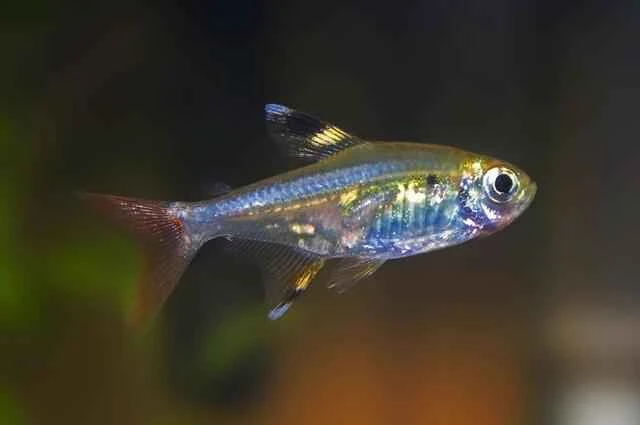
X-ray fish have a semi-transparent body, primarily silver in color, with their internal bones and organs appearing faintly visible in sunlight or other light. They are typically small, with adults measuring about 3 to 5 centimeters in length. Despite their small size, X-ray fish often have yellow and black markings on their tail fins.
Detailed introduction
Animals starting with X: Exploring the mysterious world of X-ray fish
Among the rich diversity of life on Earth, some animals whose names begin with the letter "X" are extremely rare and fascinating. The most representative of these is the X-ray fish (scientific name: *Pristella maxillaris*) . This amazing freshwater fish is renowned for its transparent body, allowing us to glimpse its internal structure as if it had been exposed to "X-rays." This article will delve into the characteristics, habits, habitats, and popularity of the X-ray fish among aquarium enthusiasts.
What is an X-ray fish?
X-ray fish, also known as transparent characins , belong to the Characidae family and are native to the Amazon River basin in South America. They are named for their transparent body structure, allowing their internal organs and skeletal structure to be clearly seen with the naked eye, as if they were being irradiated by X-rays. This transparency not only makes them unique in nature but also provides scientists with natural samples for studying the physiological structure of fish.
1. External features
X-ray fish have a semi-transparent body, primarily silver in color, with their internal bones and organs appearing faintly visible in sunlight or other light. They are typically small, with adults measuring about 3 to 5 centimeters in length. Despite their small size, X-ray fish often have yellow and black markings on their tail fins, making them appear quite agile in the water.
2. Living habits
X-ray fish are gregarious fish that prefer to live in groups with their own kind. They are gentle in nature, making them well-suited for keeping with other small freshwater fish. X-ray fish prefer to swim in warm, slow-moving waters , typically in the middle and lower layers of the water. They are omnivorous, feeding on small invertebrates, algae, and other plankton.
Habitat of X-ray fish
X-ray fish are native to the Amazon River basin in South America, especially the freshwater rivers, lakes, and swamps of Venezuela and Guyana. They prefer to live in clear waters with lush vegetation and are highly adaptable, able to survive in varying water temperatures and conditions.
In their natural environment, X-ray fish utilize their transparent bodies as a defense mechanism to evade predators. Because their bodies blend seamlessly into the aquatic environment, they are less likely to be detected by predators. This "invisibility" allows them to survive in highly competitive rivers and lakes.
Breeding and raising X-ray fish
1. Reproduction methods
X-ray fish are oviparous. Both males and females breed in waters rich in aquatic plants, typically laying hundreds of eggs at a time. These eggs hatch within 24 to 36 hours , and the fry begin swimming and feeding freely within a few days. Breeding X-ray fish is relatively easy, making them suitable for aquarium enthusiasts to breed in their home aquariums.
2. Feeding Precautions
X-ray fish are very popular as ornamental fish because they are not only unique in appearance but also easy to care for. When keeping X-ray fish, the aquarium water temperature should be maintained between 22°C and 28°C , with proper water flow and oxygen supply. Furthermore, they have relatively low requirements for water quality; simply keep the water clean and change it regularly.
X-ray fish have a relatively simple diet, and can be fed regular fish food, frozen food, or small plankton. As schooling fish, it is recommended to keep at least six X-ray fish in an aquarium, as this will make them more active and exhibit natural group behavior.
Why are X-ray fish so popular?
X-ray fish are highly regarded in the world of ornamental fish, not only for their unique appearance but also for their ease of care, gentle temperament , and ability to coexist harmoniously with other freshwater fish. Furthermore, their small size and understated colors make them an ideal choice for aquariums of all sizes.
1. Unique Transparent Appearance <br/> Their translucent appearance is a miracle of nature. Their bones and internal organs can be observed through their bodies, making X-ray fish a highlight in aquariums.
2. Gentle temperament
X-ray fish are docile and suitable for keeping with other small fish of similar temperament, such as neon tetras and zebra danios, without conflict with other fish.
3. Easy to breed <br/>For aquarium enthusiasts, breeding X-ray fish is relatively simple. They only need suitable aquatic plants and water quality to help them breed successfully.
Current status of X-ray fish conservation
Although the population of X-ray fish in the wild is currently relatively stable, their habitat—the freshwater wetlands of the Amazon River basin—is threatened by environmental pollution, deforestation, and climate change . Wetland destruction could affect X-ray fish and other species that depend on this ecosystem for survival. Therefore, protecting wetland and river environments is one of the important measures to ensure the survival of X-ray fish.
Conclusion
X-ray fish, a unique freshwater species, are widely admired not only for their transparent appearance and remarkable body structure, but also for their docile temperament and ease of care, making them a favorite among aquarium enthusiasts. However, with global environmental change and habitat destruction, the survival of X-ray fish faces potential threats. Only by focusing on environmental issues and protecting natural ecosystems can we ensure the continued existence of this amazing species on Earth.


