Basic Information
Scientific classification
- Chinese name: Himalayan woodpecker
- Scientific name: Dendrocopos himalayensis, Himalayan Woodpecker
- Classification: Climbing birds
- Family and genus: Order Vulpetiformes, Family Woodpeckers, Genus *Woodpecker*
Vital signs data
- Body length: No verification information available.
- Weight: No verification information available.
- Lifespan: No verification data available.
Significant features
Distribution and Habitat
The Himalayan woodpecker is distributed across Eurasia and North Africa, including all of Europe, Africa north of the Tropic of Cancer, the Arabian Peninsula, and Asia north of the Himalayas-Hengduan Mountains-Minshan Mountains-Qinling Mountains-Huaihe River. It is also found in the Indian subcontinent and southwestern China, including India, Bangladesh, Bhutan, Sikkim, Nepal, Pakistan, Sri Lanka, the Maldives, and southeastern Tibet.
The Indochina Peninsula and the southeastern coastal region of China, including Myanmar, Vietnam, Laos, Cambodia, Thailand, as well as the southeastern coastal region of China, Hong Kong, and Hainan Island.
Appearance
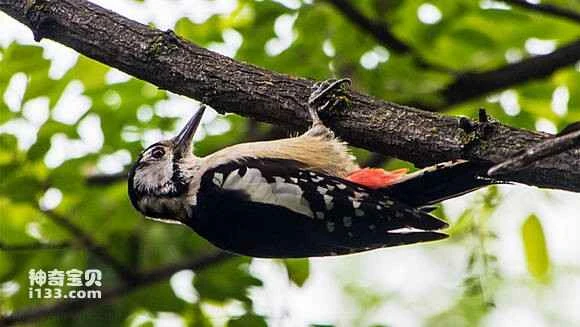
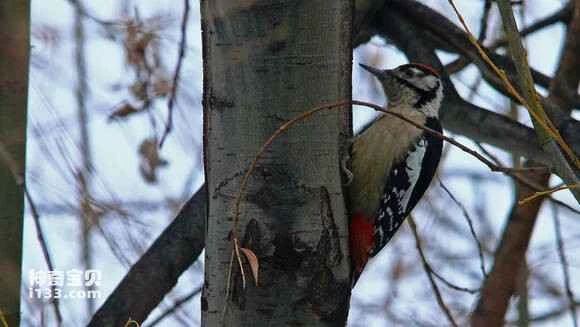
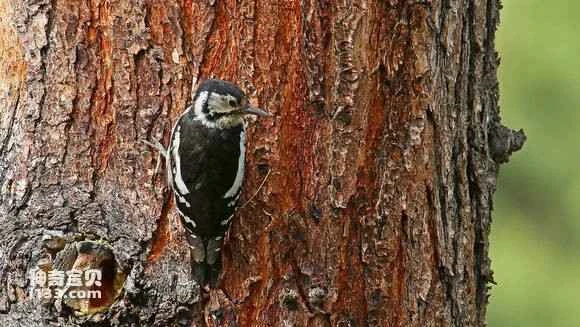
The Himalayan woodpecker has a large head but a relatively long neck. Its beak is strong, straight, and chisel-shaped, with exposed nostrils. The hyoid bone extends in a ring-like pattern, running from the throat around the occiput to the base of the upper beak. The tongue is long and retractable, with short hooks at the tip. The legs are relatively short, with 3 or 4 toes; there are 9 primary flight feathers. The skull is salipodidal, with the vomer replaced by paired plates. The palatine bones are small and far to the sides. The sternum has two notches on each side at the posterior end, and the manubrium is forked. The leg muscles lack the pelvic and parafemoral muscles. The tail is flat or wedge-shaped, with mostly 12 tail feathers. The feather shafts are stiff and flexible, supporting the body while pecking.
Detailed introduction
The Himalayan woodpecker, scientifically known as Dendrocopos himalayensis and also called Himalayan Woodpecker, has unknown habits.

Listed in the IUCN Red List of Birds, version 3.1, 2009.
Protect wild animals and ban the consumption of wild game.
Maintaining ecological balance is everyone's responsibility!