Basic Information
Scientific classification
- Chinese name: Gila Woodpecker
- Scientific name: Melanerpes uropygialis, Gila Woodpecker
- Classification: Climbing birds
- Family and genus: Order Piliformes, Family Pilidae, Genus *Pterygota*
Vital signs data
- Body length: Approximately 24 centimeters
- Weight: 51-79g
- Lifespan: Approximately 7 years
Significant features
Distribution and Habitat
The Gila Woodpecker is found in California (King's Canyon, Colorado Valley Lowlands), Nevada, New Mexico, Jalisco, Aguascalientes, and Baja California in Mexico.
The Gila woodpecker inhabits arid and semi-arid regions, with the Sonora Desert of North America providing environments of scattered trees or giant cacti. It is also found in wetter areas, such as rows of trees along rivers, subtropical forests, and plantations. Its most active area is at altitudes up to 1600 meters.
Appearance
The Gila woodpecker is a medium-sized woodpecker, 24 cm long, with a wingspan of 41 cm, weighing 51-79 g, and with a lifespan of 7 years. Head, throat, breast and abdomen are brown. The upper back, wings and tail are covered with wavy stripes of black and white. White rump, black and sparse upper tail coverts, tail and central tail feathers are black. Males have a red cap on their heads. Females have short beaks and no red spots on their heads. Juveniles have darker plumage than their parents. The upper body is more like antelope color. The belly is pale [1]. The Gila woodpecker conquers the steel thorns of the desert. It lives in arid and semi-arid regions. To survive in such harsh environments, the main problem to solve is water. They set their sights on the giant saguaro cactus, which has a vertical trunk that can reach 15 meters in height and weighs several tons. The trunk has a strong water storage capacity.
Habitat
Detailed introduction
The Gila Woodpecker, scientifically known as Melanerepes uropygialis, has three subspecies.
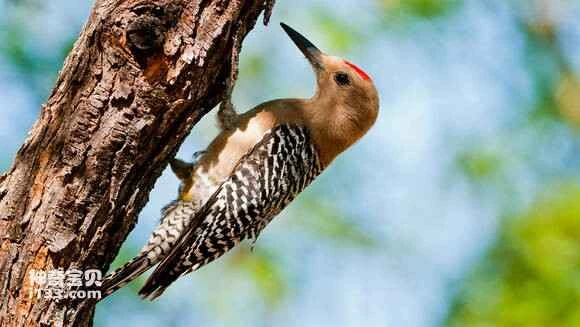
The Gila woodpecker lives in the desert and is easily observed due to its loud noise. They forage and roost in the tops of trees, cacti, and bushes. When threatened in a conflict, it will shake its head and body for balance. It is a highly aggressive bird, particularly targeting bees and mynas. Most attacks occur within a radius of 40 to 50 meters. They nest in burrows. During the breeding season, the family remains together in their territory as a group until the chicks grow up, drive away their parents, or are separated from them. They are omnivorous. Their animal menu includes many insects: ants, beetles, locusts, and insect larvae. They also eat some worms, lizards, as well as young birds and eggs. Their plant diet includes fruits and seeds, such as cactus fruits, berries, grains, and plantation fruits. The Gila woodpecker burrows into cacti to build a cool home for its chicks. The Gula woodpecker prefers sturdy cactus burrows that have dried naturally over the years, and once it finds such a usable burrow, it will quickly occupy it with great interest.
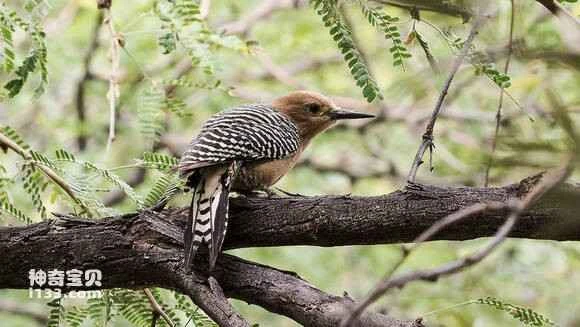
The Gila woodpecker's breeding season is from April to June. A second brood may occur in July. Both parents build the nest together in cacti, palm stumps, or trees, reaching heights of over 10 meters above the ground. They typically lay 3 to 4 eggs, with a maximum of 6. The eggs are placed in burrows in the cactus. Both parents participate in raising the chicks. In Arizona, USA, the native Gila woodpecker nests in cacti, but the invasive Purple-winged Starling (Sturnus vulgaris) has taken over these nests, causing a decline in the Gila woodpecker's breeding rate and population. The Gila woodpecker population is not facing major problems, and no special measures have been taken to protect them.
Listed as Least Concern (LC) on the IUCN Red List of Threatened Species 2012 ver 3.1.
Protect wild animals and ban the consumption of wild game.
Maintaining ecological balance is everyone's responsibility!