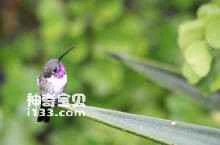
Basic Information
Scientific classification
- Chinese name: Vanuatu Jade
- Scientific name: Chestnut-bellied kingfisher, Todirhamphus farquhari, Chestnut-bellied kingfisher, Vanuatu kingfisher
- Classification: Climbing birds
- Genus and species: Order Coraciiformes, Family Kingfisher, Genus Aldebaran
Vital signs data
- Body length: 19-21 cm
- Weight: No verification information available.
- Lifespan: No verification data available.
Significant features
It is unique to Vanuatu, and actually unique to the northern half of Vanuatu.
Distribution and Habitat
It has been found only on the islands of Malekula, Santo, and Malok, mainly in the primary forests below 700 meters above sea level, and has also been found in gardens, farmlands, and coconut groves on Malok.
Appearance
It measures 19-21cm in length. Unlike the Pacific kingfisher, it has a rich purplish-blue back, wings, and head; a distinctive chestnut-orange breast, abdomen, undertail, white collar, and throat; a white spot in front of its eyes; and no white patches. The blue of its head forms a sharp line with the black eye ring (a stripe running through the eye).
The beak is thick and long, resembling a chisel, with a relatively wide base, a straight beak peak, a rounded ridge, and no nasal grooves on either side; the wings are rounded, with the first primary flight feather being the same length as or slightly shorter than the seventh primary flight feather, and the second, third, and fourth primary flight feathers being nearly the same length; the base of the primary flight feathers has white spots; the tail is rounded.
Detailed introduction
The Vanuatu kingfisher, scientifically known as *Todirhamphus farquhari*, and also called *Chestnut-bellied kingfisher* or *Vanuatu kingfisher*, is a bird species endemic to Vanuatu.
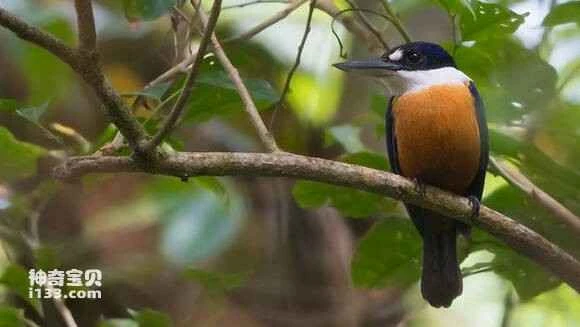
Vanuatu kingfishers typically hunt alone or in pairs. Like most forest kingfishers, they are entirely carnivorous, foraging for prey in leaves or soil. Their main diet consists of invertebrates such as crickets, spiders, scorpions, and snails. They also eat small vertebrates such as small fish, snakes, and lizards. Their call is a long string of "tik" chirps, repeated 20 times or more, lasting up to a minute.
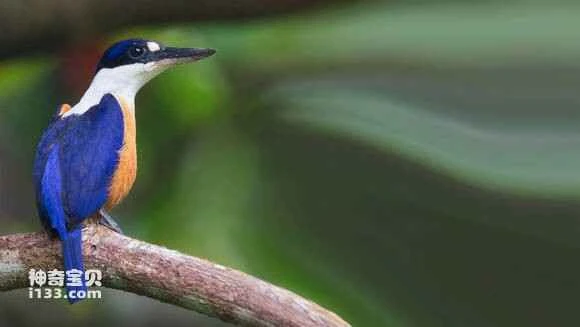
Vanuatu emeralds nest in a hole they carve in palm or fern trees, usually in trunks hollowed out by termites. They lay 3-4 white eggs at a time, each about 29.4 x 26.2 mm in size.
Listed in the IUCN Red List of Birds, ver 3.1: 2008.
Protect wild animals and ban the consumption of wild game.
Maintaining ecological balance is everyone's responsibility!