Basic Information
Scientific classification
- Chinese name: Botany Bay weevil
- Scientific name: Chrysolopus spectabilis
- Classification: Arthropoda
- Family and genus: Family Elephantidae, Genus Chrysolopus
Vital signs data
- Body length: Adults are about 1.1–2 cm long, which is a medium to large weevil species.
- Weight: The individuals are relatively light, generally in the hundreds of milligrams range, which is consistent with the weight range of small to medium-sized Coleoptera insects.
- Lifespan: The complete life cycle from egg to adult can span several months, and adults can survive for several weeks in the wild, depending on climate and food conditions.
Significant features
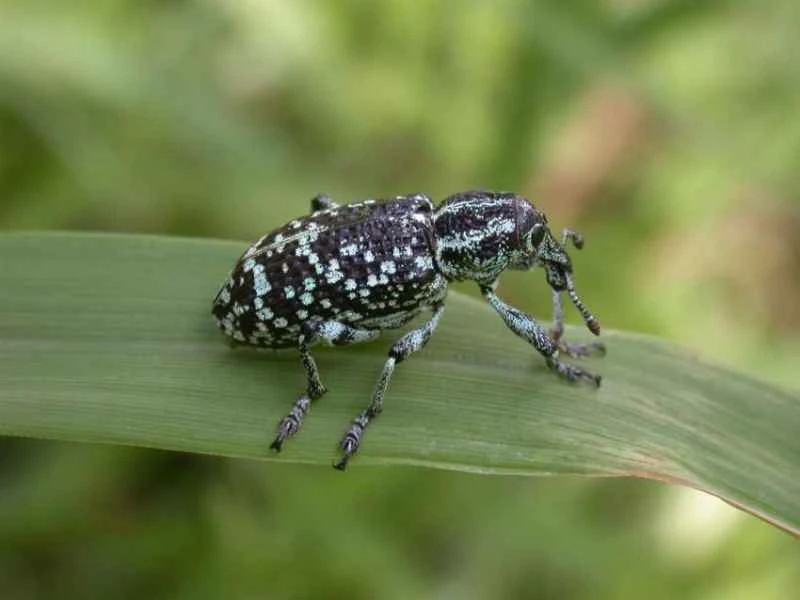
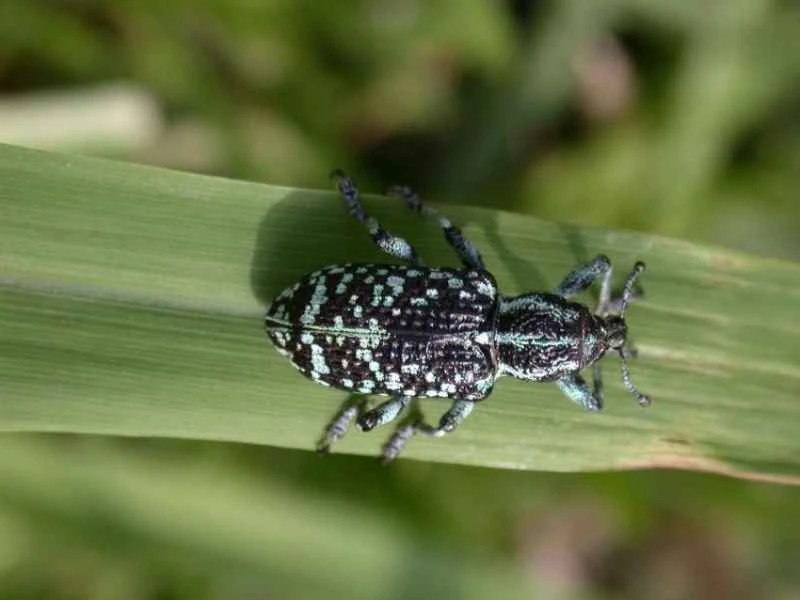
With a black body and bright green or yellowish-green stripes, it has a striking appearance. It is closely related to local leguminous plants such as acacia trees and is a representative native weevil of eastern Australia.
Distribution and Habitat
It is mainly distributed in New South Wales and surrounding areas in eastern Australia, coexisting with native leguminous shrubs and acacia trees in woodlands, thickets and some gardens and green spaces.
Appearance
It has the long proboscis and curved antennae typical of weevils, and its elytra are broad with black background and green stripes, giving it a bright and heavy visual impression. The larvae are grub-like and live in seclusion in the roots or xylem of plants.
Detailed introduction
The Botany Bay Weevil, scientifically known as *Chrysolopus spectabilis* , is a brightly colored native Australian weevil belonging to the superfamily Curculionidae within the order Coleoptera. It is named after Botany Bay, near Sydney, where it was first collected and recorded by European naturalists, and has since become one of Australia's most famous and distinctive beetles.
Classification and nomenclature
Chinese name: Botany Bay weevil (often translated directly from the place name);
English name: Botany Bay Weevil;
Scientific name: Chrysolopus spectabilis ;
Family: Curculionidae → Chrysolopus
As a member of the weevil family, it has a typical "long snout" and curved antennae structure, and is one of the representative species for studying the diversity of native beetles in Australia.
Appearance features
The most striking feature of the Botany Bay weevil is its vibrant body color and patterns:
Size: Adults are about 1.1–2 cm long, which is medium to large size.
Body color: The base color of the whole body is usually black or dark, with bright green or yellow-green stripes and spots distributed on it, forming a high-contrast "black background with green stripes" pattern;
Mouth: It has a forward-protruding, trunk-like mouth, which is an important tool for weevils to collect plant tissues and lay eggs;
Antennae: The antennae are multi-segmented, curved in an "elbow-like" shape, and slightly swollen at the end;
Elytra: The elytra are broad and slightly arched, with neatly arranged patterns that make them very eye-catching;
Larval morphology: The larvae are typical grub-like creatures, thick and legless, and feed mainly on the roots or stems of plants.
Distribution range and habitat
The Botany Bay weevil is endemic to eastern Australia .
The earliest record was made in the Port Botany Bay area near Sydney, New South Wales;
It has also been recorded in some inland and coastal areas of Dong'ao, mainly corresponding to the distribution of specific host plants.
Typical habitats include:
Open woodlands, shrublands, and areas planted with certain native host plants such as acacia;
Native vegetation strips along parts of gardens, farm edges, and roadsides.
Lifestyle Habits and Behaviors
The Botany Bay weevil primarily lives among the leaves and branches of plants.
Most commonly seen during the day or at dusk, they move slowly but steadily, often crawling or lingering on branches and leaves;
When disturbed, it will quickly fall from the leaf to the ground and pretend to be "dead" in order to avoid predators;
Adult insects mainly feed on the leaves and tender branches of host plants, and their overall impact on the plant is usually limited.
Diet and host plants
The Botany Bay weevil is closely related to certain native leguminous plants:
Adults prefer to feed on leaves and tender shoots on local leguminous shrubs such as acacia;
The larvae feed on plant tissues in the roots or inside the xylem, and pupate and emerge as adults after completing their development.
This specific host relationship limits the weevil to areas where native woody leguminous plants are distributed.
Reproduction and life cycle
Like other weevils, the Botany Bay weevil undergoes complete metamorphosis: egg → larva → pupa → adult.
The female insect uses its long proboscis to find a suitable location to lay eggs on the host plant, where it lays the eggs inside the plant tissue or near the root zone.
After hatching, the larvae feed inside hidden plants, developing for several weeks to several months.
Mature larvae pupate in the soil or inside plants, and then emerge as adults.
The specific number of generations depends on the local climate and the host plant conditions, and activity is more frequent during the warm season.
Ecological significance and current state of conservation
The Botany Bay weevil is a native herbivorous insect species that provides food for birds, reptiles, and other predatory arthropods. Due to its distinctive coloration, it is often used as a "representative" symbol of Australia's insect diversity.
Based on current data, this species is still relatively common in its native range and is usually considered as not evaluated (NE) or showing no obvious signs of threat in global or regional red lists.
Its potential threats include:
Local shrublands and host plants such as acacia trees were cleared or replaced with a single exotic tree species;
Urbanization leads to habitat fragmentation;
Excessive use of pesticides in localized areas may harm both adult insects and larvae.
Preserving native shrubs and acacia trees in gardens and nature conservation helps maintain the stability of the Botany Bay weevil and its associated insect communities.
Frequently Asked Questions
Q1: Do the weevils in Botani Bay bite?
Generally not. They mainly feed on plant tissues and do not actively attack people. When handling them for observation, just handle them gently.
Q2: Can this weevil cause serious damage to trees?
In their natural state, adult insects feed on leaves and tender branches to a limited extent, and usually do not have a fatal impact on healthy trees.
The signs of grazing will only be noticeable when there are only a few individual plants or seedlings and the plant is under a lot of stress.
Q3: Why is it called "Botany Bay Weevil"?
It is named "Botani Bay Weevil" because it was first collected, described and named by European naturalists in Botani Bay near Sydney, Australia.
Q4: Is it possible to see this beetle in the city?
If native acacia trees and shrubs are planted around the city or in parks, and are maintained in a way that closely resembles the natural environment, there is a chance of finding this brightly colored weevil among the branches and leaves.


