Basic Information
Scientific classification
- Chinese name: Blue Triangle Butterfly
- Scientific name: Graphium sarpedon
- Classification: Arthropoda
- Family and genus: Papilionidae, Genus: Sword Swallowtail
Vital signs data
- Body length: The forewings of adults are generally about 3–4 cm long and the wingspan is about 5.5–7 cm, which is a medium-sized swallowtail butterfly.
- Weight: Individual weight is relatively light, generally only a few hundred milligrams to about 1 gram, and the weight is almost imperceptible to the human hand.
- Lifespan: The complete life cycle from egg to adult usually ranges from tens of days to several months. Adult individuals can survive for several weeks in the wild, but are greatly affected by climate and natural enemies.
Significant features
With striking blue-green triangular stripes on its wings, it flies fast and has a wide range of activity, making it a common native ornamental swallowtail butterfly in Australia and the Asia-Pacific region.
Distribution and Habitat
It is widely distributed in South Asia, Southeast Asia, East Asia and eastern Australia, and is commonly found in coastal evergreen forests, rainforest edges, mountain forests and gardens and parks with host trees.
Appearance
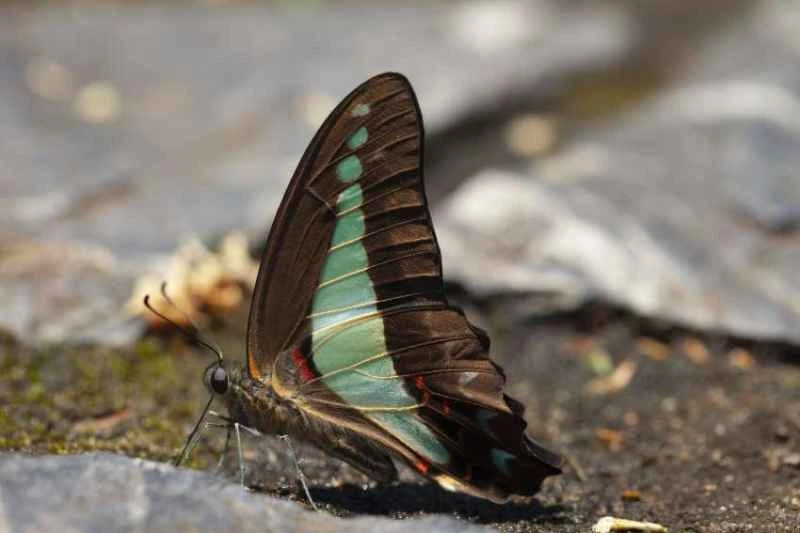
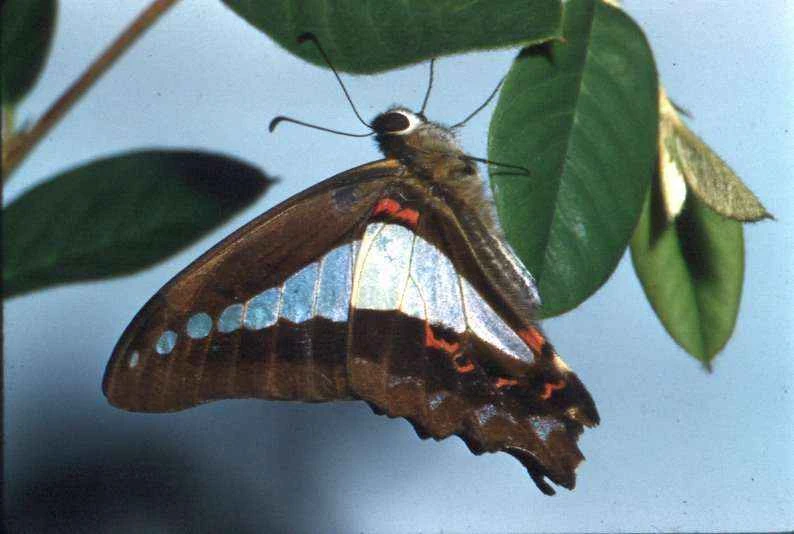
The wings are dark brown or blackish-brown with a wide blue-green band running through the center of the forewings and hindwings, creating a distinct "triangular" visual effect; the body is slender, and the larvae are mostly green camouflage.
Detailed introduction
The Blue Triangle Butterfly, scientifically known as *Graphium sarpedon *, is a brightly colored swallowtail butterfly commonly found in Australia and the Asia-Pacific region. Belonging to the genus *Graphium* in the family Papilionidae, its striking blue-green triangular stripes on its wings make it easily identifiable in forest edges and gardens, and a popular subject for insect enthusiasts and photographers.
Classification and nomenclature
Chinese name: Blue Triangle Butterfly (also known as "Blue Triangle Swallowtail" or other names);
English name: Blue Triangle Butterfly (also known as Common Bluebottle in some regions);
Scientific name: Graphium sarpedon ;
Family: Papilionidae → Genus: Graphium
Appearance features
The Blue Triangle butterfly is a medium-sized swallowtail butterfly with bright, high-contrast colors.
Size: The forewings of adults are generally about 3-4 cm long, and the wingspan can reach about 5.5-7 cm when the wings are spread.
Wing color: The base color of the wing surface is mostly blackish brown or dark brown, with a striking blue-green band extending from the middle of the forewing to the hindwing, forming a blue pattern resembling a "triangle" or a long stripe.
Hindwing morphology: The hindwings are slightly curved, and the tail angles of some individuals are not obvious, making them more rounded compared to the typical long "swallowtail" swallowtail butterfly;
Abdomen and body: The body is slender, with a dark back and often light-colored stripes on the abdomen;
Larval appearance: The larvae are mostly green or have light-colored spots, which are similar in color to the leaves of the host plant, providing good protection and camouflage.
Distribution range and habitat
The Blue Triangle Butterfly has a wide distribution range:
Its natural distribution extends from South Asia and Southeast Asia to East Asia and eastern Australia;
In Australia, it is mainly found in the eastern coastal area and adjacent inland regions.
Typical habitats include:
Coastal evergreen forests, rainforest edges, and mountain forests;
Areas in river valleys, forest edges, rural gardens, and urban parks where host plants are grown;
Adult insects often fly rapidly between the tree canopy and the forest edge, and also stop among flowers to feed on nectar.
Lifestyle Habits and Behaviors
The Blue Triangle Butterfly is a diurnal butterfly with the following behavioral characteristics:
It flies at a relatively high speed, with a light and agile flight posture, and often patrols back and forth along a fixed route;
They prefer to be active in sunny forest edges, roadsides, and above gardens;
Male butterflies sometimes "claim" positions in open areas, streamsides, and other places, chasing after other male butterflies that wander in.
They are particularly active during the hot season, and their feeding and mating behaviors are often seen in the early morning and afternoon.
Diet and host plants
The larvae and adults of the blue triangle butterfly have different food sources:
Larvae: They mainly feed on the tender leaves of plants in the Lauraceae family, Cinnamomum genus and related groups, such as camphor trees and cinnamon. In some areas, they may also use other native or cultivated evergreen tree species.
Adults: They feed on nectar by extending their mouthparts, often visiting flowering plants common in gardens and the wild, and may also feed on water and minerals in damp soil.
Planting suitable host trees and nectar plants can help attract blue triangle butterflies to settle and reproduce in the garden.
Reproduction and life cycle
The Blue Triangle Butterfly undergoes a typical complete metamorphosis: egg → larva → pupa → adult.
Female butterflies typically lay a single egg on or near the leaf of the host plant;
After hatching, the larvae feed on leaves. As they grow, they molt multiple times, and their body color and markings gradually change.
Mature larvae will pupate on or near branches and leaves in a hidden place. The pupae often have colors similar to the environment for camouflage.
Depending on the climate conditions, multiple generations can occur in a year, with more significant generational overlap in warm and humid regions.
Current Status of Ecology and Conservation
The blue triangle butterfly is a common or relatively common species in many regions. Adults flutter among flowers, playing a role in pollination and maintaining insect diversity. In global lists such as the IUCN, it is usually classified as Least Concern (LC) or Not Evaluated .
Potential threats mainly include:
Large-scale deforestation and land development have led to forest fragmentation and a reduction in host plants;
The use of pesticides in urban and agricultural environments causes indirect damage to larvae and adults.
Gardens and parks often feature monotonous tree species and lack host plants and a rich variety of flowers.
Preserving and planting host trees such as those in the Lauraceae family, increasing the diversity of native flowers, and reducing unnecessary pesticide use can help protect the Blue Triangle Butterfly and other native butterfly populations.
Frequently Asked Questions
Q1: Are blue triangle butterflies dangerous to humans?
No. Blue triangle butterflies do not bite or sting and pose no direct threat to human health. They are a native butterfly with high ornamental value.
Q2: Can you see blue triangle butterflies in city gardens?
Blue triangle butterflies can be seen visiting city parks and family gardens, provided there are host trees (such as some Lauraceae plants) and abundant nectar sources nearby.
Q3: How can I attract blue triangle butterflies in my own yard?
Planting a suitable number of trees, such as those from the Lauraceae family, as larval hosts, along with a variety of flowering plants to provide nectar, reduces the use of pesticides and makes it easier to observe adult butterfly activity in the yard.
Q4: Will the blue triangle butterfly harm crops?
Normally not. The larvae mainly feed on the leaves of specific host trees, having a limited impact on general crops. In natural and garden environments, they primarily demonstrate their aesthetic and ecological value.