Basic Information
Scientific classification
- Chinese name: Comb-footed platform spider
- Scientific name: Theridiidae (representatives: Parasteatoda, Steatoda, etc.)
- Classification: Arthropoda
- Family: Theridiidae Parasteatoda
Vital signs data
- Body length: 3–10 mm (females are usually larger)
- Weight: Small spider; varies from individual to individual.
- Lifespan: Approximately 1–2 years (environment-dependent)
Significant features
Platform tangled silk + vertical sticky foot silk (gumfoot); the fourth foot "comb" throws and entangles sticky silk; night patrol and ambush.
Distribution and Habitat
Widely distributed globally; commonly found in sheltered places such as eaves, window frames, fences, and bushes.
Appearance
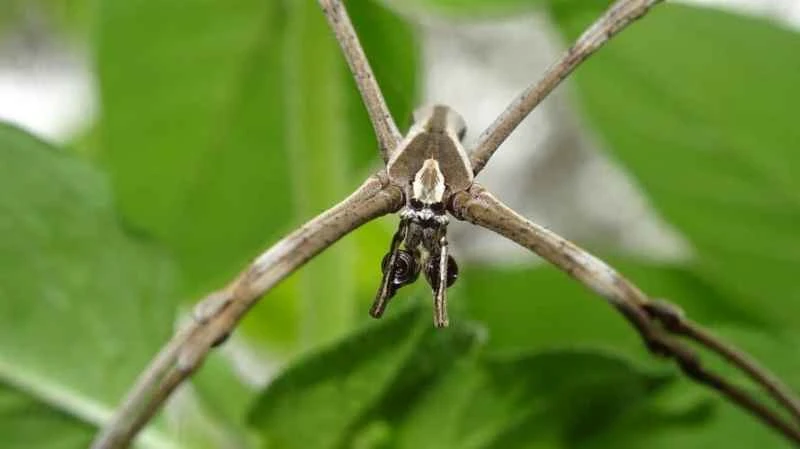
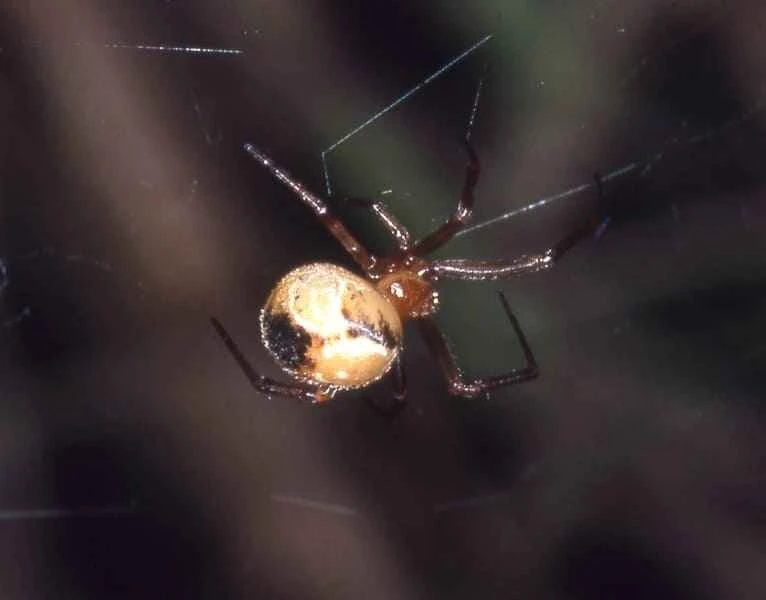
The abdomen is oval/spherical; the color varies, commonly brown/gray/black; some have a metallic/glassy luster.
Detailed introduction
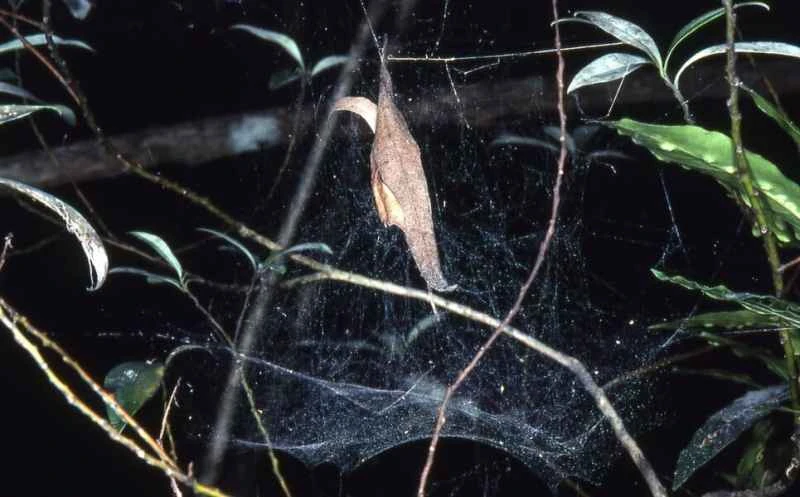
Comb-footed platform spiders are a general term for some members of the family Theridiidae . Their defining characteristic is the construction of a platform-like, three-dimensional, tangled web of silk in corners or among foliage, complemented by gumfooted lines that dangle from the platform to the ground. When an insect touches these lines, it becomes stuck and is pulled to the platform . The spider then uses the "combs" (serrated bristles on the fourth tarsal segment of its hind legs) to entangle the prey in the sticky silk, thus subduing it. Common representative groups include Parasteatoda and Steatoda .
Ecology and Biology
Feeding strategy: The trap of platform tangled silk + vertical sticky byssal silk - a bouncing mechanism , effectively intercepts insects crawling on the ground or walls.
Daily routine: Mostly active at dusk and at night , hiding in the funnels/cave above the platform during the day.
Reproduction: The female spider lays an egg sac inside the web and guards the eggs for a short period of time; the young spiders often stay near the mother web in the early stages.
Morphology and Recognition
Body length: Commonly 3–10 mm (females are slightly larger than males).
Characteristics: The fourth tarsus has comb-like serrated bristles used for throwing and entangled silk; the abdomen is mostly oval/spherical .
Body color: brown, gray, black and milky white, etc.; some have metallic/glassy luster or reticulated markings.
Distribution and Habitat
Comb-footed spiders are widely distributed globally ; platform-type webs are commonly found in locations with less wind and rain and frequent prey passage, such as eaves, window frames, sheds, fences, and branches/shrubs .
Humanity and Safety
Medical Importance: This section provides a general overview of the group . Most platform-type comb-footed spiders have low medical importance to humans (excluding a few genera with high medical importance).
Recommendations: Reduce exposure to strong light at night to attract insects; regularly clean old webs; if individual insects need to be relocated, gently release them using the cup and card method.
IUCN: Multiple species not independently evaluated; this overview marks them as not evaluated (NE) .
Frequently Asked Questions
Q1: Why is it called "comb foot"? Because the fourth tarsal segment of the foot has comb-like bristles , which are used to throw and entangle sticky silk to subdue prey.
Q2: Will the platform be sticky? The main body of the platform is mostly irregular and messy threads , and the sticky threads at the bottom are sticky and will pull when touched.
Q3: Do you have any suggestions for cleaning during the day? First, use a long-handled duster to clean the platform, then roll up the hanging wire; reducing nighttime light exposure can lower the frequency of re-building the net.
Q4: Does this apply to all comb-footed spiders? No. This section focuses on representative groups that build platforms and use sticky webs (such as Parasteatoda ).