Basic Information
Scientific classification
- Chinese name: Carrai (cave spider)
- Scientific name: Progradungula carraiensis
- Classification: Arthropoda
- Family: Gradungulidae Progradungula
Vital signs data
- Body length: female 8–13 mm; male slightly smaller (excluding leg span)
- Weight: Small to medium-sized spider; varies from individual to individual.
- Lifespan: Estimated 1–2.5 years
Significant features
They live in caves; they build narrow "ladder nets" on the cave walls; they ambush people at dusk and night; they are highly dependent on the humidity of their microenvironment.
Distribution and Habitat
Carrai Plateau, New South Wales, Australia: limestone caves and vestibule area; constant humidity, weak wind, and dim lighting.
Appearance
It has a light-colored, semi-transparent body; exceptionally long legs and a slender body; and relatively strong chelicerae.
Detailed introduction
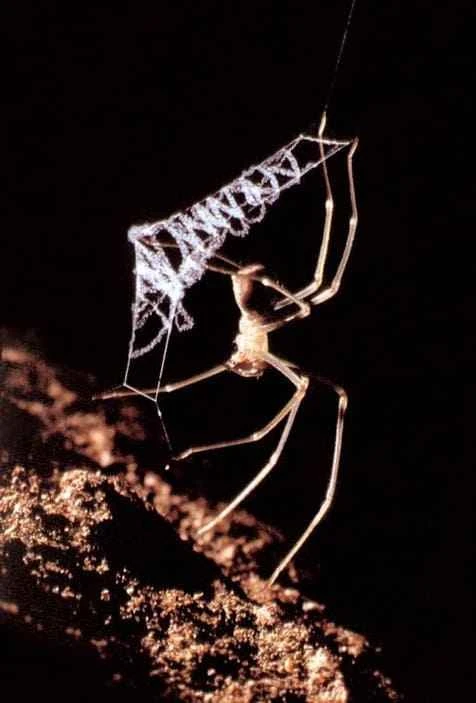
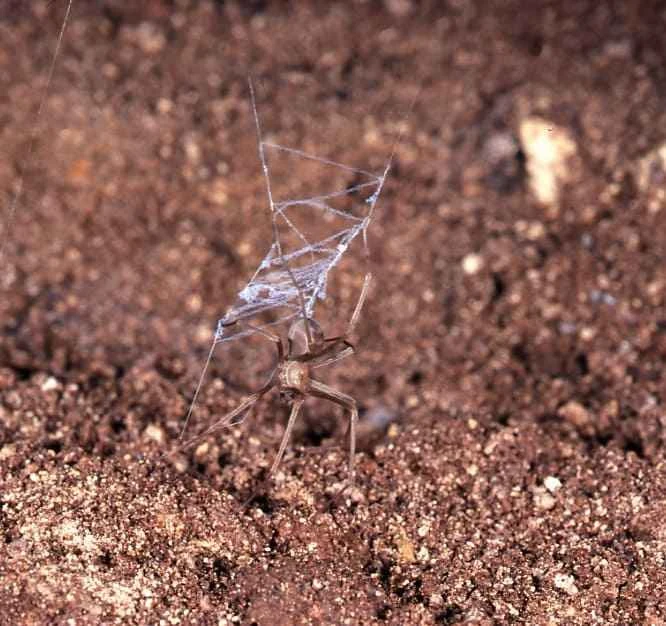
The Carrai Cave Spider ( Progradungula carraiensis ) belongs to the family Gradungulidae and is a cave-dwelling group endemic to the limestone cave system of the Carrai Plateau in New South Wales, Australia. It is known for constructing a "trapezoidal/grid-like" hunting silk structure at the cave entrance-forecourt area, where it ambush and intercepts small arthropods in the dark, damp environment.
Ecology and Biology
Activity rhythm: Mostly active from dusk to night ; during the day, mostly hidden in rock crevices and silk pipes.
Foraging strategy: Narrow "ladder nets" are laid on the cave walls/between travertine drips to ambush insects and other small invertebrates at close range, using sticky silk to subdue them.
Reproduction: The female spider lays an egg sac in a secluded place and guards the eggs for a short period of time; the young spiders first live near the mother's nest, and then disperse.
Morphology and Recognition
Body length: females are typically 8–13 mm , males are slightly smaller (both excluding leg span).
Body shape: Slender body with exceptionally long legs, which facilitates crawling on vertical surfaces and ceilings; strong chelicerae.
Body color: Cave dwellers tend to have lighter pigments and a semi-transparent appearance; individual and environmental humidity affect color tone.
Distribution and Habitat
Limited to limestone caves and their vestibule areas in the Carrai Plateau region of New South Wales, Australia , they prefer a microenvironment characterized by constant humidity, weak winds, and darkness .
Conservation and Human Interaction
Threat factors: trampling and microenvironmental changes caused by cave tourism/caving, vegetation changes in the entrance area, and decreased humidity due to prolonged drought.
Conservation recommendations: Limit unauthorized cave exploration; maintain vegetation and humidity barriers at cave entrances; when entering caves, always follow existing paths and avoid touching netting and biofilm on the rock surfaces.
IUCN: Currently lacking independent evaluation, this site marks it as unevaluated (NE) .
Frequently Asked Questions
Q1: Does it weave a "circle net"? Not the common circle net, but a narrow trapezoidal/grid-like ribbon stretched along the cave walls for an ambush.
Q2: Is it dangerous to humans? It has very little medical importance to humans and is usually shy; please do not disturb or capture individuals in the cave.
Q3: Where is it easiest to observe? Mostly found on the damp facades and rock crevices of cave entrances and vestibules ; observation must comply with protection regulations.
Q4: How is it different from the Tasmanian cave spider? Hickmania troglodytes is a closely related cave spider endemic to Tasmania; the Carrai cave spider differs in distribution, web pattern, and morphological details.