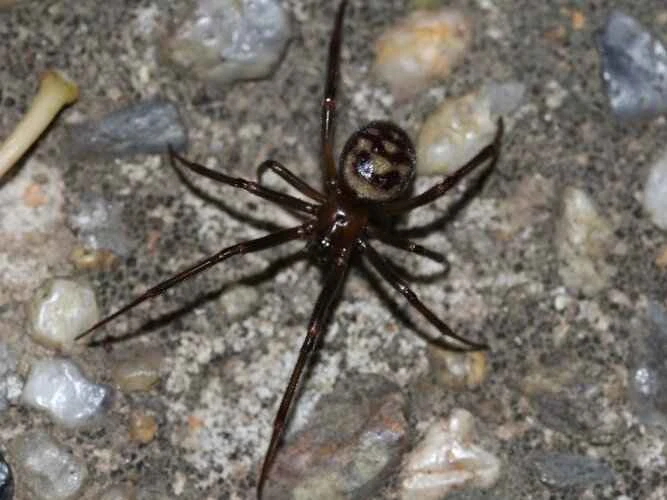
Basic Information
Scientific classification
- Chinese name: Cabinet Spider
- Scientific name: Steatoda grossa (and related species Steatoda spp.)
- Classification: Arthropoda
- Family: Theridiidae Steatoda Steatoda grossa
Vital signs data
- Body length: female 6–10 mm; male 4–6 mm (excluding leg span)
- Weight: Small spider; varies from individual.
- Lifespan: Approximately 1–3 years (female spiders typically live longer).
Significant features
Tangled webs in indoor and outdoor corners; oval abdomen; nocturnal and ambush; preying on insects and other spiders.
Distribution and Habitat
It is found on many continents; it is commonly found in quiet corners such as indoor cabinets, warehouses, garages, and under eaves.
Appearance
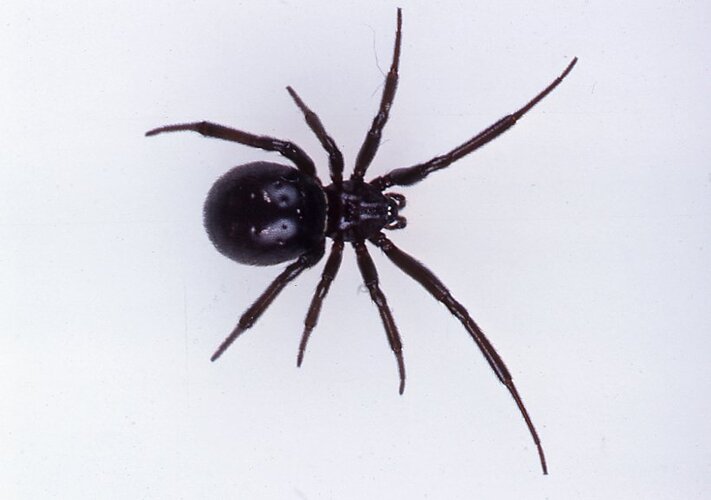
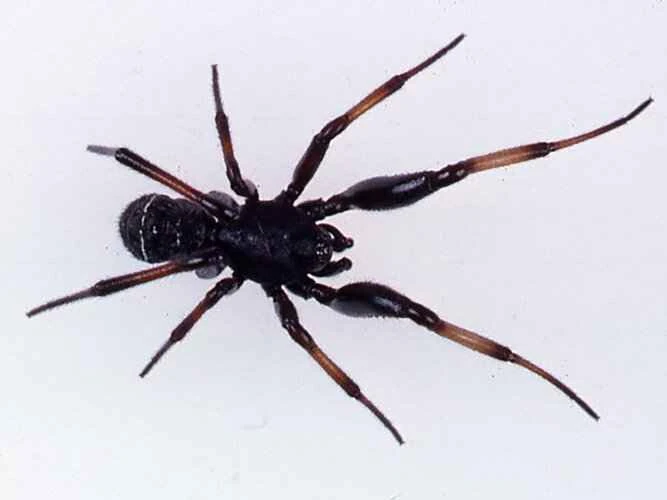
Dark brown to purplish-brown/blackish-brown; abdomen oval, with light-colored spots or patterns; fourth leg with comb-like bristles.
Detailed introduction
Cupboard spiders typically refer to some members of the family Theridiidae that live in indoor corners, cupboards, garages , and other similar environments, with Steatoda grossa (often referred to as one of the "false widow spiders") being the most typical example. They weave three-dimensional tangled webs and small refuges , lying in wait in semi-concealed environments to prey on small arthropods.
Ecology and Biology
Their activity patterns are mostly nocturnal , spending the day curled up in a corner of their web or in a small "tent"-shaped silk nest .
Feeding: Primarily insects and other spiders, but sometimes also preys on slightly larger arthropods, using sticky silk and entanglement to quickly subdue prey.
Reproduction: The female spider hangs egg sacs inside the web, and multiple spherical or oval egg sacs can be seen hanging in the tangled silk; after hatching, the spiderlings first move around near the mother web and then gradually disperse.
Morphology and Recognition
Body length: females are typically 6–10 mm , males 4–6 mm (excluding leg span).
Body color: Overall dark brown to purplish-brown/blackish-brown , with light-colored spots or irregular patterns on the abdomen, and some individuals have a lighter color on the ventral side.
Body shape: The abdomen is oval to slightly spherical , and the legs are relatively slender; the fourth foot has comb-like bristles , which are used to throw and entangle sticky silk.
Distribution and Habitat
Steatoda grossa is believed to originate from Eurasia , but it has now appeared in many places including Europe, North America, Australia, and New Zealand . It is used to set up messy nets in quiet, undisturbed corners such as indoor cabinets, warehouses, garages, basements, outdoor eaves, and fences .
Humanity and Safety
Medical importance: Low to moderate overall medical importance to humans. Individual cases of bites have been reported to present with local pain and swelling , and a few may be accompanied by mild systemic symptoms; generally significantly less than that of the true widow spider (Latrodectus) .
Recommendations: Keep the environment clean and remove old netting regularly; if you need to remove an individual, you can gently move it out using a cup and a piece of paper . If you suspect a bite, it is recommended to clean the wound and pay attention to changes in symptoms, and seek medical attention if necessary.
IUCN: Steatoda grossa and several others that have not yet been evaluated (NE) .
Frequently Asked Questions
Q1: Is the cabinet spider a "widow spider"? No. Cabinet spiders mostly belong to the genus Steatoda , commonly known as "false widow spiders," and differ from the true Latrodectus widow spider in both markings and venom.
Q2: What happens if I get bitten? Most bites only cause local pain, redness, swelling , and mild discomfort; if you experience persistent severe pain, systemic symptoms, or an allergic reaction, you should seek medical attention immediately.
Q3: How to reduce spiders and insects in your home? Organizing cabinets and corners, reducing clutter, using screens, and sealing cracks can significantly reduce hiding places for spiders and insects.
Q4: Are cabinet spiders beneficial to the home? To some extent, they help control the number of arthropods indoors by preying on mosquitoes and other small pests .