Basic Information
Scientific classification
- Chinese name: Australian Marleyan moth
- Scientific name: Lepidoptera: various species associated with Australian mallee habitats
- Classification: Arthropoda
- Family and genus: Noctuidae, Proteuxoa
Vital signs data
- Body length: The body length of adult insects varies greatly among different species, with most having a wingspan of about 2–5 cm, and being small to medium in size.
- Weight: Individual weight is extremely light, usually only a few hundred milligrams or less, and can hardly be felt by the hand.
- Lifespan: The larval and pupa stages can last from several weeks to several months, while the adult lifespan is mostly from several days to several weeks, and is greatly affected by species and environmental conditions.
Significant features
Diverse moth populations adapted to arid and semi-arid Mali shrubland environments are mostly nocturnal, possessing camouflage, phototaxis, and a life history closely associated with eucalyptus trees and shrubs.
Distribution and Habitat
It is mainly distributed in the Marley shrubland area of southern and southeastern Australia, and is commonly found in eucalyptus thickets, sandy areas, farmland edges and roadside vegetation. The larvae live attached to eucalyptus trees and other native plants.
Appearance
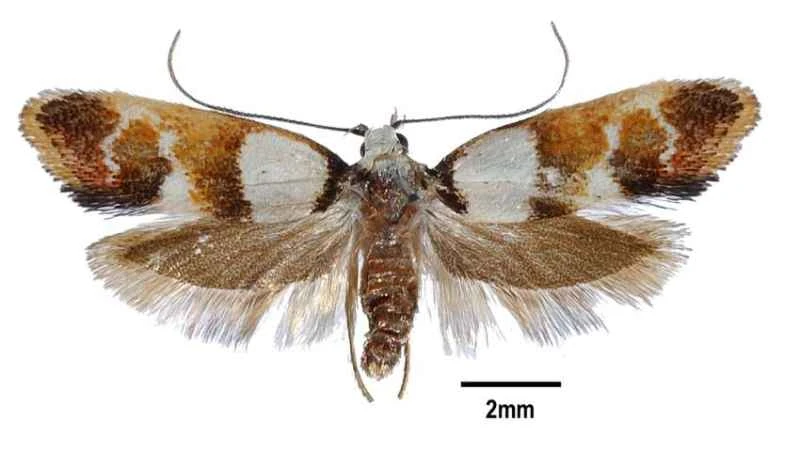
They range in size from small to medium, and their body color is mostly grayish-brown, yellowish-brown, or olive-brown. Their wings have stripes or spots, which helps them to camouflage themselves among tree bark and fallen leaves. The larvae have diverse appearances, some resembling small twigs, while others exhibit obvious protective coloration.
Detailed introduction
Australian mallee moths are not a single species, but rather a large group of moths that primarily inhabit the mallee shrubland ecosystem in Australia. They mostly belong to multiple families within the order Lepidoptera, such as Noctuidae and Geometridae. Many species are specifically adapted to the eucalyptus shrubland environment of arid and semi-arid regions, are nocturnal, and are very important pollinators and herbivorous insects in the mallee ecosystem.
Overview of Mali shrubs and moths
"Malee" is a unique ecological landscape in Australia, generally referring to shrub-like vegetation dominated by low-growing eucalyptus trees with multiple trunks. In these arid, hot-summered, and infertile soil regions, moths have successfully adapted to their environment through diverse life histories and behavioral strategies, forming rich species communities.
Classification status and representative groups
General Chinese name: Australian Marleyan moths;
General English name: Australian mallee moths;
Taxonomic status: A composite group of multiple families and genera within the order Lepidoptera;
Representative families: Noctuidae, Geometridae, Erebidae, etc.
Example genus: Proteuxoa and other noctuid moths common in the Mali region.
In actual surveys or popular science content, "mallee moths" is often used to refer to various native moths that inhabit, reproduce, and feed in Mallee bushes.
Appearance and Identification Features
The size and patterns of moths in the Mali ecosystem vary greatly, but they share some common characteristics:
Size range: Adult wingspan ranges from less than 2 cm to 4–5 cm, with most being small to medium-sized moths;
Body color: Many species are mainly in low-key colors such as grayish brown, yellowish brown, and olive brown, which makes it easy to camouflage on bark, dead branches and fallen leaves;
Wing shape and pattern: The forewings are mostly triangular or narrow and often have fine stripes, wavy lines or spots; some geometrid moths have wavy wing edges;
Antennae: Male moths often have longer antennae, some of which have feathery branches, which is helpful for detecting sex pheromones released by female moths;
Larval morphology: The larvae (caterpillars) are elongated in shape. Some species have camouflage and look like small twigs or dead leaves. Other species have short hairs or spots.
Distribution range and habitat
The Mary moths of Australia are mainly distributed in South Australia, Victoria, southern Western Australia, and parts of the Mary bushland in New South Wales .
The typical environment is shrubland and open woodland dominated by low-growing eucalyptus trees (mallee eucalypts);
Commonly found in sandy or red sandy loam soil areas, with arid to semi-arid climates;
Some species also extend into adjacent farmland, roadside vegetation, and sand dune areas.
Adults often fly around eucalyptus trees, ponds, streetlights, and camp lights at night, while larvae mostly live in eucalyptus leaves, shrubs, herbs, or dead matter on the ground.
Lifestyle Habits and Behaviors
Mali moths are primarily nocturnal, and many species exhibit the following lifestyle habits:
Activity time: Most active from dusk to night, especially common in the warm and dry summer and autumn seasons;
Phototaxis: Attracted by camp lights, streetlights, and outdoor lights, this is a common method for observing the diversity of Mali moths;
Seasonality: Some species only appear in large quantities during specific seasons, which is related to the rhythm of eucalyptus sprouting new leaves, flowering, and rainfall;
Resting method: During the day, they usually rest on tree trunks, dead branches, or rock surfaces, using camouflage patterns to reduce the risk of being preyed upon.
Diet and ecological role
Moths play multiple roles in the Mali ecosystem, including herbivores, pollinators, and prey .
Larvae: They mainly feed on eucalyptus leaves, shrub leaves, herbaceous plants, and dead branches and leaves on the ground. Some species are specific to certain eucalyptus trees or shrubs.
Adults: Some adults feed on nectar or sap and provide pollination services for Eucalyptus mali and other flowering plants at night;
Food chain position: Large numbers of moth larvae and adults are an important food source for bats, nocturnal birds, small reptiles and spiders.
Reproduction and life cycle
Like most moths, the Mali moth undergoes complete metamorphosis: egg → larva → pupa → adult.
Female moths lay their eggs on host plants, and the eggs are mostly attached to the leaves, tender branches, or bark crevices.
After hatching, the larvae feed on leaves or other plant tissues, molting multiple times during the process.
Mature larvae can pupate in cocoons in the soil, bark cracks, or rolled leaves;
Adults typically live for several days to several weeks after emerging from their molt, primarily for mating and laying eggs.
Relationship with humans
Most malathi moths only live in wild malathi thickets and have little impact on agriculture and the urban environment;
When the number of larvae of certain species is extremely high, they may cause some damage to eucalyptus seedlings or vegetation on the edge of farmland.
For nature observers and ecotourists, the Mali moths represent an important window into Mali’s nocturnal biodiversity.
Protecting the status quo and threats
Currently, most Australian Marie moths have not been individually evaluated on the IUCN Red List and are mostly classified as Not Evaluated (NE) or still relatively common in the region.
Potential threats include:
The clearing or conversion of Mali scrubland into farmland and pasture has led to habitat fragmentation.
Frequent and intense fires alter vegetation structure, affecting host plants and larval habitats;
Pesticide use and light pollution alter the structure of nocturnal insect communities.
Preserving the Mali bush, managing fire and pesticide use appropriately, and reducing unnecessary nighttime light pollution can help maintain the diversity of moths and other invertebrates in the Mali region.
Frequently Asked Questions
Q1: Is the Mali moth a single species?
No. "Australian mallee moths" usually refers to a large group of native moths living in the mallee bush ecosystem.
It includes multiple families and genera, and is not a specific species.
Q2: Why do you see so many moths flying towards lights when camping at night in the Mali area?
Many moths exhibit strong phototaxis; on nights without moonlight or with weak natural light, camping lights and vehicle headlights become the primary light sources.
As a result, a large number of moths will gather near the light.
Q3: Are moths harmful to humans?
Most moths do not bite and pose little direct harm to humans. However, a few species may cause damage to leaves or crops when their larvae are numerous.
However, in natural Mali bushes, its ecological role is more prominent.
Q4: Why does protecting Mali bushes help protect moths?
Both moth larvae and adults are highly dependent on host plants and their microenvironment.
When malley shrubs are cleared or oversimplified, the host plants and habitat microenvironment disappear, and the moth community also declines significantly.