Basic Information
Scientific classification
- Chinese name: Australian Royal Dragonfly
- Scientific name: Hemianax papuensis
- Classification: Arthropoda
- Family and genus: Heemianax (family Hymenoptera)
Vital signs data
- Body length: Adults are typically 6–8 cm long with a wingspan of 9–11 cm, making them one of the larger dragonfly species.
- Weight: Each individual weighs less than a few grams, which is relatively large among dragonflies, but still very light to the touch.
- Lifespan: The nymph stage can live in water for several months or more. The entire life cycle from egg to adult usually spans about a year, with the specific duration depending on water temperature and food.
Significant features
Large, fast-flying dragonflies, skilled at aerial hunting, often patrol the skies above lakes, reservoirs, and city parks, feeding on flying insects such as mosquitoes.
Distribution and Habitat
Widely distributed in Australia and surrounding areas, it inhabits open areas around lakes, reservoirs, wetlands, slow-flowing river sections and urban water features, and is a common large dragonfly near water bodies.
Appearance
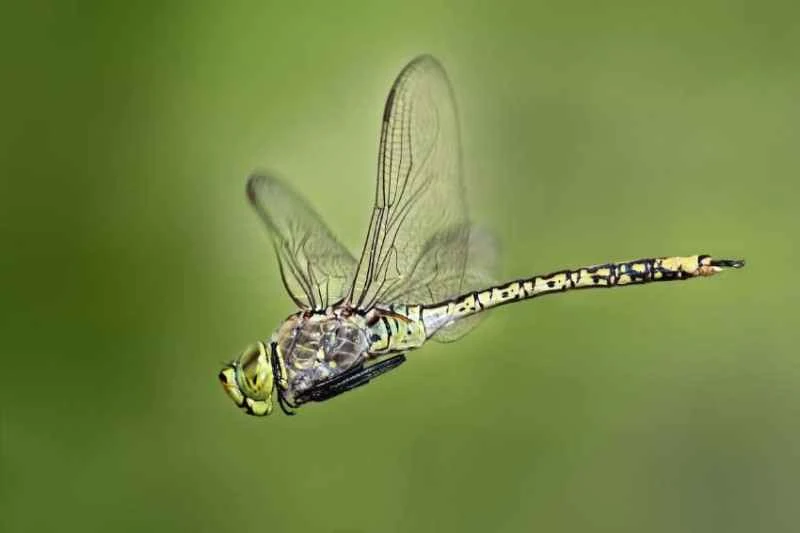
It has a slender body, large compound eyes that are close together, a strong thorax, and body colors that are mostly green, blue-green, or brown. Its abdomen has blue or yellow-green rings, and its four wings are transparent and powerful.
Detailed introduction
The Australian Emperor dragonfly ( Hemianax papuensis , sometimes also spelled Anax papuensis ) is a large, fast-flying dragonfly belonging to the family Aeshnidae in the order Odonata. It is one of Australia's most iconic "large dragonflies," widely found over lakes, reservoirs, wetlands, and urban parks.
Classification and nomenclature
Chinese reference name: Australian Royal Dragonfly (general translation);
English name: Australian Emperor;
Scientific name: Hemianax papuensis (some literature refers to it as Anax papuensis );
Family: Aeshnidae → Genus: Hemianax
Appearance and Identification Features
The Australian Emperor Dragonfly, with its slender body and broad wings, is a large dragonfly that is easily identifiable in the wild.
Size: Adults are typically 6–8 cm long with a wingspan of 9–11 cm, making them one of the larger dragonfly species in Australia;
Head: Possesses large, prominent compound eyes that are nearly touching each other, providing an extremely wide field of vision;
Chest: The chest is strong and muscular, providing power for sustained high-speed flight;
Body color: The body color is mostly green, blue-green or brown, and the abdomen often has blue or yellow-green rings and patches;
Wings: Four transparent and powerful wings with clear veins that shimmer slightly in the sunlight;
Sexual dimorphism: There are slight differences in the details of body color between males and females, with males usually having brighter colors and more obvious contrast.
Distribution range and habitat
The Australian royal dragonfly is mainly distributed in Australia and surrounding areas .
Widely found in various climate zones across the Australian continent, from tropical to temperate;
It has also been recorded to be distributed in New Guinea and some offshore islands.
Typical habitats include:
Lakes, reservoirs, artificial ponds, as well as marshes and wetlands;
Slow-flowing sections of rivers, irrigation canals for farmland, and water features in urban parks;
Adult insects often hover above water bodies, and may also fly a certain distance over open grasslands or farmlands to hunt insects.
Lifestyle Habits and Behaviors
The Australian royal dragonfly is a typical robust flyer and aerial predator :
They are most active during the day, especially when there is plenty of sunshine and the temperature is high;
It flies over water and grassland by hovering, making rapid advances, and patrolling back and forth.
They exhibit strong territoriality, with some males spending long periods of time patrolling over suitable waters to drive away other males;
When the weather turns cool or windy, the flight altitude and range of operations will be adjusted accordingly.
feeding habits
As a highly efficient predator in the order Odonata, the Australian Emperor Dragonfly primarily feeds on flying insects:
Small flying insects such as mosquitoes, small flies, and aphids;
Small, gregarious insects such as moths, midges, and chironomids;
Sometimes they also prey on other smaller aquatic insects such as dragonflies or mayflies.
It has significant ecological value in controlling the number of flying insects around water bodies.
Reproduction and larval stage
The reproductive life of the Australian royal dragonfly is closely related to water bodies:
The male and female mate in the air near the water, and the female then lays her eggs in the water or on aquatic plants.
After hatching, the eggs develop into aquatic nymphs (dragonfly larvae), which spend most of their lives in water.
The nymphs feed on aquatic invertebrates, insect larvae, and small aquatic animals, and are high-altitude predators.
After molting multiple times, the mature nymphs crawl out of the water to emerge as adults, leaving behind their shed exoskeletons that attach to plants or rocks near the water.
Protecting the status quo and threats
Currently, the Australian Emperor Dragonfly remains very common in its wide distribution area and is generally considered a species of Least Concern or Not Evaluated in assessments such as those by the IUCN.
Potential threats mainly include:
Water pollution and pesticide and fertilizer runoff reduce water quality and affect the survival of nymphs;
Wetlands are being filled in or hardened, reducing suitable breeding waters;
Climate change is causing droughts to become more frequent and water levels to fluctuate more.
Maintaining clean water bodies and protecting wetland and riparian vegetation contributes to the long-term health of various dragonfly and aquatic insect populations, including the Australian emperor dragonfly.
Frequently Asked Questions
Q1: Are Australian dragonflies dangerous to humans?
No. Dragonflies do not bite or sting. The Australian emperor dragonfly mainly feeds on small flying insects and is basically harmless to human daily activities.
Q2: Can you see Australian dragonflies in the city?
Yes. As long as there is a pond, water feature, wetland, or reservoir, and there is some vegetation around it, there is a chance to see them patrolling and hunting over the water.
Q3: How can I distinguish between a "royal dragonfly" and a regular small dragonfly?
The royal dragonfly is larger and flies faster. Its compound eyes are close together and cover most of its head, giving it the overall impression of a "strong, large dragonfly".
Q4: Why are they more likely to be seen in the summer?
Summer temperatures are high and insect populations are abundant, which is ideal for dragonflies to be active and hunt. As a result, the Australian emperor dragonfly is particularly active in the warm season and is commonly seen near water, in grasslands, and over farmland.