Basic Information
Scientific classification
- Chinese name: Australian carpet beetle
- Scientific name: Dermestidae
- Classification: Arthropoda
- Family and genus: Dermestidaceae, Genus Anthrenocerus
Vital signs data
- Body length: Adults are generally about 2–5 mm long, belonging to the category of extremely small beetles; larvae are slightly longer than adults but are still very small.
- Weight: Individual weight is extremely light, only in the milligram range or even less, and the difference in weight is difficult to discern with the human eye.
- Lifespan: Depending on temperature and food conditions, the entire life cycle can range from several months to more than a year, with the larval stage typically lasting longer.
Significant features
The larvae feed exclusively on keratin-containing animal materials such as wool, feathers, and leather, easily causing damage to fabrics and specimens in homes and museums, making them typical indoor pests.
Distribution and Habitat
Widely distributed in human settlements throughout Australia, they prefer dry, secluded indoor environments rich in wool, leather, and dried animal products, such as carpets, wardrobes, specimen rooms, and warehouses.
Appearance
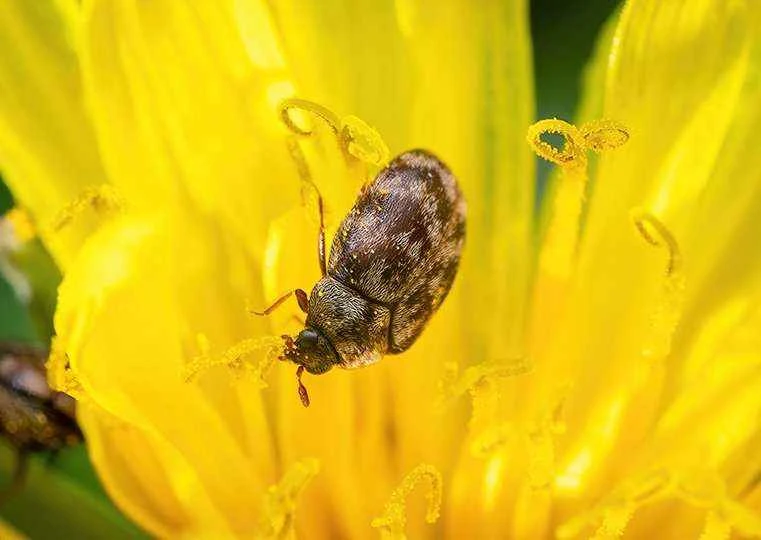
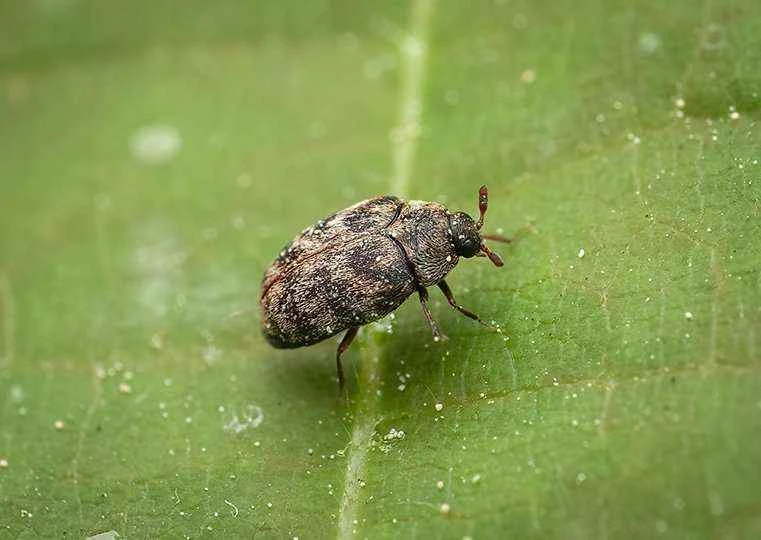
The adult insect is small and oval in shape, with a raised back, and its body color is mostly brownish-black or patterned; the larvae are oblong in shape, with fine hairs or long hair tufts covering their body surface, and they look like small caterpillars.
Detailed introduction
Australian carpet beetles generally refer to a group of carpet beetles commonly found in Australian homes and storage environments. They belong to the family Dermestidae, with representative species including Anthrenocerus australis . Their larvae feed on wool, blankets, carpets, leather, specimens, and dried animal products, making them a typical indoor pest.
Taxonomic status and representative species
Chinese reference name: Australian carpet beetle;
Common English name: Australian Carpet Beetles;
Representative scientific names: Anthrenocerus australis and other carpet beetles;
Family: Dermestidae → Represented by Anthrenocerus , etc.
In practical life and prevention, various small dermestid beetles that damage fabrics and specimens indoors are generally referred to as "carpet beetles".
Appearance and Identification Features
The Australian carpet beetle is very small, but the adults and larvae differ significantly in appearance:
Size: Adults are typically about 2–5 mm long, making them extremely small beetles;
Adult appearance: The body is oval or nearly round, with a slightly arched back, and looks like a small "bean" when viewed from the side;
Body color and patterns: Different species have body colors ranging from brown and dark brown to those with yellowish-white spots and patterns, and some look like "ladybugs".
Antennae: The antennae are relatively short, and the terminal segments are often slightly enlarged;
Larval morphology: The larvae are oblong, covered with long or short hairs, and often have a tuft of long hairs at the end, making them look like a small clump of "caterpillars".
Activity characteristics: Adults are often active near windows, under lights, or on carpet surfaces, while larvae mostly hide on the back of carpets, in the gaps of baseboards, and in piles of clothing and leather.
Distribution range and habitat
Carpet beetles were originally mostly scavenging insects in the wild, but they have widely adapted to human environments in Australia and around the world.
Geographical distribution: Widely found in most populated areas of Australia, recorded in urban and rural homes and warehouses;
Indoor habitats: carpets, wool mats, curtains, furniture crevices, wardrobes, storage rooms, specimen rooms, museums, and granaries, etc.;
Outdoor environment: It can also be found near bird nests, animal carcasses, dried fish and meat, and dried animal remains, acting as a "cleaner" in the natural environment.
Lifestyle
The Australian carpet beetle exhibits a typical complete metamorphosis: egg → larva → pupa → adult.
Diurnal activity: Adults are mostly active during the day or at dusk, and are sometimes attracted by indoor light sources;
Larval concealment: Larvae are afraid of light and prefer to feed in dark, dry places with a lot of fiber or dried animal products.
Temperature and humidity: They reproduce faster in warm, dry indoor environments;
Harmful characteristics: The larvae feed on wool, feathers, blankets, leather, animal specimens, etc., leaving irregular small holes and hairless spots. They are common pests in homes and museums.
Dietary properties and hazards
Carpet beetle larvae exhibit a typical "feeding preference for keratin and dried animal tissue":
Wool, silk, blankets, blended carpets and other natural fiber products;
Down feathers, furs, leather products, as well as writing brushes, animal specimens, etc.;
Dried meat, dried fish, dried bones, dried insect specimens, bird nests, and animal remains in nature;
When animal-based materials are scarce, they may also gnaw on plant fibers such as cotton and flax, but their ability is weaker.
The resulting damage includes small holes, hair loss spots, and powdering in carpets and clothing, and specimens being hollowed out by insects, causing damage to household property and museum collections.
Reproduction and life cycle
In suitable indoor environments, carpet beetles can reproduce year-round.
The female insect lays her eggs in secluded places; the eggs are so small that they are difficult to detect.
After hatching, the larvae burrow into piles of fiber or dried animal products to feed, and undergo multiple molts.
Mature larvae pupate in crevices or inside objects, eventually emerging as adults.
The length of their entire life cycle is affected by temperature, humidity, and food availability, and can range from several months to more than a year.
Prevention and Management
Although carpet beetles play a "cleaner" role in the natural ecosystem, they are considered pests requiring strict management indoors.
Regularly clean carpets, baseboard crevices, the bottom of furniture, and wardrobes to reduce dust and hair buildup;
Wool products, furs, and specimens stored for extended periods should be sealed and inspected regularly.
Reduce larvae and eggs through physical methods such as vacuuming, sun exposure, and low-temperature freezing;
If necessary, use appropriate amounts of insecticides under professional guidance or seek treatment from a professional pest control agency.
Preserve the status quo
From a conservation perspective, most carpet beetle species are not listed as threatened species, and are mostly classified as Not Evaluated (NE) or Least Concern on the IUCN Red List. In indoor management, they are primarily treated as economic and sanitary pests rather than objects requiring protection.
Frequently Asked Questions
Q1: Can carpet beetles bite people or spread diseases?
Carpet beetles generally do not bite people actively and are not a major vector for human diseases.
However, some people are sensitive to the hairs and debris shed by the larvae, which may cause mild skin itching or allergic reactions.
Q2: How can I tell if there are carpet beetles in my home?
You can observe whether there are irregular small holes and hair loss spots on wool carpets, clothing, furs, and specimens.
You can also find small adult oval beetles on windowsills or under lights, or small hairy larvae in corners.
Q3: Are carpet beetles only found in old houses?
Not necessarily. Given a suitable food source (wool, feathers, leather, etc.) and a secluded environment, it can also appear in new or well-furnished houses.
Regular cleaning and proper storage of textile products are more important than the age of the building.
Q4: Will carpets made entirely of synthetic fibers be free of carpet beetles?
Carpet beetles prefer natural fibers such as wool, but will not tolerate other animal sources (pet hair, food scraps, dried insect carcasses, etc.)
They can still survive in synthetic fiber environments, so maintaining hygiene remains crucial.


