Basic Information
Scientific classification
- Chinese name: Singing Tree Frog
- Scientific name: Litoria verreauxii
- Order: Anura
- Family and genus: Tree frog (Rhizophora spp.)
Vital signs data
- Body length: Adults are generally about 2.5–4 cm in length, which is relatively small among tree frogs.
- Weight: Individual weight is usually only a few grams or less, and varies depending on individual size and nutritional status.
- Lifespan: It is estimated that it can survive for several years in the wild. As long as the water body and surrounding vegetation environment are stable, it can participate in reproduction for several consecutive breeding seasons.
Significant features
The male frog emits a clear, whistling call, which is one of the key characteristics for identifying the species; it is small in size, semi-arboreal, and often active in grassy areas and shrubs near water.
Distribution and Habitat
It is mainly distributed in eastern and southeastern Australia, and is commonly found in grasses and shrubs near still ponds, slow-flowing streams, farmland dams and suburban water bodies.
Appearance
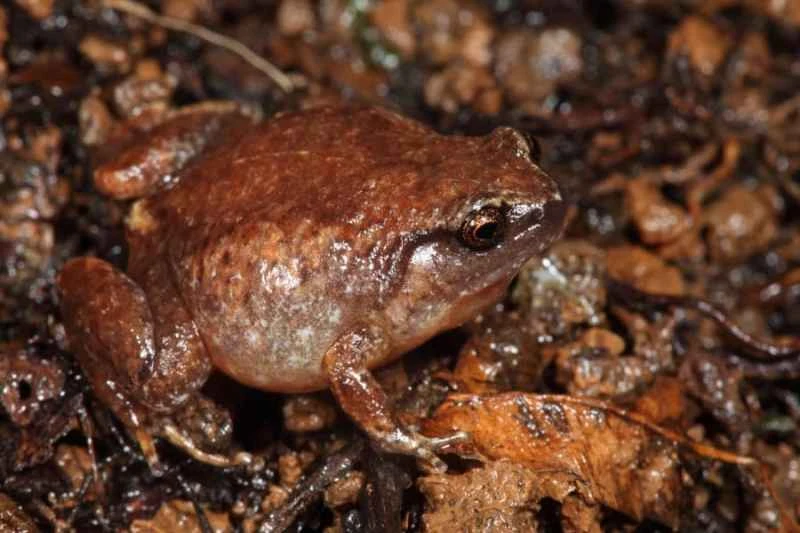
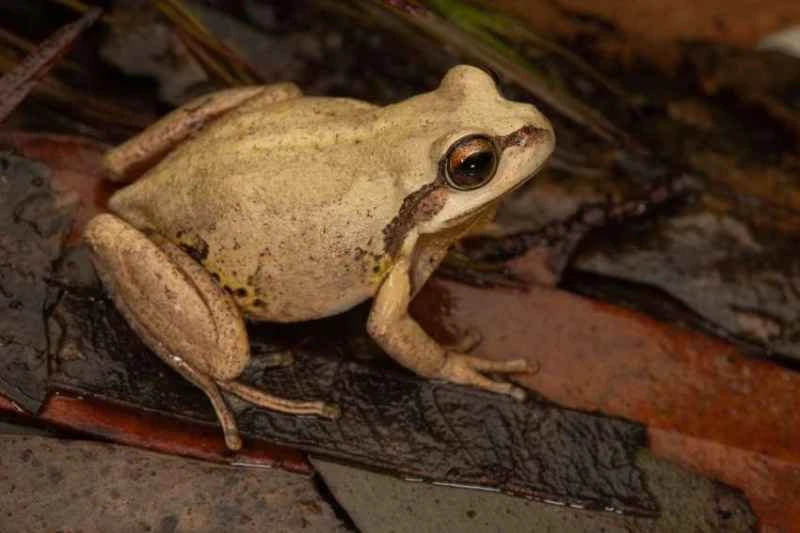
It has a slender body, an olive-green or grayish-brown back with spots, and a lighter-colored belly; its limbs are long and thin with suckers at the tips of its toes, and its hind feet have a certain degree of webbing, making it a typical small tree frog in appearance.
Detailed introduction
The Whistling Tree Frog ( Litoria verreauxii ) is a small, native Australian tree frog with a melodious call. It is named for the whistling or sharp, short call emitted by the males at night, and is a common sound heard along many quiet ponds and streams in eastern Australia.
Classification and nomenclature
Chinese reference name: Singing Tree Frog (general translation);
English name: Whistling Tree Frog;
Scientific name: Litoria verreauxii ;
Family: Hylidae → Genus: Litoria
Appearance and Identification Features
The singing tree frog is relatively small, but possesses typical tree frog characteristics:
Size: Adults are about 2.5–4 cm in length, with males being slightly smaller than females;
Body shape: The body is slightly flat and slender, with a narrow head, which is suitable for moving among grass and low vegetation;
Back color: mostly olive green, grayish brown or brownish brown, sometimes with irregular light and dark spots;
Lateral markings: Dark stripes or bands can be seen from behind the eyes to the sides of the body in some individuals, which is one of the important details for identification;
Abdomen: The abdomen is lighter in color, often milky white or light yellow;
Skin texture: The skin on the back is relatively smooth or slightly rough, and not as warty as that of a toad;
Limbs and toes: The limbs are slender, and the fingers and toes have round suction cups that can attach to grass and shrubs; the hind feet have a certain degree of webbing between the toes, which is beneficial for movement near water.
Distribution range and habitat
The singing tree frog is mainly distributed in eastern and southeastern Australia .
It is commonly found in New South Wales, Victoria, and other areas, with its distribution extending to surrounding regions in some areas;
It often appears in temperate or subtropical regions with freshwater bodies and moderate rainfall.
Typical habitats include:
Around still or slow-flowing water pits, ponds, farmland dams, and artificial pools;
Grasslands, thickets, and forest edges near streams, wetlands, and marshes;
Suburban gardens, farmland edges, and the areas surrounding vegetated bodies of water.
Lifestyle
The singing tree frog is a nocturnal, semi-arboreal frog .
During the day, they usually hide in grass, under rocks, in crevices of wooden stakes, or in low vegetation to avoid high temperatures and dryness;
They emerge from their hiding place at dusk and night, moving about on the grass and bushes around the water;
After rainfall or during the breeding season, male frogs will croak at high frequency, forming a distinct "tree frog chorus".
vocal characteristics
As its name suggests, one of the most distinctive features of the singing tree frog is its call:
The male frog's call is clear and high-pitched, often described as a short "whit... whit..." or a whistling-like syllable;
Their calls are most active at night and after rain, especially around waterholes and ponds during the breeding season.
When multiple male frogs call simultaneously, they create a strong rhythmic background sound, which is a key clue for identifying the species.
feeding habits
Like most small tree frogs, the singing tree frog primarily feeds on small invertebrates:
Flying insects, such as mosquitoes, small moths, and small beetles;
Spiders and other arthropods that live on grass, shrubs, and tree trunks;
Using their long tongues to quickly capture approaching prey, insects play a certain ecological role in controlling their populations.
Reproduction and Development
The reproduction of the singing tree frog is closely related to rainfall and still water bodies:
The breeding season often occurs during the wettest season in the area or after heavy rainfall;
Male frogs will call out at the edges of ponds, puddles, and slow-flowing streams to attract female frogs;
Female frogs lay their eggs in still water areas, with the eggs clustered together or attached to the water surface or near aquatic plants.
Tadpoles develop in water and have a certain range of adaptability to water quality and temperature.
After metamorphosis, the young frog leaves the water and lives in the surrounding grasslands and bushes.
Protecting the status quo and threats
In the IUCN Red List, the singing tree frog is generally assessed as Least Concern (LC) and remains relatively common in suitable habitats.
Potential threats include:
Wetlands and small bodies of water are being filled in, hardened, or polluted;
Pesticides and urban runoff affect water quality and insect resources;
Long-term climate change has led to changes in rainfall patterns, affecting the quantity and stability of breeding water bodies.
Protecting small bodies of water and surrounding vegetation, reducing pollution and pesticide use, helps maintain healthy populations of the singing tree frog and other tree frog species.
Frequently Asked Questions
Q1: Why is it called the "Whistling Tree Frog"?
Because the male whistling tree frog has a clear, high-pitched call that sounds like a short whistle or the syllable "whit... whit...", it is called "Whistling Tree Frog" in English.
Q2: Do croaking tree frogs only live in trees?
No. Although it has the suckers and climbing ability of a tree frog, it is more often found in grass, bushes and low vegetation near water, and is a typical semi-arboreal, aquatic frog.
Q3: Are croaking tree frogs dangerous to humans?
They are generally considered harmless to humans and will not attack people unprovoked. Like other frogs, simply observe them and then wash your hands.
Q4: Can this type of frog still be seen near cities and farmlands?
Near some suburban gardens, farmland dams, and artificial ponds where water bodies and vegetation have been preserved, there is still a chance to hear or see the croaking of tree frogs.
This indicates that it has the ability to adapt to a certain degree of human environmental modification.