Basic Information
Scientific classification
- Chinese name: Strong Whistle Frog
- Scientific name: Austrochaperina robusta
- Order: Anura
- Classification: Amphibia, Order Anura
Vital signs data
- Body length: Typical adult body length is about 2–3 cm, which is a small terrestrial frog with a slightly robust body.
- Weight: Individual body weight is usually only a few grams, but varies depending on the size of the individual and nutritional status.
- Lifespan: It is estimated that it can survive for several years in the wild and participate in the breeding season multiple times in areas with a relatively stable environment and abundant food.
Significant features
A type of small, sturdy frog with a call that sounds like a short whistle. They often use farmland irrigation ditches, ponds, temporary water pits, and urban green wetlands to call and hunt insects at night by the water.
Distribution and Habitat
This category represents a variety of "whistling frog" species in Australia and the surrounding areas. They are commonly found in environments such as woodlands, farmland edges, pastures, and urban parks, and rely on small bodies of water such as ponds, swamps, drainage ditches, and temporary rainwater puddles for reproduction.
Appearance
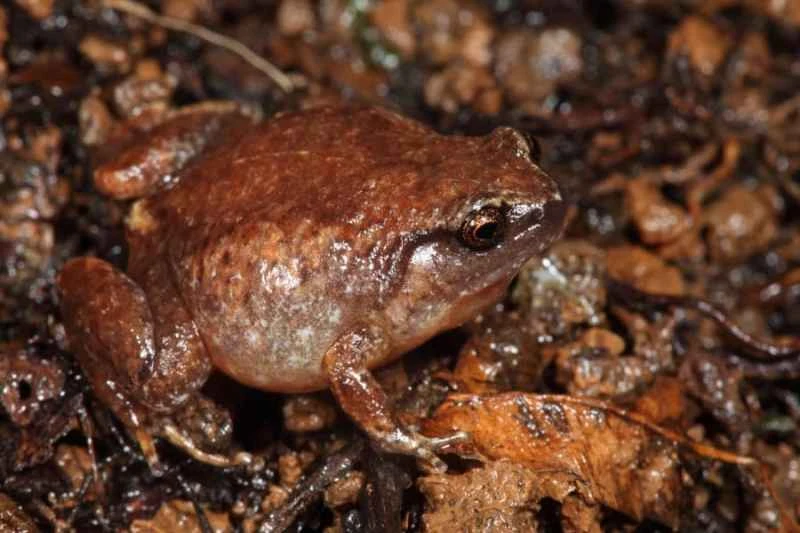
It has a small and slightly stout body, with a grayish-brown or yellowish-brown back with spots, a lighter-colored belly, and slightly rough skin; its limbs are short and powerful, with hind limbs adapted for short jumps, and fewer webbed toes, making it suitable for ground and low-lying vegetation environments.
Detailed introduction
Robust Whistling Frog is a general term for a group of small frogs with a clear, whistling call, typically found in woodlands, farmland edges, and urban green spaces in Australia and surrounding areas. The common English name "Robust Whistling Frog" is not entirely consistent across different regions; therefore, this section provides a general overview of the morphology and ecological characteristics of this "whistling frog type" for easier public education and basic identification.
Classification and nomenclature (general introduction)
Currently, in amphibian classification, "whistling frog" usually refers to a small frog whose call resembles a short whistle, and it may belong to different genera and species. Due to the inconsistency in common names across regions, this page does not mandate a single scientific name. It is recommended to supplement with precise scientific names based on authoritative amphibian lists when creating more detailed species entries.
Chinese reference name: Strong Whistle Frog (a general name for ease of reading);
Common English name: Robust Whistling Frog (the usage of the name varies in different sources);
Classification: Belongs to the class Amphibia, order Anura (frogs), but the specific family and genus need to be further confirmed based on the target species.
Appearance and distinguishing features (typical "whistling frog" type)
Strong whistling frogs are generally small frogs with a relatively robust body, and have the following typical characteristics:
Size: Adults are usually about 2-3 cm long. Although small, they are somewhat stocky.
Body color: The back is mostly grayish-brown, yellowish-brown or olive brown, and may have spots or cloud-like patterns of varying shades, which helps to camouflage in the soil and dead leaves.
Abdomen: The abdomen is lighter in color, mostly milky white or light gray, sometimes with spots;
Skin texture: The back is slightly rough with visible small warts, while the abdomen is smoother or slightly granular;
Limbs: The limbs are short and powerful, with the hind limbs adapted for short-distance jumping. The toes have fewer webs, and in some species, the tips of the toes are slightly enlarged.
Head and eyes: The head is relatively short and wide, and the eyes are relatively large compared to the body size, which is conducive to nighttime activity.
Distribution range and habitat (general overview)
Many small frogs known as "whistling frogs" are mainly distributed in Australia and surrounding areas , including temperate woodlands, farmlands, grasslands, and wetland environments near residential areas.
Typical habitat characteristics include:
Near still or slow-moving water bodies such as ponds, swamps, ditches, and temporary storm drains;
The surrounding area is covered with grass, low shrubs, leaf litter, and hiding places such as rocks and fallen trees;
It can be found on the edges of farmland, pastures, roadside drainage ditches, and in city parks and gardens.
Lifestyle
The strong whistling frog is a nocturnal, terrestrial frog .
During the day, they mostly hide among rocks, fallen leaves, grass roots, or in soil crevices to avoid dehydration and predators.
They are most active at dusk and night, especially after rain and in humid weather;
They often crawl slowly or hop short distances along the edges of water bodies and on damp surfaces, searching for food and mates.
vocal characteristics
The name "whistling frog" comes directly from its call:
The male frog emits a short, clear, high-pitched sound, similar to whistling or a "chirp-chirp" sound;
During rainy days or the breeding season, when multiple male frogs sing together around a body of water, they create a continuous whistling chorus.
The rhythm and pitch of calls may vary between different species, which is an important basis for identification in the wild.
feeding habits
The robust whistling frog primarily feeds on small invertebrates.
Various small insects, such as ants, small beetles, flying insects, mosquitoes, midges, and small crickets;
Small arthropods living in the leaf litter and on the soil surface, such as springtails, larvae, and small spiders;
They hunt and kill suitable prey by ambush or by moving slowly.
Reproduction and Development (General Model)
The reproduction of many whistling frog species is closely related to rainfall:
During the rainy season or after heavy rainfall, male frogs gather at the edges of ponds, ditches, and temporary waterholes and call out.
Female frogs lay their eggs in still or slow-moving water, and the eggs are usually attached to aquatic plants or sink to the bottom.
Tadpoles develop in water, and after completing the metamorphosis from tadpole to froglet, they leave the water and enter the surrounding terrestrial environment to live.
Some highly adaptable populations can reproduce using artificial water bodies such as farmland irrigation ditches, artificial ponds, and urban drainage ditches.
Protecting the status quo and threats
Looking at the "whistling frog type" of frogs as a whole, many species are still relatively common in some areas, but amphibians as a whole face global pressures such as habitat loss, pollution and climate change.
Potential threats include:
The reduction of breeding water bodies due to wetland landfill, drainage, and urban sprawl;
The effects of pesticides and chemical pollution on tadpoles and adult frogs;
Roads and infrastructure contribute to habitat fragmentation and the risk of vehicles running over habitats;
Climate change is causing changes in rainfall patterns, affecting the formation and duration of temporary water bodies.
By preserving small wetlands, reducing pollution, and maintaining vegetation and buffer zones in farmland and urban green spaces, small frog species such as the whistling frog can continue to survive in landscape transformation.
Frequently Asked Questions
Q1: Why is it called "Robust Whistling Frog"?
The name "Whistling Frog" comes from the male frog's call, which resembles a short whistle.
"Robust" usually describes a species that is relatively robust and resistant to disease, and is commonly found in populations that inhabit farmland and urban fringe environments.
Q2: Do these whistling frogs necessarily live in virgin forests?
Not necessarily. Many whistling frog species are adaptable to human activities and are often found near water bodies in farmland, pastures, roadside ditches, city parks, and gardens.
Q3: Is there a unique scientific name corresponding to "Robust Whistling Frog"?
Currently, the use of this common English name varies across different regions and sources, and it may refer to different closely related species.
Therefore, this entry does not specify a single scientific name, but only provides a general overview of "whistle frog types." It is recommended to refer to specific species pages for further details.
Then, supplement the precise scientific name and IUCN classification based on authoritative directories.
Q4: Are these types of frogs harmful to humans?
Generally, it poses no direct harm and can even help control insect populations. Like most frogs, its skin secretions may cause slight irritation to mucous membranes.
If contact is necessary, it is recommended to wash hands afterwards and avoid rubbing eyes or ingesting food.