Basic Information
Scientific classification
- Chinese name: Australian water dragon
- Scientific name: Intellagama lesueurii
- Classification: Squamata
- Family and genus: Aerial lizard family, genus *Leptochloa*
Vital signs data
- Body length: Adults can reach 80–90 cm in total length, with the tail accounting for more than two-thirds of the body length.
- Weight: Adult individuals typically weigh several hundred grams, depending on sex, age, and habitat conditions.
- Lifespan: It can survive for several years in the wild, and under suitable captive conditions, its lifespan is expected to exceed 10 years.
Significant features
Large, arboreal/terrestrial lizards that are good swimmers and highly dependent on water, they quickly jump into the water when threatened and are one of the iconic species of the riverine ecosystem in eastern Australia.
Distribution and Habitat
It is widely distributed along the eastern coast of Australia and adjacent inland areas, mainly inhabiting riparian woodlands, rocks, and the vicinity of water bodies in urban parks near rivers, streams, lakes, and ponds.
Appearance
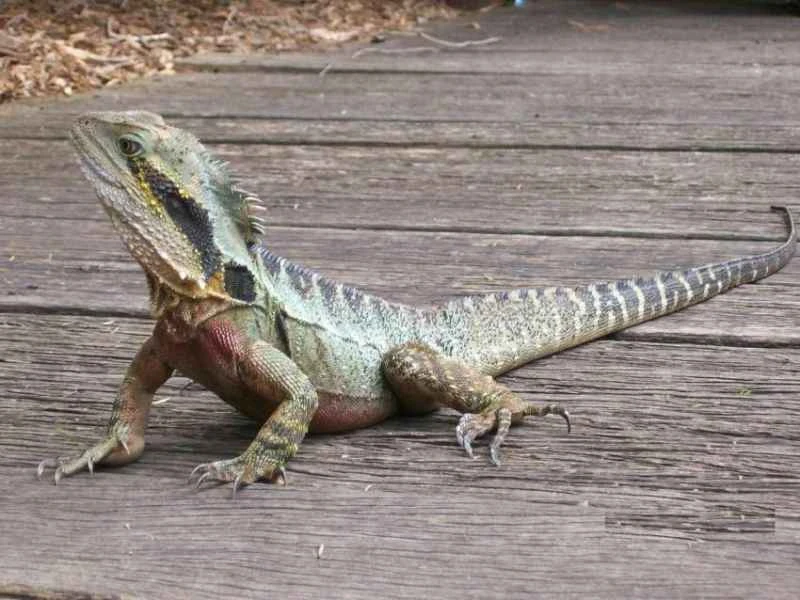
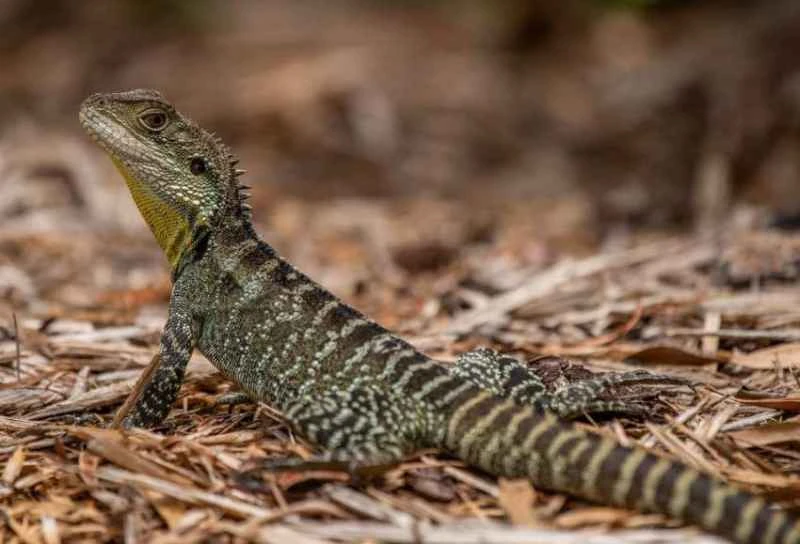
With a slender body, a row of distinct spiky scales on its back and tail, and a body color that is mostly grayish-brown or olive with stripes, its long and powerful tail is well-suited for propulsion and balance in the water.
Detailed introduction
The Australian Water Dragon is a large arboreal, semi-aquatic lizard, scientifically named *Intellagama lesueurii* (formerly classified under the genus *Physignathus *), belonging to the family Aerialidae in the order Squamata. It is widely distributed near rivers, streams, and urban park waterways in eastern Australia, and is one of the most representative native reptiles of the region.
Classification and nomenclature
Chinese name: Australian water dragon;
English name: Australian Water Dragon;
Scientific name: *Intellagama lesueurii *
Family: Agamidae → Genus: Intellagama
Appearance features
The Australian water dragon has a slender body and a very striking appearance:
Size: Adults can reach a total length of 80–90 cm, with the tail accounting for most of the body length; juveniles are significantly smaller;
Head and body shape: The head is large and slightly flat, the neck is thick, and the body is laterally flattened to facilitate swimming in the water;
Back crown and spines: A row of distinct spiny scales runs from the head through the back to the upper edge of the tail, forming an appearance similar to a "dragon crown";
Body color: The body is mainly grayish-brown, olive or brownish-green, with dark horizontal stripes often on the sides and limbs;
Tail: The tail is long and powerful, with a slightly flattened cross-section, and is an important tool for swimming and maintaining balance in the water;
Sexual type II: Males are typically larger, with thicker heads and stronger color contrasts, and may exhibit more pronounced color changes during the breeding season.
Distribution range and habitat
Australian water dragons are mainly distributed along the eastern coast of Australia and in adjacent inland areas .
From southeast Queensland, through New South Wales, all the way to parts of Victoria;
They can be found in natural rivers, valleys and rainforest edges, as well as in lakes and artificial canals near city parks, campuses and residential areas.
Typical habitat characteristics:
Near freshwater bodies, such as rivers, streams, ponds and lakes;
The shoreline has trees, rocks, and fallen logs, making it easy to sunbathe and quickly escape into the water;
They can often be seen in cities, inhabiting riverbank steps, near bridges, or on park lawns.
Lifestyle Habits and Behaviors
The Australian waterdragon is a diurnal, swimming, arboreal/terrestrial lizard .
They are active during the day and like to sunbathe their backs to regulate their body temperature;
When startled, they will quickly leap into the water and stay underwater for several minutes, extending their diving time by reducing their metabolism and utilizing the residual air in their lungs;
They move freely among the tree trunks, rocks, and shrubs along the riverbank, and sometimes climb to higher branches to rest.
During the colder seasons, activity decreases, and some regions enter a period of dormancy similar to "hibernation."
feeding habits
Australian waterdragons are typical omnivorous lizards , and their diet may change as they age.
The larvae mainly consist of insects, spiders, and small invertebrates;
Adults prey on insects, crustaceans, small fish, and small amphibians, and also eat fallen fruits, flowers, and some tender leaves of plants;
In city parks, animals sometimes scavenge for food scraps dropped by humans, which is not ideal for their health.
Reproduction and life cycle
Australian waterdragons are oviparous reptiles, and their reproduction is closely related to temperature and season.
The breeding season is usually in spring and summer, during which males may compete for mates and territory through head nodding, body display and chasing behaviors.
Female lizards dig nests in loose soil near water to lay their eggs, with each nest containing anywhere from a few to more than ten eggs.
The eggs hatch in the soil, and the hatching time is affected by the soil temperature. After hatching, the larvae crawl out on their own and begin to live independently.
In the wild, individuals can live for several years or even longer, and under captive conditions, they may live for more than ten years.
Relationship with humans
In many cities and parks, Australian water dragons have become "familiar neighbors" in people's daily lives.
They are relatively docile, wary of people but usually do not attack first;
They are frequently photographed by tourists and photography enthusiasts, becoming an important "star species" for interpreting local wildlife;
In some areas, the animals have become accustomed to being near humans due to being fed by them, which may alter their natural behavior and be detrimental to their long-term health.
Protecting the status quo and threats
Currently, the Australian water dragon remains a common species within its distribution range and is generally classified as Least Concern (LC) or Not Evaluated in global assessments such as those by the IUCN.
The main potential threats include:
Riverside habitats have been hardened, and fallen trees and shrubs have been cleared, leaving them without shade or sunbathing spots;
Pet dogs and cats, along with invasive predators, increase predatory pressure on young and small individuals;
Water pollution and garbage accumulation affect the quality of water sources and food;
Artificially feeding them high-salt and high-sugar foods interferes with their normal eating habits.
Protecting natural riverbank vegetation, reducing water pollution, and refraining from indiscriminate feeding of wildlife help maintain healthy populations of Australian water dragons and other native reptiles.
Frequently Asked Questions
Q1: Do Australian water dragons attack people?
Generally not. They usually choose to escape danger, such as jumping into the water or crawling away. They may only bite or exhibit defensive behaviors when cornered or roughly handled.
Q2: Is it okay to feed the water dragon in the park?
Not recommended. Human food is mostly high in salt, sugar, or fat, which is not suitable for the digestive system of water dragons. It can also cause them to become overly dependent on human feeding and change their natural foraging behavior.
Q3: Do water dragons hibernate in winter?
In colder regions, water dragons significantly reduce their activity during winter, hiding in caves, tree roots, or rock crevices, entering a hibernation-like sluggish state; in temperate regions, they may still be active briefly in warm weather.
Q4: How to safely observe Australian water dragons in the wild?
Maintain a safe distance, avoid chasing or catching it, and do not throw food or stones at it. Simply observe quietly to see its natural behaviors such as sunbathing, swimming, and crawling.