Basic Information
Scientific classification
- Chinese name: Peron's tree frog
- Scientific name: Litoria peronii
- Order: Anura
- Family: Perons tree frog Emerald spotted tree frog
Vital signs data
- Body length: Adults are generally about 4–6 cm in length, making them medium to small tree frogs, with males slightly smaller than females.
- Weight: The weight of each individual typically ranges from a few grams to over ten grams, varying depending on the size of the individual and its nutritional status.
- Lifespan: They can survive for several years in the wild, and even longer in captivity under good conditions. They can reproduce repeatedly throughout multiple breeding seasons.
Significant features
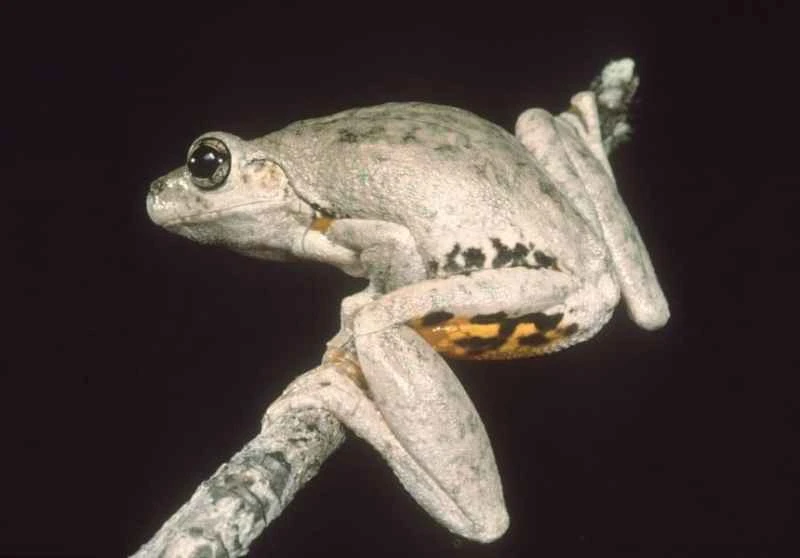
The tree frog, common in eastern Australia, has cross-shaped pupils and yellow-black marbled thigh patterns. Its call sounds like a gradually increasing "crazy laugh." It has a strong ability to adapt to both natural wetlands and human-modified environments.
Distribution and Habitat
Native to eastern Australia, from southeastern Queensland, New South Wales, eastern Victoria to parts of South Australia, it can be found in woodlands, scrubland, farmland and residential areas around streams, ponds, swamps and artificial water sources, and is one of the most common tree frogs near humans.
Appearance
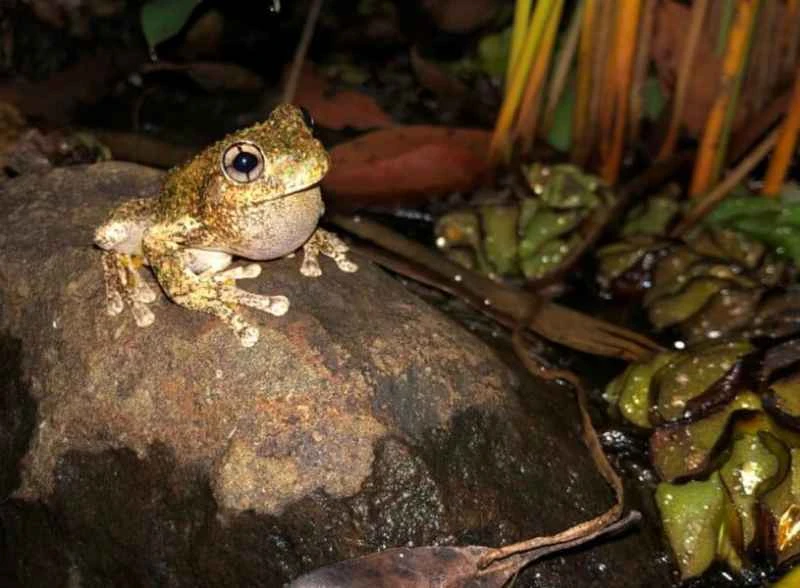
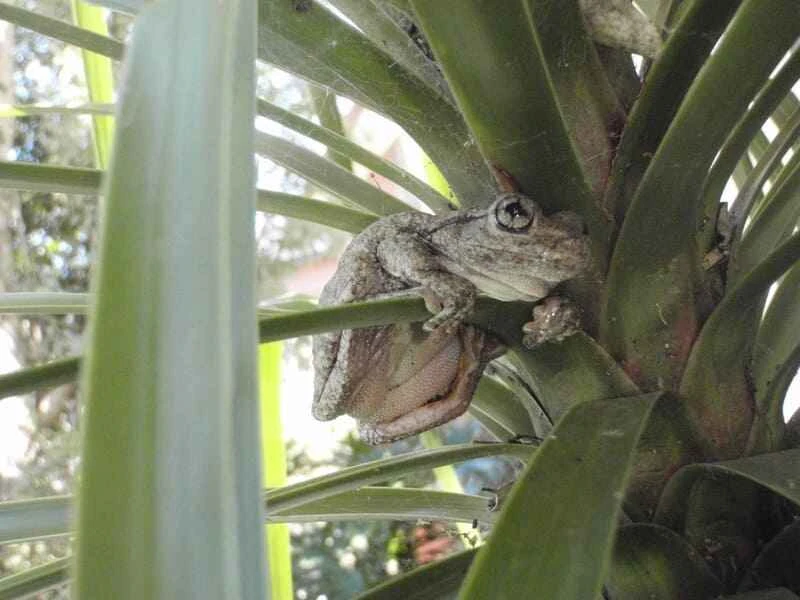
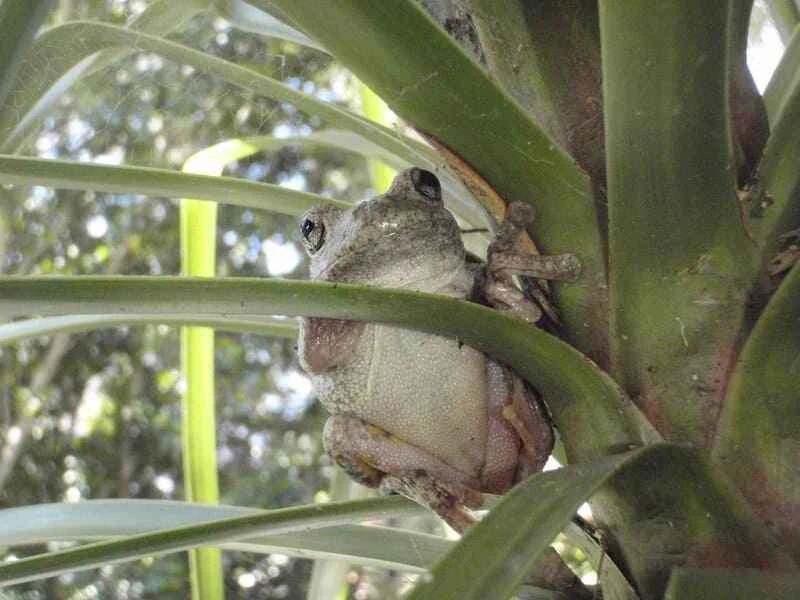
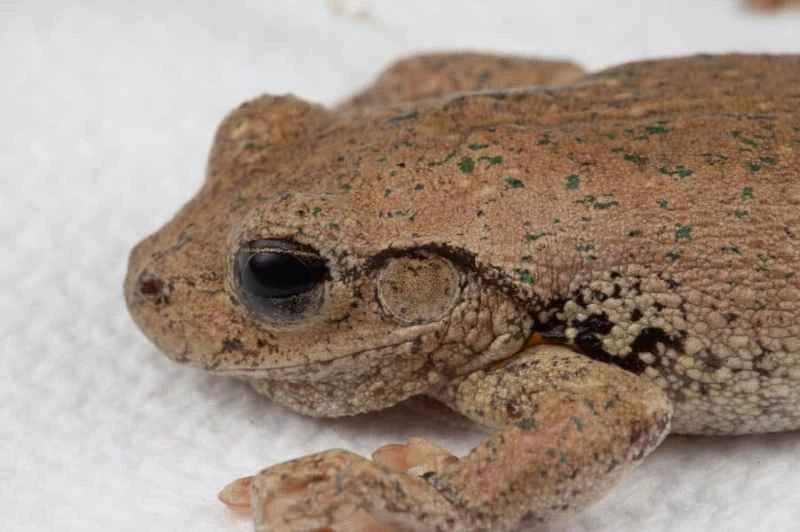
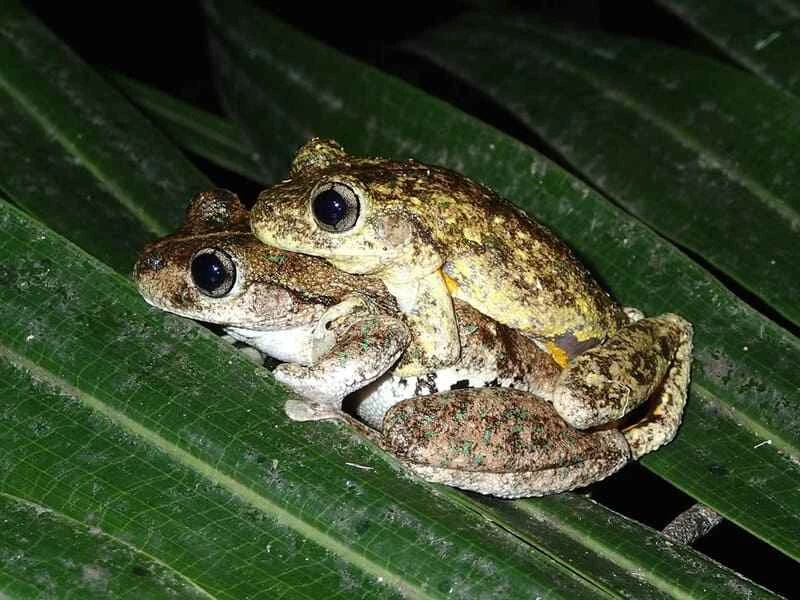
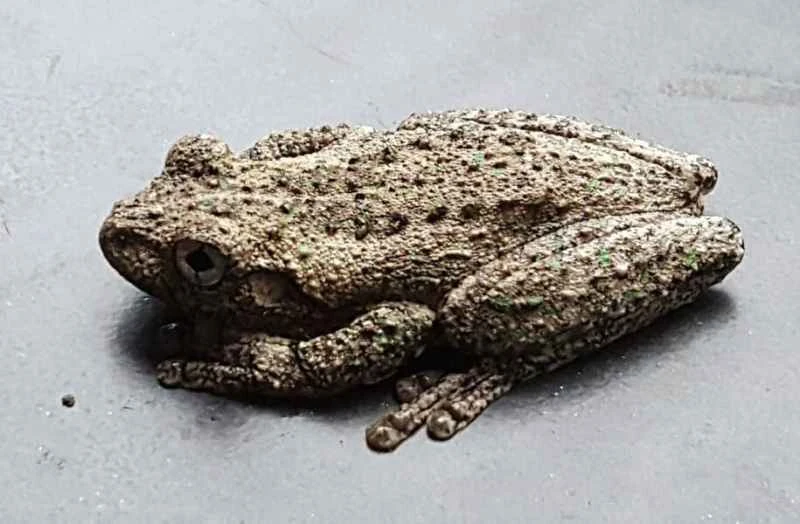
Small to medium in size, with a grayish-brown or olive-brown back dotted with small green spots, and a lighter-colored belly; the pupils of the eyes are cross-shaped; there are striking yellow-black marble patterns on the groin and inner thighs; the limbs are long and the toes have suction cups, making them suitable for climbing shrubs, tree trunks and building surfaces.
Detailed introduction
Peron's Tree Frog ( Litoria peronii ) is a small to medium-sized tree frog commonly found in eastern Australia. It is known for its distinctive "cross-shaped pupils" and striking yellow-black marbled patterns on its thighs and groin. Its call sounds like a gradually increasing "crazy laugh," making it particularly noticeable on rainy nights.
Classification and nomenclature
Common Chinese name: Peron's tree frog
English name: Peron's Tree Frog, Emerald Spotted Tree Frog, etc.
Scientific name: Litoria peronii
Family and genus: Tree frogs → Litoria
Appearance and Identification Features
Peron's tree frog is not large, but its distinctive features are easily identifiable:
Size: Adults are generally about 4–6 cm long, with males being slightly smaller than females;
Back color: The base color of the back is mostly grayish brown, olive brown or light brown, with scattered small green spots or light-colored spots. The green color will be more obvious in a humid environment.
Pupil shape: The pupil of the eye is distinctly "cross-shaped" (cross-shaped slit), which is one of its most distinctive features;
Patterns on the sides and thighs: There are very striking yellow and black marble patterns on the groin and inner thighs, which are especially noticeable when the frog jumps or spreads its hind legs.
Abdomen: The abdomen is light in color, white or cream, sometimes with a few gray spots;
Skin texture: The back is slightly rough with small warts, and the glands on the sides are not particularly prominent;
Limbs and suction cups: The limbs are long and slender, with a certain degree of webbing between the toes, and round suction cups at the ends of the fingers and toes. It is good at climbing tree trunks, shrubs and building surfaces.
Distribution range and habitat
Perron's tree frog is a native species to parts of the eastern coast and inland of Australia .
It is mainly distributed in southeastern Queensland, New South Wales, eastern Victoria, and parts of South Australia;
It can be found in everything from coastal sand dunes and lowland forests to inland open woodlands and farmland.
It has a wide range of habitat adaptations:
In natural environments, they are commonly found in woodlands and shrublands surrounding streams, ponds, swamps, and floodplains;
They also enjoy using artificial water sources, such as farm dams, garden ponds, and roadside drainage ditches.
They are often found around residential houses, on windowsills, in gutters, near toilets and bathrooms, and are one of the tree frogs that humans often encounter.
Lifestyle
Peron's tree frog is a nocturnal arboreal/semi-arboreal frog .
During the day, they mostly rest in tree holes, bark crevices, rock crevices, eaves, and other shady and damp places;
They are most active in the evening and at night, especially before and after rainfall and on nights with high humidity.
They are skilled climbers and often appear near lights to prey on insects.
Cry
The call of the Peron's tree frog is very distinctive:
It is often described as a gradually increasing "giggle" or "crazy laughter," starting from a low pitch and gradually becoming louder and more rapid;
Male frogs often call out from the vegetation or tree branches at the edge of the water.
On rainy nights, when multiple male frogs croak at the same time, their sounds echo across the water and through the forest, easily attracting attention.
feeding habits
Like most tree frogs, the Peron's tree frog primarily feeds on small invertebrates:
Various insects, such as moths, beetles, crickets, mosquitoes, midges, etc.;
Spiders and other small arthropods;
Occasionally, they may prey on smaller frogs or other soft-bodied prey.
Reproduction and Development
The reproduction of the Peron's tree frog is usually associated with rainfall and water abundance:
The breeding season typically occurs during warm, rainy periods.
Male frogs call out at the edges of ponds, dams, slow-flowing streams, and swamps to attract female frogs;
Female frogs lay their eggs in still or slow-moving water. The eggs are mostly in clusters or small pieces, floating or attached to aquatic plants.
Tadpoles develop in the water, then transform into tadpoles and crawl onto the shore and nearby vegetation.
Young frogs gradually transition to a lifestyle that primarily consists of arboreal and shrub habitats.
Protecting the status quo and threats
The Peron's Tree Frog is currently assessed as Least Concern (LC) on the IUCN Red List, and its overall population remains relatively common within its wide distribution area.
Potential threats include:
Some wetlands and woodlands have been damaged or altered due to urban expansion, agriculture, and road construction.
Water pollution, pesticides, and chemicals affect the health of eggs, tadpoles, and adult frogs;
Climate change has led to altered rainfall patterns and extreme droughts;
Amphibian diseases (such as chytriditis) can have an impact on local populations.
Frequently Asked Questions
Q1: How to quickly identify Peron's tree frog?
The most typical features include: eyes with prominent cross-shaped pupils, and yellow and black marbled patterns on the thighs and groin.
In addition, its distinctive "laughter"-like croaking makes it one of the most easily identifiable tree frogs.
Q2: Do Peron's tree frogs enter human houses?
Yes. They are often found near windowsills, bathrooms, toilets, gutter drains, and garden pools.
Insects attracted by lights are generally harmless to humans.
Q3: Is the Peron's tree frog dangerous to humans?
It is generally considered to pose no direct danger to humans. Like other frogs, it may secrete certain irritating fluids when grasped or subjected to pressure.
Therefore, if a brief observation is required, handle the items gently and wash your hands afterward.
Q4: What should I do if I find a Peron's tree frog in my home?
You can gently move it to a safe outdoor location with vegetation and water, and try not to harm it.
In many regions, they are also considered "natural helpers" in controlling insects and mosquitoes.