Basic Information
Scientific classification
- Chinese name: Taiwanese Salamander
- Scientific name: Hynobius formosanus
- Order: Tail-like
- Genus and species: Formosan salamander
Vital signs data
- Body length: 8–12 cm in total length; maximum ~14–15 cm
- Weight: Small amphibian, varies with body length
- Lifespan: Approximately 6–12 years (estimated)
Significant features
Endemic to Taiwan; inhabits high-altitude cold waters; fertilizes eggs externally in paired gelatinous sacs; larvae are stream-dwelling and have external gills; dependent on low temperatures and high oxygen levels.
Distribution and Habitat
2,000–3,000 m in central and northern Taiwan; source streams/cold springs and moist mossy woodlands, under rocks and among decaying wood.
Appearance
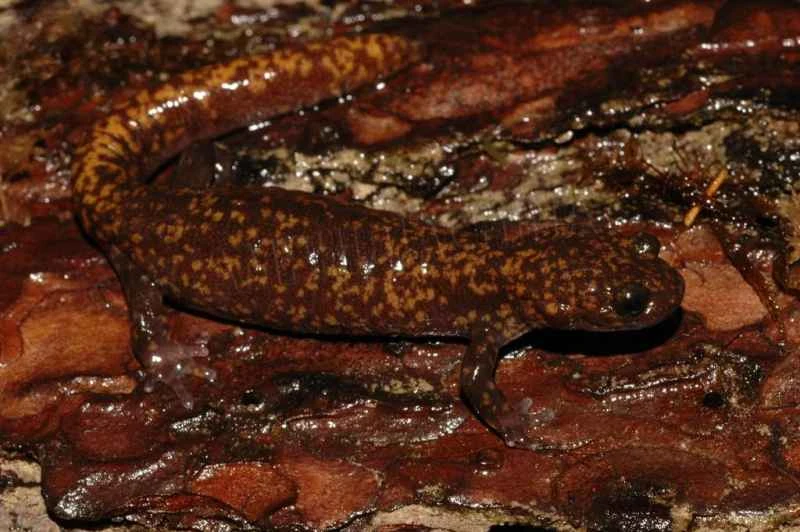
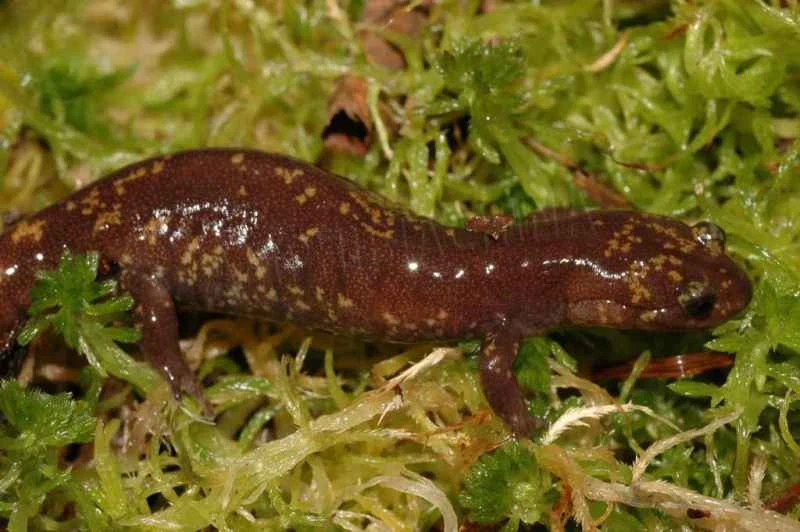
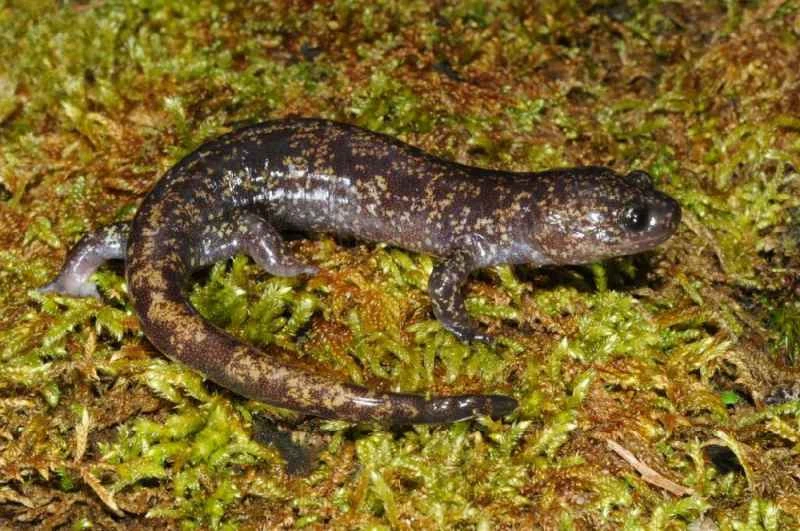
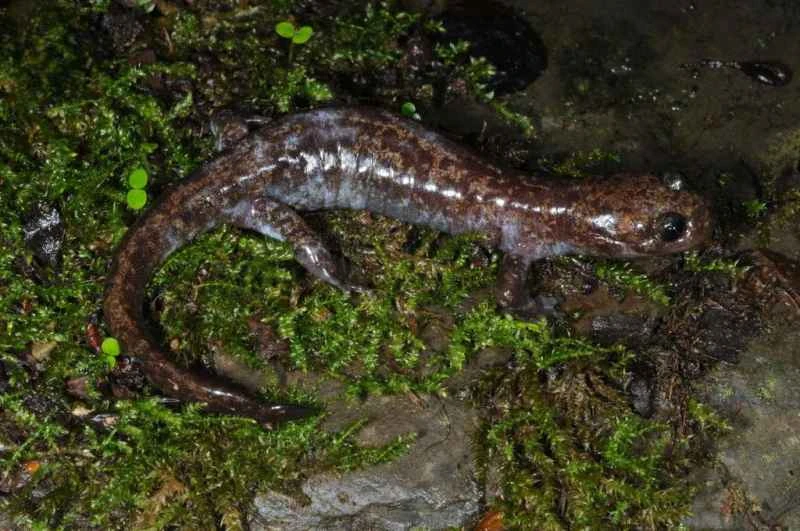
Dark brown to blackish-brown back with fine light spots; distinct rib grooves on the sides; short limbs and laterally compressed tail.
Detailed introduction
The Taiwan salamander ( Hynobius formosanus , also known as the Formosa salamander ) belongs to the family Hynobiidae . It is a cold-water amphibian endemic to Taiwan , and is mostly found in mountain streams/cold springs and moist mossy forests in central and northern Taiwan. It is secretive and nocturnal.
Ecology and Biology
Diet: Preys on small arthropods (insect larvae, isopods/springtails, centipede larvae, etc.).
Reproduction: External fertilization ; females lay pairs of gelatinous egg sacs attached to cold springs/slow-flowing waters under rocks or trees; juveniles have external gills and are stream-dwelling.
Seasonality: They reproduce mostly in late winter to spring ; they depend on low temperature and high oxygen content environment.
Morphology and Recognition
Body size: small to medium; costal grooves on the sides.
Body color: Dark brown to blackish brown on the back, with scattered fine light spots; lighter on the belly.
Limbs and tail: The limbs are relatively short; the tail is laterally flattened, which is conducive to undulating in the water.
Body size and lifespan
Body length: 8–12 cm in total length, up to ~14–15 cm in maximum length.
Lifespan: Estimated 6–12 years (depending on environment).
Distribution and Habitat
The high mountain zone in central and northern Taiwan (such as the Hehuanshan area) has an elevation of approximately 2,000–3,000 m and is associated with headwater streams, cold springs, moist mixed coniferous and broadleaf forests , and mossy rock crevices.
Conservation and Human Interaction
Threats: Road and recreational disturbances, stream management/water quality changes, habitat fragmentation, and climate warming causing habitat shifts upwards.
Conservation: Included in Taiwan's wildlife conservation and national park/protected area management; avoid trampling and overturning rocks in the headwaters of the stream.
IUCN: Near Threat (NT) (subject to the latest authoritative assessment).
Quote
Amphibians of China. 2024. Information System for Amphibians of China. Kunming, Yunnan Province, China; Kunming Institute of Zoology, Chinese Academy of Sciences. Website: http://www.amphibiachina.org/.
AmphibiaChina. 2024. The database of Chinese amphibians. Electronic Database accessible at http://www.amphibiachina.org/. Kunming Institute of Zoology (CAS), Kunming, Yunnan, China. (citation in English)
Frequently Asked Questions
Q1: How to distinguish it from Alishan salamander? H. arisanensis differs in body color, rib groove count, and geographical altitude; it is necessary to refer to the place of origin and morphological identification table.
Q2: Do they only live in water? Adults mostly live in the damp microenvironment near the shore , and enter cold springs/slow waters during the breeding season; juveniles are stream-dwelling .
Q3: Can they be artificially raised? It is not recommended; they have extremely high requirements for low temperature, high oxygen and clean water , and are protected by law.
Q4: Conservation priorities? Maintaining the cleanliness and connectivity of the source streams , reducing engineering disturbances, and assessing the impacts of climate change.