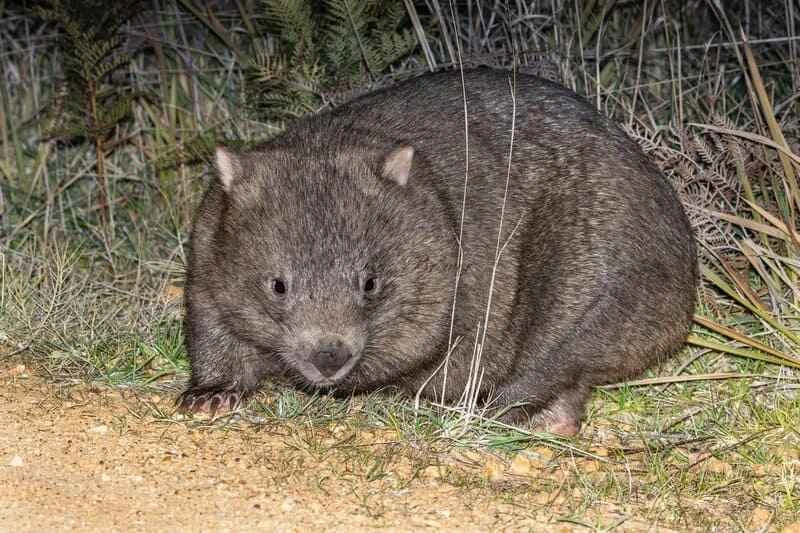
Basic Information
Scientific classification
- Chinese name: Common Wombat
- Scientific name: Vombatus ursinus
- Classification: Mammals
- Genus and family: Vombatidae Vombatus
Vital signs data
- Body length: 90–115 cm; shoulder height ~35 cm
- Weight: 20–35 kg (regional variation)
- Lifespan: 5–15 years in the wild; 20+ years in captivity
Significant features
Powerful burrowing (rear-opening nursery pouch); efficient herbivorous fermentation; cubic fecal marker; nocturnal solitary living.
Distribution and Habitat
Temperate woodland/shrubland/grassland and farmland edges in southeastern Australia and Tasmania.
Appearance
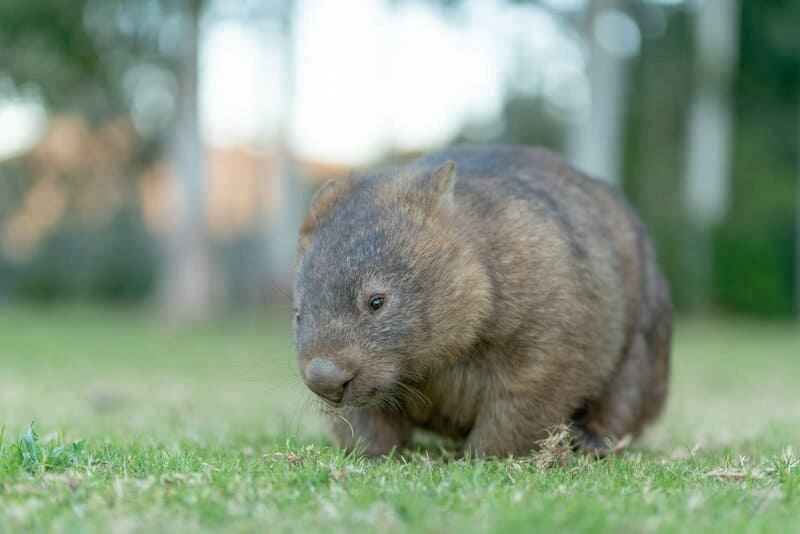
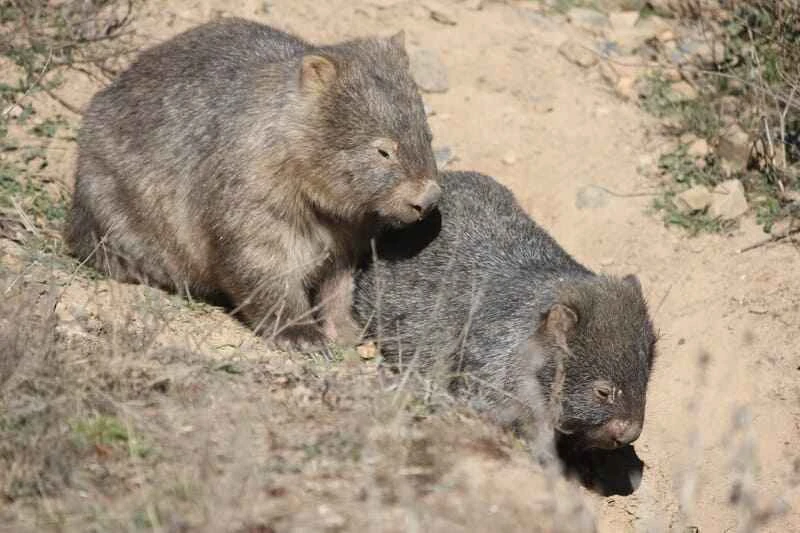
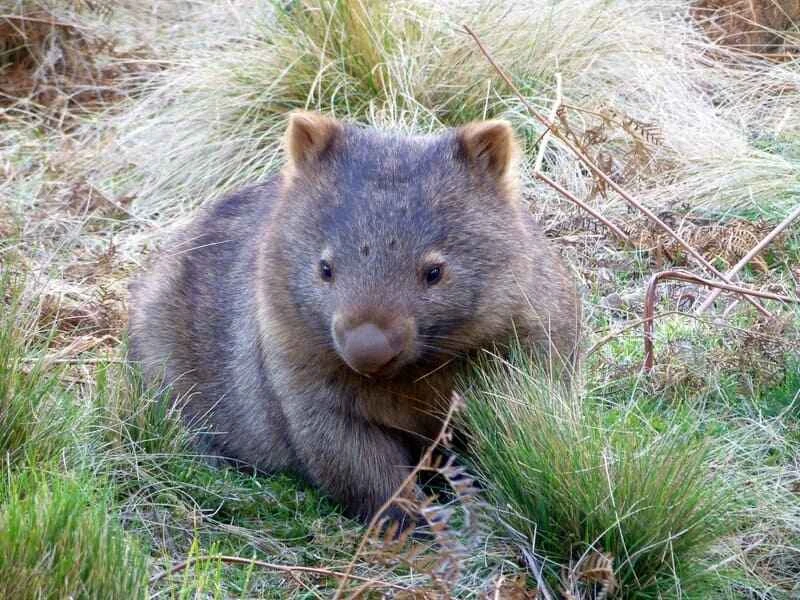
Stout, short legs, shovel-shaped claws; fur ranging from sandy brown to dark gray; broad nose and short, round ears.
Detailed introduction
The common wombat ( Vombatus ursinus ) belongs to the family Vombatidae and is a burrowing marsupial native to southeastern Australia and Tasmania. It uses its powerful forelimbs and shovel-shaped claws to dig intricate burrow networks and is known for its cubic droppings , which facilitate scent marking and territorial communication.
Ecology and Biology
Their daily routine consisted mostly of traveling at dusk and night , resting in the cave during the day to escape the heat and avoid enemies.
Diet: Herbivorous (grass, sedges, rhizomes and bark), with high hindgut fermentation efficiency.
Reproduction: The female has a hind-opening pouch to prevent burrowing into the pouch; the young are nursed in the pouch for about 5–6 months .
Society: Mostly solitary , cave systems can be used sequentially by multiple individuals.
Morphology and Recognition
It has a robust build and short, strong limbs ; its forelimbs are muscular and have large claws.
The coat color ranges from sandy brown to dark gray/blackish brown; the nose is wide and the ears are short and round.
The tooth structure is simplified, and the incisors continue to grow to gnaw on tough plants.
Body size and lifespan
Body length: 90–115 cm ; shoulder height: approximately 35 cm .
Weight: 20–35 kg (regional variation).
Lifespan: ~5–15 years in the wild; up to 20+ years in captivity.
Distribution and Habitat
Found in southeastern Australia and Tasmania , it prefers temperate woodlands, scrublands, grasslands and farmland edges , and is more common in well-drained soils.
Conservation and Human Interaction
IUCN: Least Concern (LC) ; Locally affected by road fatalities, mange, habitat fragmentation and agricultural conflict.
Ecological role: Ecological engineer – digging burrows to improve soil aeration and provide shelter for other animals.
Frequently Asked Questions
Q1: Why is feces cube-shaped? The strong water regeneration of the intestines and the anisotropic elasticity of the intestinal wall cause it to compact and take shape at the end, making it less prone to rolling and easier to mark.
Q2: Do they live in groups? Mostly solitary ; however, multiple individuals may reuse the same cave system for a long period of time.
Q3: Is it dangerous to people? It is usually shy, but may charge if forced; do not block the entrance or drive it away.
Q4: What are the differences between Vombatus and Lasiorhinus? Vombatus has less facial hair and more varied body colors; Lasiorhinus has thicker facial hair and more pointed ears.