Basic Information
Scientific classification
- Chinese name: Gorgeous honeycomb coral (Gorgeous brain coral)
- Scientific name: Favia speciosa (= Dipsastraea speciosa)
- Classification: Echinoderms
- Genus and family: Merulinidae Favia
Vital signs data
- Body length: The common diameter of the group is 20–60 cm, and can reach 1 m+.
- Weight: The weight of the group varies greatly with size, and there is currently no uniform value.
- Lifespan: Perennial reef-building coral, lasting from several years to several decades.
Significant features
Primarily photosynthetic, but also predatory; its form is malleable with the currents; it reproduces through budding; it preys on prey with its tentacles at night.
Distribution and Habitat
The reef flats, lagoons, and upper outer reefs of the Indo-Pacific coral reefs, 2–25 m in length, require moderate water flow.
Appearance
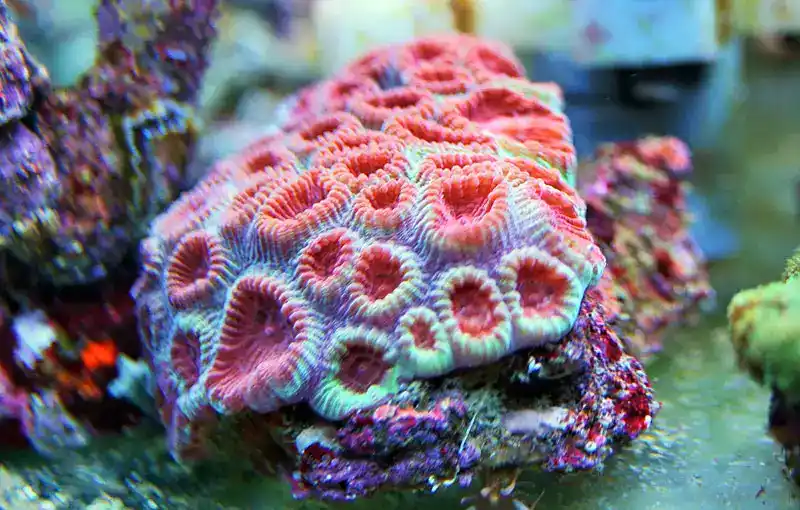
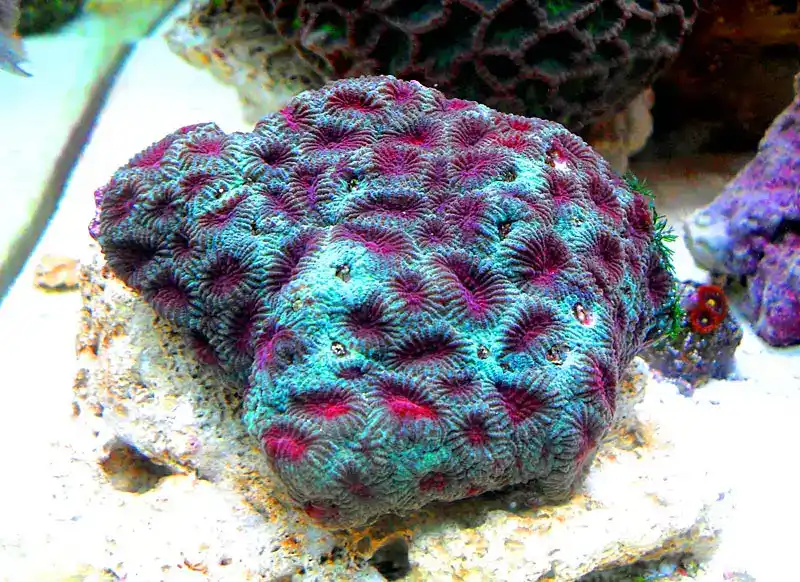
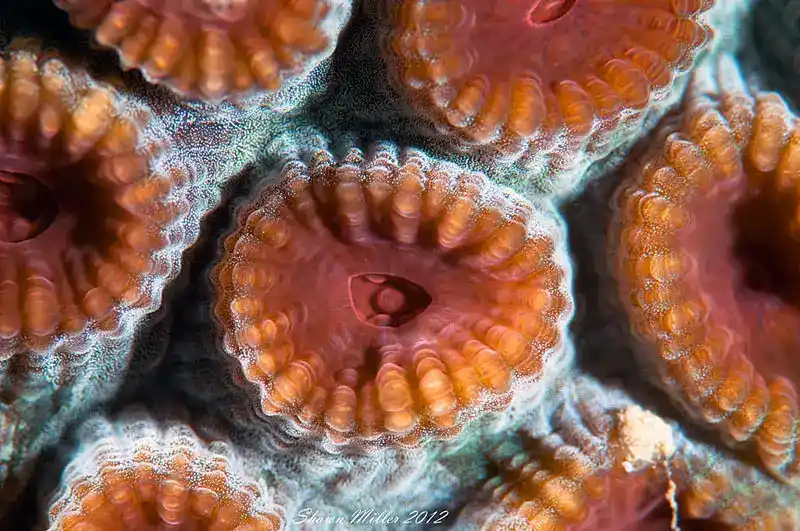
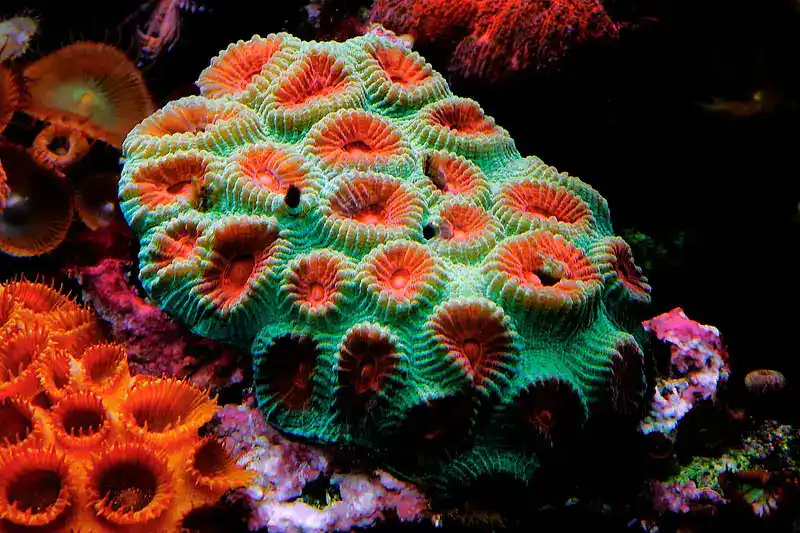
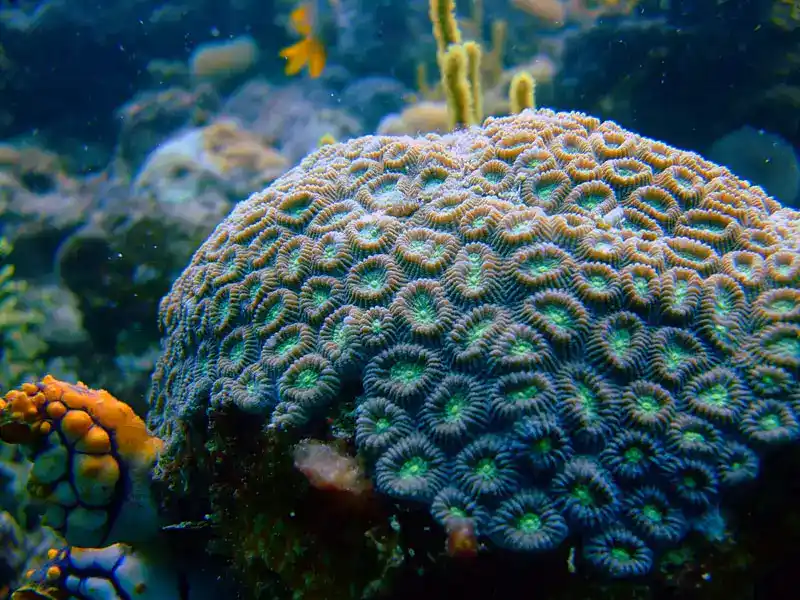
Massive/hemispherical; solitary corals with distinct calyx walls, resembling a honeycomb; brown/green/yellowish-green, etc., with fluorescent stripes commonly seen on the calyx margin.
Detailed introduction
Favia speciosa (sometimes referred to as Dipsastraea speciosa ) is a typical reef-building coral . It is an endosymbiotic organism of zooxanthellae (symbiodiniaceae) and primarily relies on photosynthesis for energy, but also feeds on suspended particles and plankton. This species often forms dense, blocky or hemispherical colonies with clearly defined calyxes (monomers).
Ecology and Biology
Nutrition mode: Primarily photosynthesis; at night, it extends its tentacles to prey on microscopic zooplankton and organic particles.
Growth and morphological plasticity: in strong wave/strong current environments, the colonies are shorter and denser; in calm or deeper waters, the colonies are larger.
Reproduction: Sexual (seasonal release of eggs and sperm/release of larvae) and asexual (budding and proliferation) coexist; the population can be perennial.
Morphology and Recognition
The colony is blocky/hemispherical , with the surface covered with regular, solitary coral calyxes (plocoid corallites) . Each calyx wall is distinct , and the calyx diameter is usually 5–12 mm (regional variation). The septa inside the calyx are relatively regular, and the calyx wall and calyx pores are often darker in color. The body color is mostly brown, green, yellowish-green, or tan, and bright fluorescent stripes can be seen on the calyx margin. At night, the tentacles extend like fine tendrils.
Body size and lifespan (group)
Group diameter: Commonly 20–60 cm, but can reach more than 1 m in good reef areas.
Growth rate: slow to medium, significantly affected by light, nutrients and water temperature.
Lifespan: It is a perennial reef-building coral that can live for many years to decades.
Distribution and Habitat
Widely distributed in tropical Indo-Pacific reefs (from the Indian Ocean to the western Pacific, Southeast Asia, northern Australia, and parts of the Pacific islands and reefs). Commonly found in reef flats, atoll lagoons, and upper outer reefs , at depths of approximately 2–25 m; requires moderate currents to carry away sediments.
Threats and Protection
Seawater warming and bleaching: Sustained high temperatures and marine heat waves can lead to the loss of symbiotic algae.
Sedimentation/Pollution: Increased nutrients, silt, and turbidity along the coast inhibit photosynthesis and larval anchorage.
Physical damage: strong storms, anchor strikes, and trampling.
IUCN: Records vary across different databases and differ significantly by region; this site classifies it as Unevaluated (NE) and marks the synonym ( Dipsastraea speciosa ) on the species page for easy retrieval. Management recommendations: Protect healthy reef sections, control nutrient levels and sedimentation, and regulate tourism and collection.
Frequently Asked Questions
Q1: How to distinguish it from other "brain corals"? This species has a distinct calyx wall , medium calyx diameter, relatively regular septa, and a honeycomb-like surface;
Unlike the clearly connected grooved brain corals known as "valleys," accurate identification requires combining spicule/skeletal microstructure with geographic distribution.
Q2: Why are there fluorescent stripes? It is related to the density of symbiotic algae, pigments, and light environment; it is more noticeable at night or under blue light.
Q3: Can it be artificially bred? It can be propagated by microbial culture, but it requires stable water quality, strong light and moderate flow rate; excessive sediment and nutrients will be detrimental.
Q4: What is the relationship between Favia and Dipsastraea? Recent classifications often place some traditional Favia species under Dipsastraea ;
Therefore, it is common to use both scientific names together.