Basic Information
Scientific classification
- Chinese name: Yellow-faced whip snake
- Scientific name: Demansia psammophis
- Classification: Squamata
- Family and genus: Elapidae, genus *Virginia*
Vital signs data
- Body length: Adults are usually about 80–120 cm in total length, with a few individuals being slightly longer. Their bodies are slender and flexible.
- Weight: Weight varies from person to person and nutritional status, with most adult individuals weighing between tens and hundreds of grams.
- Lifespan: There is no precise data on lifespan in the wild, but it is generally estimated that it can survive for several years or more, and under good conditions, it may reach about ten years.
Significant features
The whip snake, a small to medium-sized snake commonly found in eastern and southern Australia, is slender, extremely fast-reacting, diurnal, and primarily feeds on small lizards. It is moderately toxic to humans, but caution is still advised.
Distribution and Habitat
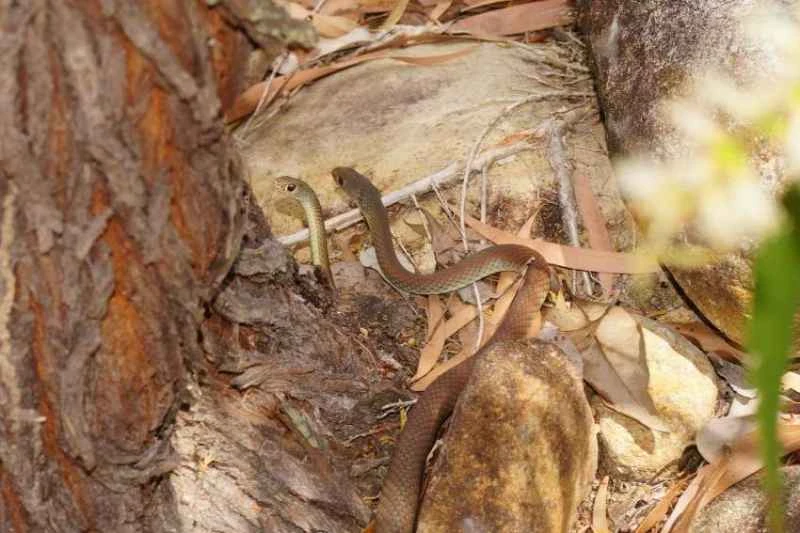
Widely distributed in eastern and southern Australia, from eastern Queensland, New South Wales, Victoria to parts of South Australia, it inhabits open woodlands, scrublands, savannas, rocky slopes, as well as green spaces near farmland and residential areas, often using rocks, fallen logs and building debris as hiding places.
Appearance
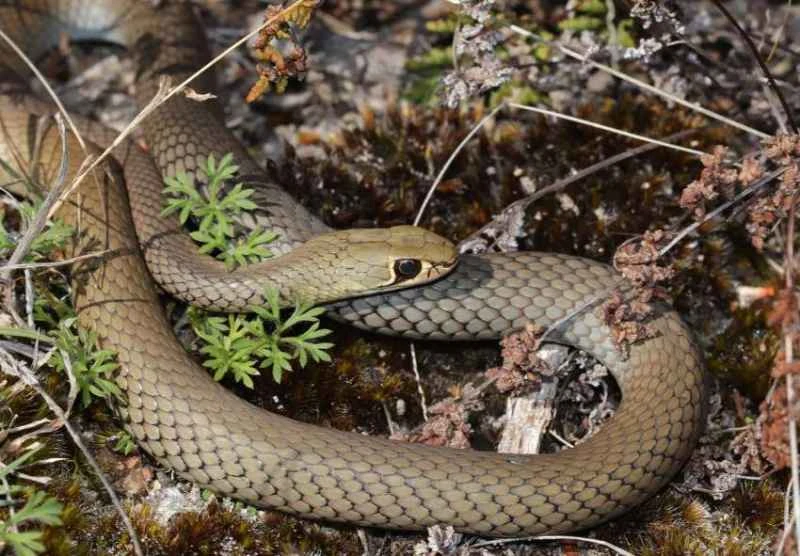
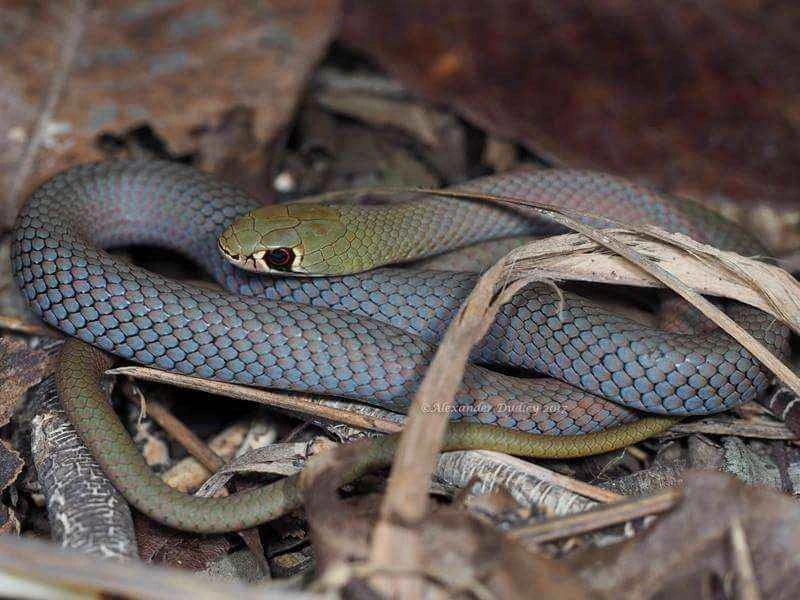
The body is slender and sturdy, with the back typically olive green, grayish-green, or brownish-gray. Distinct light yellow or cream-colored horizontal stripes run from behind the eyes down the neck, and light-colored vertical stripes often accompany the sides, contrasting with the dark back. The underside is lighter in color, cream or light gray. The head is slightly flat and narrow, with large eyes that give an impression of sharpness and agility.
Detailed introduction
The Yellow-faced Whip Snake (scientific name *Demansia psammophis *) is a slender, extremely fast-moving, mildly venomous snake native to Australia, belonging to the genus *Demansia* in the family Elapidae. It gets its name from the distinctive yellow or light-colored stripes behind its eyes and along its sides, and is one of the common small to medium-sized diurnal snakes in eastern and southern Australia.
Classification and nomenclature
The yellow-faced whip snake belongs to the class Reptilia, order Squamata, suborder Serpentes, family Elapidae, and genus Demansia . The genus Demansia includes various small to medium-sized venomous snakes with slender bodies that hunt using sight and speed. Demansia psammophis is broadly referred to as the yellow-faced whip snake complex, with several geographic types exhibiting slight variations in color and size in different regions. The English name, Yellow-faced Whip Snake, is a direct translation of "yellow-faced whip snake," highlighting the bright stripes around its eyes and sides.
Appearance features
The yellow-faced whip snake is slender and flexible, with adults typically reaching 80–120 cm in total length, though some larger individuals may be slightly longer. Its back is mostly olive green, grayish-green, brownish-gray, or gray with a slight metallic sheen, sometimes with faintly visible fine horizontal stripes or spots. The head is slightly flattened and not wide, with large, round pupils. The most distinctive feature is a pale yellow or cream-colored horizontal stripe extending from behind the eye towards the neck, and light-colored longitudinal stripes along the sides of the body, contrasting with the dark back. The underside is lighter in color, ranging from cream and light gray to slightly greenish. Overall, it is a small venomous snake that is "slender, agile, and subtly colored with bright stripes around the eyes."
Distribution range and habitat
The yellow-faced whip snake is endemic to Australia, with a wide distribution ranging from eastern Queensland and most of New South Wales to parts of Victoria and South Australia, and has also been recorded in southern Western Australia and parts of the interior. They are adapted to a variety of habitats, including open woodlands, scrubland, savanna, rocky slopes, farmland edges, roadsides, and green spaces near urban and rural residential areas. They often use rocks, fallen logs, tree root crevices, and human construction debris (such as piles of sheet metal and planks) as hiding places.
Lifestyle Habits and Behaviors
The yellow-faced whip snake is primarily diurnal, most active during the bright, warm daytime. It is known for its agility and speed, almost always fleeing quickly when disturbed, disappearing into nearby grass or crevices. Yellow-faced whip snakes are mostly active on the ground, but will also climb short distances through low bushes or piles of rocks. At night, they mostly return to hidden caves, crevices, or building gaps to rest. Generally, they are shy and prone to avoidance, but if cornered, roughly grasped, or persistently provoked, they may bite defensively.
feeding habits
The yellow-faced whip snake is a sight-based, active predator, primarily hunting small lizards (especially skinks), lizard larvae, and a small number of small snakes and frogs. It also occasionally preys on small mammals and large insects. They actively search for prey during the day, using their keen eyesight to spot small reptiles in motion. They then approach and bite with incredible speed, injecting venom and waiting for their prey to weaken or die before swallowing it whole.
Reproduction and life cycle
The yellow-faced whip snake is an oviparous species, with its breeding season typically from late spring to summer. During the breeding season, males actively seek out females, which may result in fighting or contesting between males. After fertilization, the female lays several to more than ten soft-shelled eggs in caves, crevices, or piles of loose rocks, the exact number varying depending on the female's size and nutritional status. The eggs hatch in a warm, relatively dry environment over several weeks to two months. The hatchlings are then able to live independently and begin preying on small lizards and other small prey. Precise lifespan in the wild is unknown, but it is generally believed to be several years.
Relationship with humans
The yellow-faced whip snake is widely distributed in farmland, pastures, and near residential areas, and is one of the slender, brownish-green snakes commonly found in eastern and southern Australia. Its venom is highly lethal to small reptiles, but to humans it is considered a "medically important but low-risk" venomous snake: bites can cause localized pain, swelling, nausea, headache, and muscle discomfort; in rare severe cases, systemic reactions may occur, so it should still be taken seriously. After a bite, pressure immobilization should be applied immediately, and the victim should be taken to a veterinarian as soon as possible for professional assessment to determine if antivenom is needed. Generally, the yellow-faced whip snake is more inclined to flee than attack, and usually does not cause problems unless deliberately captured or disturbed.
Protecting the status quo and threats
In current assessments, the yellow-faced whip snake is generally considered a widely distributed species, still relatively common in many areas, and close to the IUCN "Least Concern" category. Compared to species highly dependent on wetlands or narrow habitats, it is more adaptable to habitat change, utilizing human-modified environments such as farmland edges, roadsides, and urban green spaces. However, local populations may still be affected by roadkill, domesticated or wild predators such as cats and dogs, and indiscriminate hunting of snakes. Key to protecting the yellow-faced whip snake and other native small venomous snakes lies in: maintaining diverse woodland and shrub habitats, raising public awareness of the ecological value of snakes and safe coexistence in residential areas, and reducing unnecessary hunting out of fear.
Frequently Asked Questions
Q1: Is the venom of the yellow-faced whip snake fatal to humans?
The venom of the yellow-faced whip snake is highly lethal to prey such as small lizards, but is moderately toxic to humans, rarely causing death, though it can still cause noticeable symptoms. In rare severe cases, antivenom may be required. Therefore, if bitten, immediate pressure immobilization and prompt medical attention are essential.
Q2: How to quickly identify the yellow-faced whip snake?
Its typical features include a slender, brownish-green or grayish-green body, and a pale yellow or cream-colored horizontal stripe extending from behind the eye to the neck, often accompanied by light-colored longitudinal stripes on the sides of the body. Compared to other brown snakes, it has a more slender body and a smaller head, making it more like a "whip".
Q3: What should I do if I find a yellow-faced whip snake in my yard?
Remain calm and keep a safe distance from the snake, allowing it to leave on its own. Do not attempt to catch or strike it, as this may anger the snake and cause a bite. If its location poses a significant risk to children or pets, contact your local professional snake catcher or wildlife agency.
Q4: What role does the yellow-faced whip snake play in the ecosystem?
The yellow-faced whip snake primarily preys on small lizards and some small mammals, helping to control their populations. It is an important small predator in open woodland and farmland edge ecosystems. At the same time, it also provides food for predators such as birds of prey and larger snakes.


