Basic Information
Scientific classification
- Chinese name: Humpback whale
- Scientific name: Megaptera novaeangliae
- Order: Cetacea
- Family and genus: Fin whale family, Humpback whale
Vital signs data
- Body length: Adults are usually about 12–16 meters long, with some large female whales reaching nearly 18 meters.
- Weight: Adults typically weigh between 25 and 40 tons, with the largest individuals reaching around 40 tons.
- Lifespan: Lifespan can typically reach several decades, and under good conditions it can approach or exceed 80 years.
Significant features
Known for its exceptionally long pectoral fins, warts on its head, and spectacular leaps; a typical long-distance migratory whale.
Distribution and Habitat
They are found in almost all oceans around the world: in summer they mostly forage in cold waters at high latitudes, and in winter they migrate to warm waters at low latitudes to breed and raise their young.
Appearance
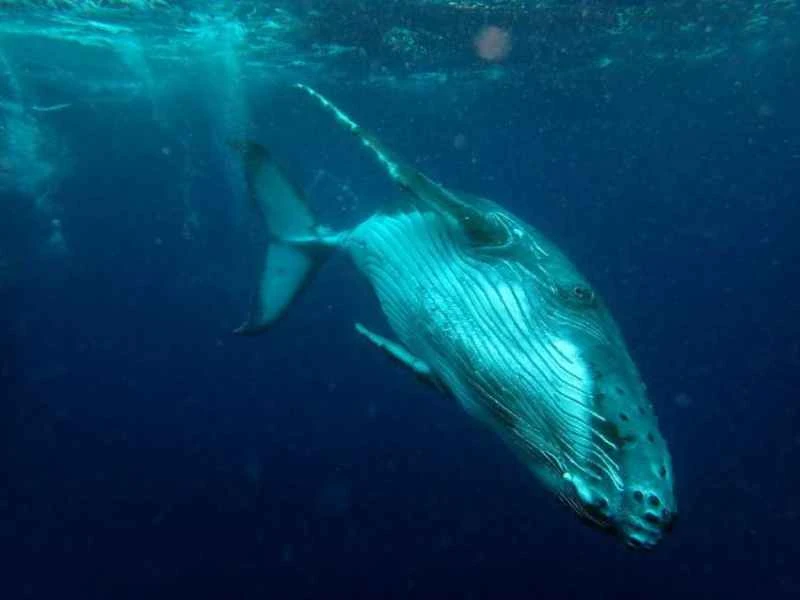
The back is dark gray to black, and the belly often has black and white patterns; the pectoral fins are extremely long, reaching about one-third of the body length; the head has tubercles and is often covered with barnacles.
Detailed introduction
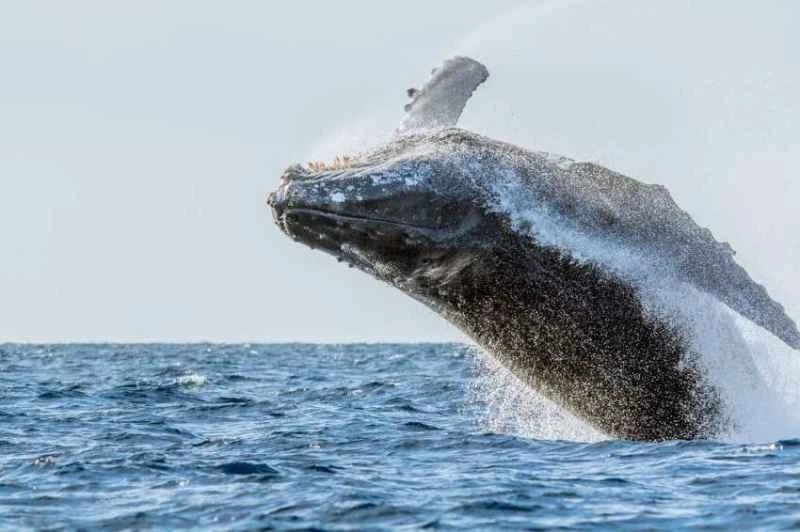
Humpback whales (scientific name: Megaptera novaeangliae ) are among the most well-known large baleen whales, famous for their exceptionally long pectoral fins, warts on their heads (skin nodules), and spectacular breaching behavior. They are widely distributed in the world's oceans, typically foraging in high-latitude waters and breeding and raising their young in low-latitude, warm waters, making them typical long-distance migratory whales.
Humpback whales have historically suffered a sharp decline in numbers due to commercial whaling, but in recent years, thanks to conservation efforts and whaling bans in many countries, many populations have recovered significantly. However, they still face multiple pressures, including entanglement in fishing gear, ship collisions, ocean noise, pollution, and climate change.
Classification and nomenclature
Humpback whales belong to the order Cetacea, suborder Mysticeti, family Balaenopteridae, and are the only extant species in the genus Megaptera . The genus name originates from Greek and means "giant wings," referring to their unusually long pectoral fins.
Appearance features
They have a robust build, with a back that is mostly dark gray to black and a belly that often features black and white stripes. The pectoral fins are very long, reaching about one-third of the body length, and their edges are often serrated. The caudal fin has a highly individual variation in its ventral pattern, which is often used for identification. The head and beak are covered with tubercles, on which barnacles and whale lice often attach.
Distribution range and habitat
Humpback whales are found in almost all oceans worldwide. They typically migrate to high-latitude, high-productivity, cold-water areas (near the polar continental shelf, bays, or upwelling zones) to feed in the summer; and migrate to low-latitude, warmer waters (around islands, shallow waters, or near coral reefs) in the winter to mate, give birth, and raise their calves. Migration routes and breeding grounds vary between different ocean basins and populations.
Lifestyle Habits and Behaviors
They are usually solitary or in small groups, but may also form loose gatherings in feeding areas. Humpback whales are known for their diverse surface behaviors, including leaping, flapping their pectoral fins, and flapping their tails. Adult male whales emit complex "whale songs" during the breeding season, which are believed to be related to courtship and social communication.
feeding habits
Primarily feeding on krill and small fish, they often use cooperative or individual hunting methods, such as "bubble nets," to encircle and swallow their prey. Their throat and ventral grooves can expand, allowing them to swallow large amounts of seawater and prey at once, which are then filtered through baleen plates.
Reproduction and life cycle
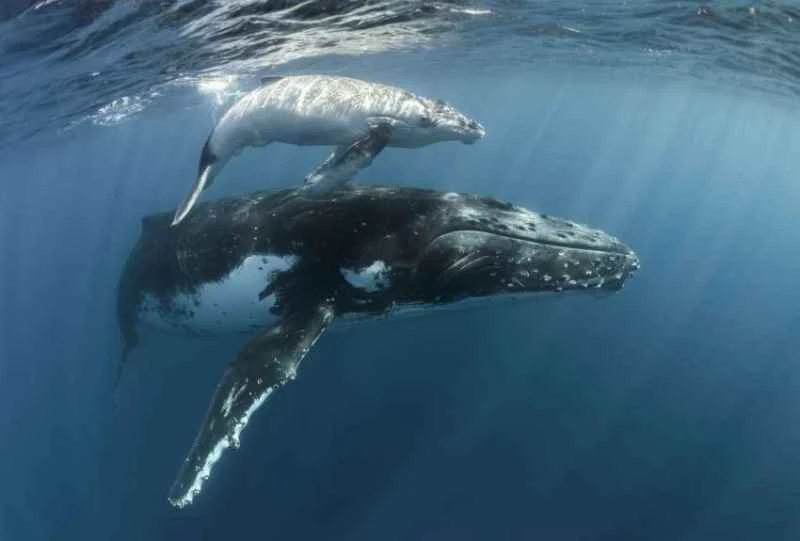
The gestation period is about one year, and each calf usually gives birth to one. Newborn calves are about 4–5 meters long and grow rapidly primarily by drinking high-fat milk. They learn migration and foraging skills from their mothers in warm waters. Humpback whales typically live for decades, and under favorable conditions, they can live close to or exceed 80 years.
Relationship with humans
Humpback whales are a flagship species for whale watching tourism, generating significant ecotourism revenue. However, human activities can also cause disturbances, such as close-range chasing, speedboat noise, and drone interference. Scientific research typically uses photographic tail fin patterns, satellite tagging, and acoustic monitoring to understand their migration and population dynamics.
Protecting the status quo and threats
Globally, the IUCN classifies humpback whales as Least Concern (LC), reflecting the recovery trend in many populations; however, the degree of recovery varies across different sea areas, with a few regions still showing greater vulnerability. Major threats include gear entanglement and bycatch, ship collisions, marine noise (such as sonar and seismic exploration), marine debris and chemical pollution, and the indirect impacts of climate change on prey resources and marine ecosystems.
Frequently Asked Questions
Q1: Why are humpback whales called "humpback" whales?
The name is related to the shape of its back and the position of its dorsal fin; in some languages and regions it is also called "bigwing whale," emphasizing its unusually long pectoral fins.
Q2: Why are the pectoral fins of humpback whales so long?
Extra-long pectoral fins aid in steering and maneuverability, and may also play a role in courtship displays, calf learning, and hunting.
Q3: What do humpback whales eat?
They mainly feed on krill and small schooling fish, and often use bubble nets and other methods to trap their prey before swallowing them and filtering them with baleen.
Q4: Are humpback whales still endangered?
At the global level, the IUCN assesses it as Least Concern (LC), and many populations have recovered; however, it continues to be threatened by netting, ship collisions, noise, and climate change, requiring long-term protection and management.