Basic Information
Scientific classification
- Chinese name: Orca
- Scientific name: Orcinus orca
- Order: Cetacea
- Family and genus: Dolphinidae, Orca
Vital signs data
- Body length: Adult male whales are usually about 6–8 meters long, and female whales are about 5–7 meters long; the largest individuals can reach about 9–9.8 meters in length.
- Weight: They can weigh over 10 tons, with the largest recorded weight being about 11 tons; female whales are generally lighter.
- Lifespan: Male whales live an average of about 30 years, but can live to at least 60 years; female whales live an average of about 50 years, but can live to at least 90 years.
Significant features
The apex predators of the dolphin family have a distinct “group culture”: different ecotypes have vastly different diets, vocalizations, and hunting methods.
Distribution and Habitat
They are found in almost all oceans around the world; they are more common in cold waters, but also in temperate and tropical regions, and can be active both near the coast and in the open ocean.
Appearance
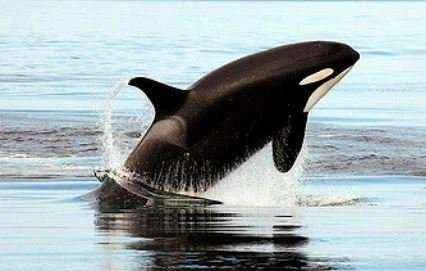
The distinct black and white body color and white eye spots are very eye-catching; there are gray-white saddle spots behind the dorsal fin; the male whale's dorsal fin is high and straight, reaching about 1.8 meters, while the female/juvenile whale's dorsal fin is lower and sickle-shaped.
Detailed introduction
Orcas (scientific name: *Orcinus orca *), also commonly known as killer whales or "Orca," are the largest species in the dolphin family and one of the most representative apex predators in marine ecosystems. They are found in oceans worldwide, from polar regions to tropical zones, and can be found both nearshore and in the open ocean.
Orcas are known for their high degree of social and “cultural” diversity: different populations (or ecotypes) vary significantly in their diet, hunting methods, vocalizations, and range. Some populations feed almost exclusively on fish (e.g., primarily salmon), while others prey mainly on marine mammals. Because of this complexity, assessing global population trends is not easy.
Classification and nomenclature
Orcas belong to the order Cetacea, suborder Odontoceti, family Delphinidae, and genus Orcinus . They are generally considered a single species, but the scientific community continues to research and discuss whether different ecotypes should be classified as subspecies or even independent species.
Appearance features
The whale exhibits a striking black and white coloration: its back and sides are predominantly black, while its belly is white, with a distinct white "eyespot" behind each eye. A grayish-white "saddle patch" is commonly seen behind the dorsal fin, the shape of which varies depending on the individual and the population. Adult male whales have tall, upright dorsal fins that can reach approximately 1.8 meters; females and calves have lower, more sickle-shaped dorsal fins. Their pectoral fins are broad and paddle-shaped, and their bodies are robust and powerful.
Distribution range and habitat
Orcas are among the most widely distributed cetaceans, found in almost every ocean. They are more common in cold waters (such as Antarctica, Norway, and Alaska), but can also be found in temperate and tropical waters. Their habitats are diverse, including nearshore bays, straits, continental shelf edges, and open ocean; some populations prefer nearshore areas and have more stable ranges, while others are more offshore.
Lifestyle Habits and Behaviors
Orcas are highly social animals, often living in pods, with many individuals remaining with their maternal relatives throughout their lives. They rely on underwater vocalizations for communication and navigation, and different pods possess dialectal vocalizations that can be learned and passed down through generations. When hunting, they often employ cooperative hunting strategies, similar to wolf packs, and can develop unique tactics for different prey.
feeding habits
Orcas have the most diverse diet among cetaceans: from fish (such as salmon and herring) to squid, sea turtles, seabirds, and even other marine mammals (seals, sea lions, porpoises, dolphins, and some cetacean larvae). However, specific populations often exhibit significant "specialization," which is closely related to their culture and habitat.
Reproduction and life cycle
Female whales typically reach sexual maturity around 10–13 years of age; the gestation period is approximately 15–18 months, and they usually give birth to one calf per litter. For at least the first year after birth, the calf primarily nurses from its mother and learns foraging and social skills in the mother's presence. Regarding lifespan, male whales have an average lifespan of about 30 years, but can live to at least 60 years; female whales have an average lifespan of about 50 years, but can live to at least 90 years.
Relationship with humans
Orcas are an important species for whale watching tourism and receive significant public attention. However, they are also subject to disturbance from shipping activity and noise; in some areas, they are driven away or even injured due to competition with fisheries or their feeding on catches. Historically, there has been pressure to capture them live for aquarium displays, a concern that remains a potential risk in some regions.
Protecting the status quo and threats
Due to significant differences in populations across different ecotypes and regions, and the continued uncertainty regarding their taxonomic status, the IUCN classifies orcas as "Data Deficient (DD)" globally. However, at the regional level, some populations are listed at higher levels of protection; for example, the Southern Resident in the Pacific Northwest of the United States is considered endangered under local laws. Current major threats include entanglement and bycatch in fishing gear, ship noise and disturbance, accumulation of chemical pollutants in blubber, declining food resources (such as reduced salmon populations), and sudden pollution events such as oil spills.
Frequently Asked Questions
Q1: Is an orca a "whale" or a "dolphin"?
From a classification perspective, killer whales belong to the family Delphinidae and are the largest "dolphins"; in Chinese they are often called "orca" or "killer whale", while in English they are often called killer whales or orca.
Q2: Do orcas attack humans?
Direct attacks on humans are extremely rare in the wild. Orcas are more focused on their primary prey, but approaching them should still be done at a safe distance and in accordance with local whale watching regulations.
Q3: Why are orcas divided into different "ecotypes"?
Different ethnic groups have developed different diets and hunting strategies through long-term adaptation, and have also developed unique calls and social structures. These differences can be passed down from generation to generation, similar to "culture".
Q4: Are killer whales currently considered endangered?
At the global level, the IUCN data deficiency (DD) status is not a simple conclusion of "least concern" or "endangered"; however, some regional populations (such as southern populations) do face a higher risk of extinction and are listed as endangered.