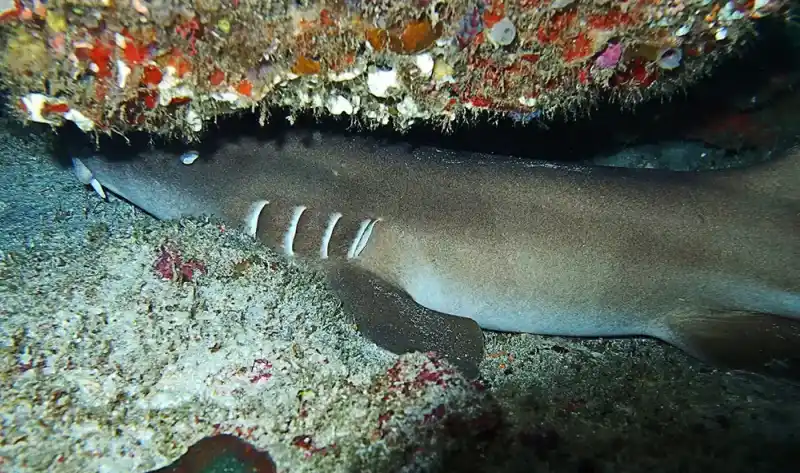
Basic Information
Scientific classification
- Chinese name: Nurse Shark
- Scientific name: Ginglymostoma cirratum
- Classification: Large fish
- Family and Genus: Scutigeraceae (Family of Scutigeraceae)
Vital signs data
- Body length: Commonly 2.0–3.0 m
- Weight: Commonly 70–110 kg
- Lifespan: Approximately 25–35 years
Significant features
They are nocturnal; they feed on benthic prey with strong suction; they are ovoviviparous, giving birth to 20–30 offspring per litter; they are loyal to their sites and have a small range of activity.
Distribution and Habitat
Coral reefs, seagrass beds, and mangroves are commonly found near the western Atlantic coast, ranging from 1 to 40 meters in length.
Appearance
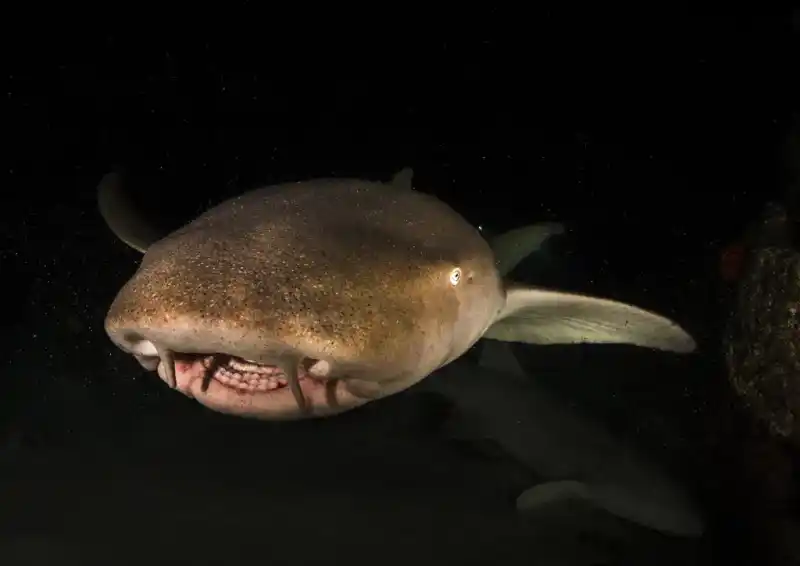
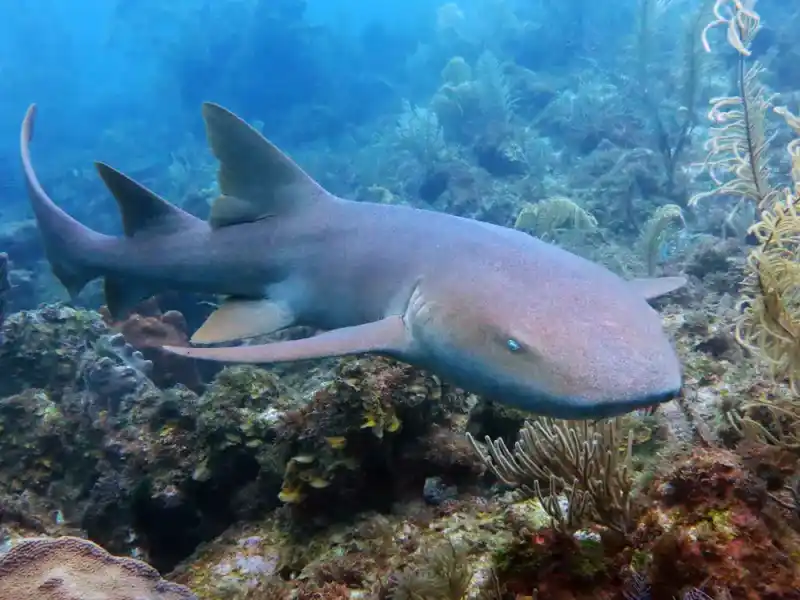
The snout has barbels; the two dorsal fins are positioned towards the rear; the body is yellowish-brown to grayish-brown; juveniles have pale spots; and there are spiracles.
Detailed introduction
The nurse shark ( Ginglymostoma cirratum ) belongs to the family Ginglymostomatidae and is one of the most common medium to large nearshore sharks in the western Atlantic and Caribbean Seas. Known for its nocturnal bottom-dwelling ambush behavior , it often rests in caves, reef crevices, or sandy bottoms during the day, making it highly visible and valuable for local diving tourism.
Ecology and Behavior
Diet: Mainly bottom-dwelling fish, crustaceans and mollusks (such as lobsters, crabs and octopuses); the mouth can form a strong suction to suck up prey.
Daily routine: Typically active at night and resting during the day ; station-loyal and with a small range of activity, often recurring at fixed rest points.
Reproduction: Ovoviviparous , gestation period is about 5-6 months; each litter contains about 20-30 fry (regional variation), and the breeding interval can be 2 years.
Morphology and Recognition
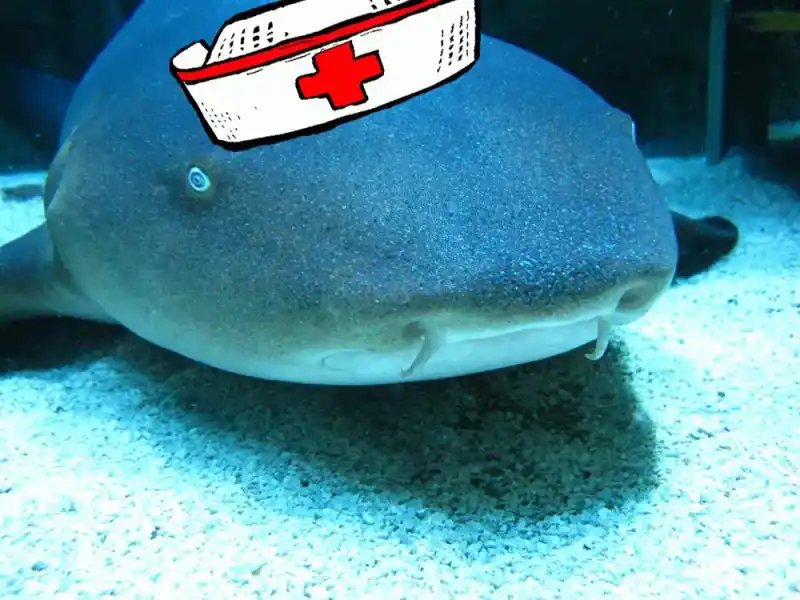
The snout has a pair of distinct barbels ; the mouth is inferior and the teeth are fine and dense; the first and second dorsal fins are positioned posteriorly ; the caudal peduncle is short; the body color is mostly uniform yellowish-brown to grayish-brown (juveniles have light spots); there is a small spiracle behind the eye; the skin is rough and the color difference between the back and belly is not significant.
Body size and lifespan
Body length: Commonly 2.0–3.0 m (extreme values are slightly larger).
Weight: Commonly 70–110 kg (larger females weigh more).
Lifespan: Approximately 25–35 years (regional variations).
Distribution and Habitat
They are mainly distributed in the western Atlantic Ocean (from the southeastern United States to the Caribbean and Brazil), including the Gulf of Mexico and the Bahamas; they are commonly found nearshore coral reefs, seagrass beds, mangroves and sandy bottoms, in waters ranging from 1 to 40 m in depth.
Threats and Protection
Fisheries stress: small-scale and recreational fishing along the coast; accidental catches and entanglement in fixed nets.
Habitat degradation: coral reef degradation, mangrove loss and coastal pollution.
Human-shark interaction: Improper feeding and close contact may trigger biting incidents and alter behavior.
IUCN Global Assessment: Vulnerable (VU) . Management priorities: Spatial and temporal protection of critical habitats and resting sites; regulations on bycatch reduction and release; tourism regulations (no feeding, no touching, and limits on the number of people and distance).
Frequently Asked Questions
Q1: Is it "docile and safe"? It usually does not attack unless provoked, but may bite defensively when provoked or fed; keep your distance and do not touch it.
Q2: Why do people gather at the bottom of the room during the day? This is a combination of energy conservation and social behavior, with high activity levels at night.
Q3: How to distinguish it from other nearshore sharks? The key identification features are the snout barbels, two rearward-positioned dorsal fins, a short caudal peduncle, and a uniform brown color.
Q4: Can it enter freshwater? Occasionally, it enters brackish estuaries for short periods, but it mainly prefers nearshore waters and reef areas.