Basic Information
Scientific classification
- Chinese name: Smooth Hammerhead Shark
- Scientific name: Sphyrna zygaena
- Classification: Large fish
- Family and genus: Scalloped hammerhead shark (Scalloped hammerhead shark)
Vital signs data
- Body length: Commonly 2.5–3.5 m; Maximum ~4 m
- Weight: Commonly 100–230 kg; Maximum ~300–400 kg
- Lifespan: Approximately 20–30 years
Significant features
Widely distributed in temperate to tropical regions; placental ovoviviparous; migrating in groups; feeding on mid-to-upper-level fish/stingrays/cephalopods.
Distribution and Habitat
Nearshore to offshore surface to upper layer (0–200+ m); more resistant to cold water, also common in temperate zones.
Appearance
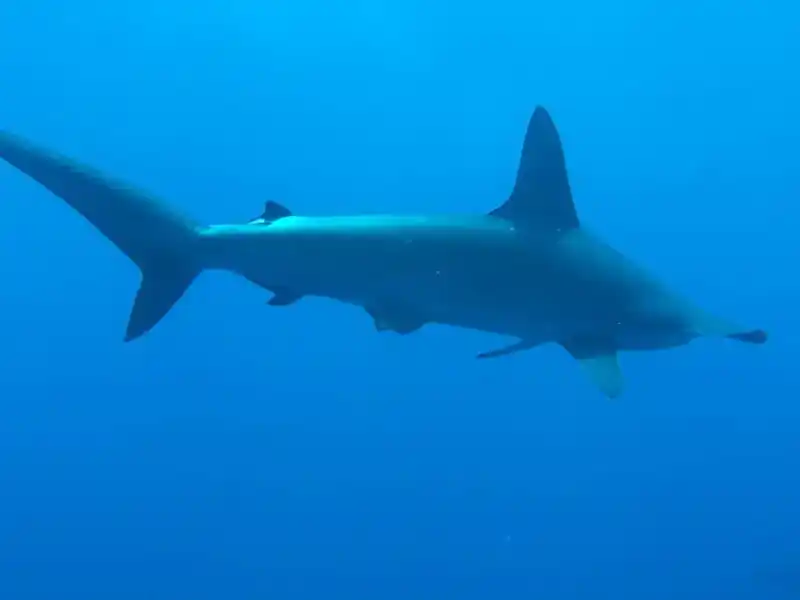
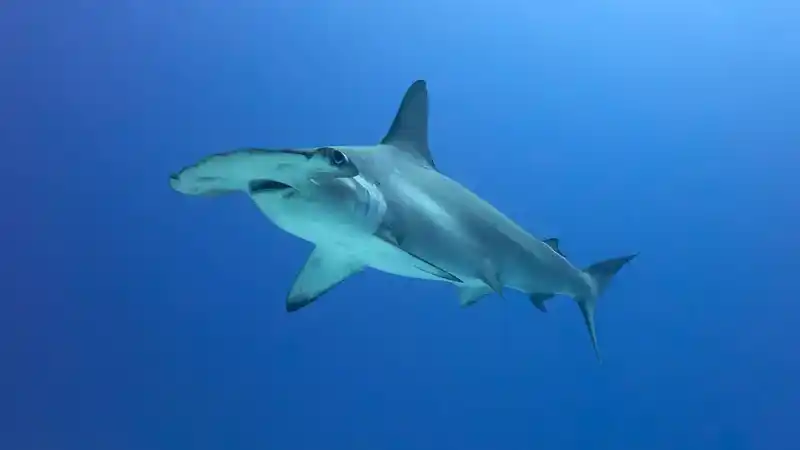
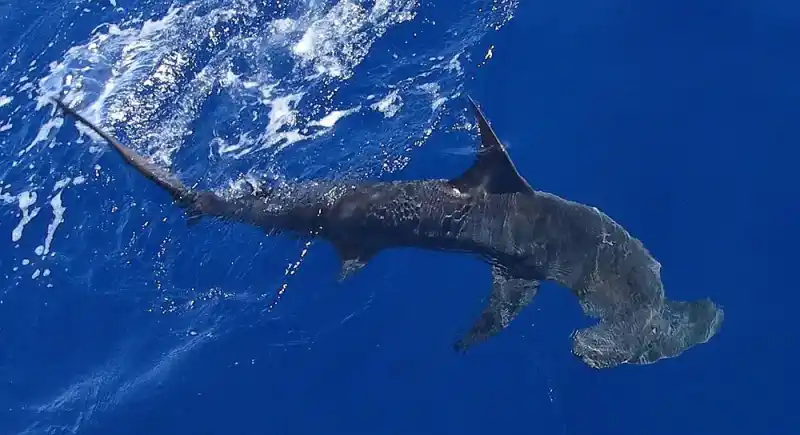
The anterior margin of the head lobe is straight and without notches; the first dorsal fin is tall and sickle-shaped; the back is gray and the belly is white; pale white/black edges are visible on the fin margins of juvenile fish.
Detailed introduction
The smooth hammerhead shark ( Sphyrna zygaena ) is a medium to large predatory shark widely distributed in temperate to tropical waters worldwide, belonging to the family Sphyrnidae . Its "hammer-shaped head" ( cephalofoil ) enhances its olfactory/electrocution and steering efficiency at sea level, which helps it prey on mid-to-upper-level fish, rays, and cephalopods .
Ecology and Behavior
Migration and colonization: They exhibit seasonal migration; juveniles and subadults often live in groups.
Feeding: Small herring, squid, stingrays and crustaceans, etc.; chases prey along the edge of the continental shelf and the upper layers.
Reproduction: placental ovoviviparous ; gestation period approximately 8–11 months; litter size approximately 20–50 fry (regional variation).
Morphology and Recognition
The almost straight leading edge of the head lobe without a central notch is the key difference between it and the "fan-shaped hammerhead shark" ( S. lewini ); the first dorsal fin is tall and sickle-shaped, narrower than the "long-tailed giant hammerhead shark" ( S. mokarran ) and without a prominent right-angle leading edge; the back is grayish-brown to olive-gray, the belly is white, and the pectoral/caudal fin edges of juveniles show pale white or black edges.
Body size and lifespan
Body length: Commonly 2.5–3.5 m, with an extreme total length of about 4 m .
Weight: Commonly 100–230 kg, with a maximum of ~300–400 kg (record variations).
Lifespan: Approximately 20–30 years (regional variations).
Distribution and Habitat
Almost all temperate to tropical offshore and shelf waters worldwide : from nearshore lagoons and estuaries to the surface to upper layers of the open ocean (usually 0–200+ m). Compared to other hammerheads, it is more resistant to cold water and is also common in temperate waters.
Threats and Protection
Fisheries stress: target/bycatch from longline fishing, gillnetting and trawl; high risk from shark fin trade .
Biological vulnerability: late maturity and slow growth despite high litter size limit the population's recovery rate.
IUCN Global Assessment: Vulnerable (VU) . Management priorities: quotas and minimum body length , hotspot closures , reduction of bycatch and immediate release (round hooks, weak breaks), and trade regulation and traceability.
Frequently Asked Questions
Q1: How to distinguish it from the wavy hammerhead shark/long hammerhead shark? This species has no central notch on its head lobe and its anterior margin is relatively straight; the largest dorsal fin is high but its anterior margin is not at a right angle;
The long hammerhead ( S. mokarran ) has a wider head and a larger, "right-angled" first dorsal fin.
Q2: Does it live close to the shore? Yes, especially the juveniles often live in shallow sea shelves/estuaries, while the adults are more exotropic and migrate with the seasons.
Q3: Is it dangerous to humans? It is generally not aggressive towards humans, but large individuals should be kept at a distance to avoid interference from the bait's diving.
Q4: Why is it rated as vulnerable? Pressure from fishing and the shark fin trade, coupled with low growth rates, has led to a decline in populations in many areas.