Basic Information
Scientific classification
- Chinese name: Giant manta ray (or giant manta ray)
- Scientific name: Mobula birostris (= Manta birostris)
- Classification: Large fish
- Family: Mophaniidae; Genus: Mophani
Vital signs data
- Body length: Body disc width commonly 4–6 m; maximum ~7 m+
- Weight: Commonly 1,000–1,500 kg
- Lifespan: Approximately 30–50+ years
Significant features
Filter-feeding oceanic migration; cleaning station circling; ovoviviparous, single-birth, late maturity.
Distribution and Habitat
Tropical to subtropical to warm temperate offshore waters and continental slopes; associated with fronts, upwellings, seamounts, and clean stations.
Appearance
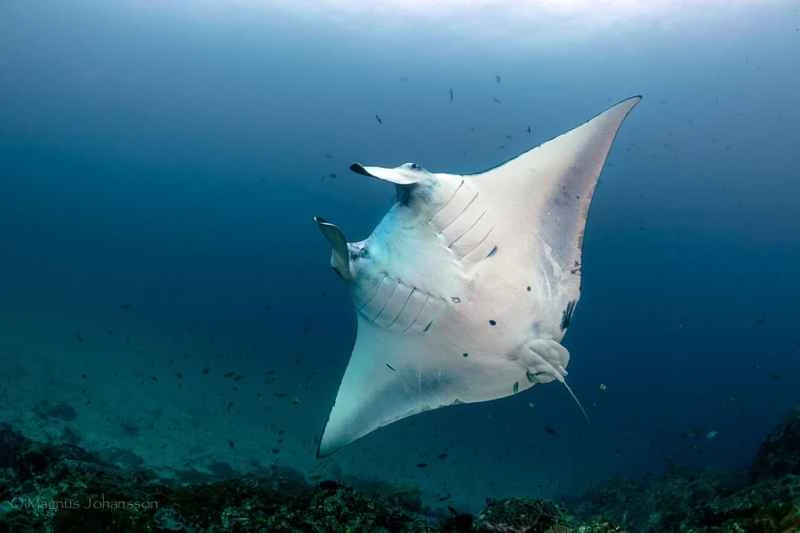
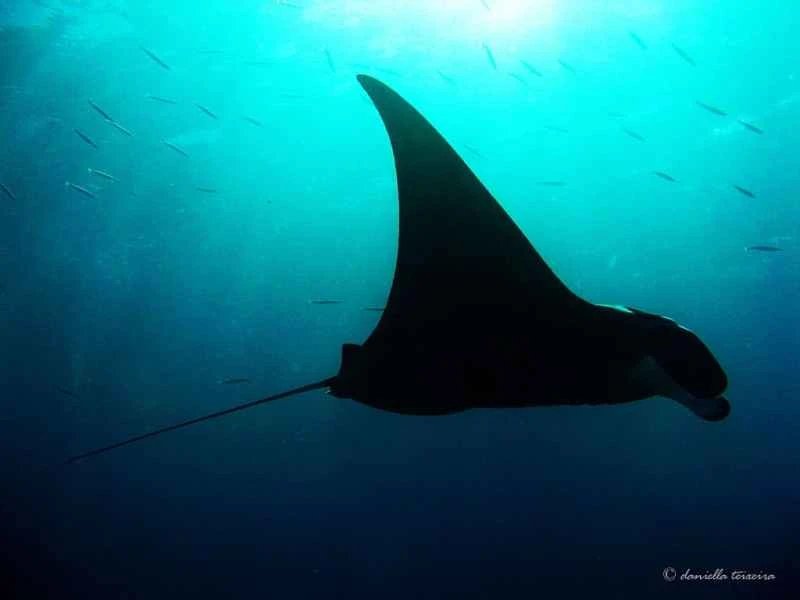
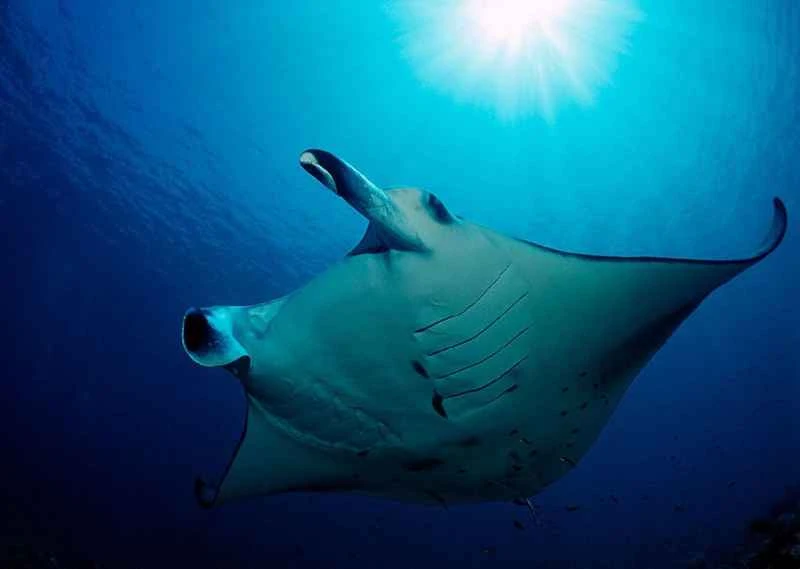
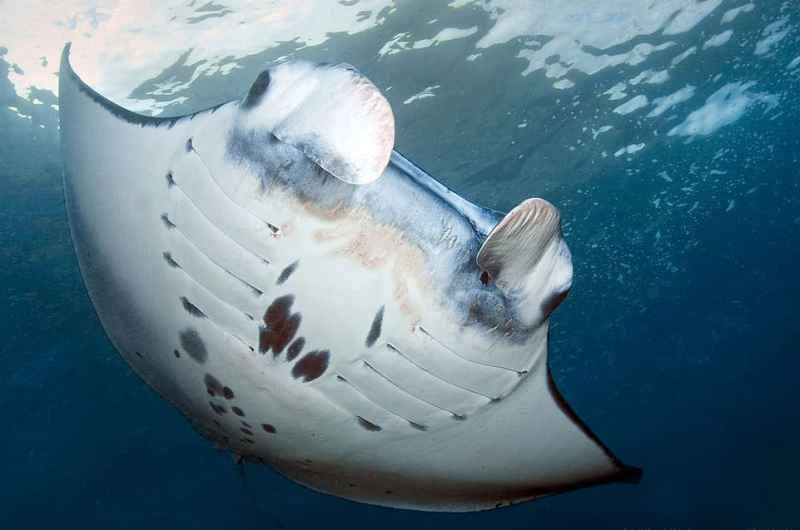
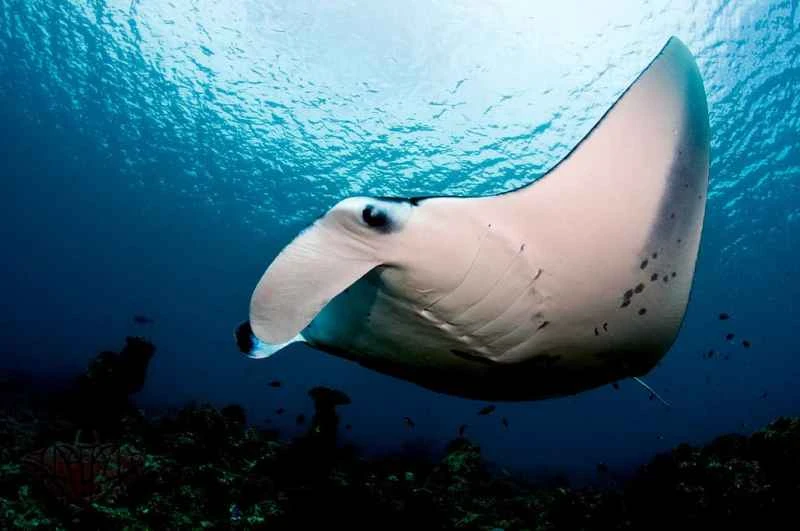
Extremely broad, wing-like pectoral fins and a head fin that can be rolled up; terminal mouth; dark back, white belly with asymmetrical black spots; distinct shoulder markings.
Detailed introduction
The giant manta ray ( Manta birostris , now often written as Mobula birostris ) is one of the rays with the widest body disc and belongs to the family Mobulidae . It mainly filters plankton and small fish, and often circles around upwelling and reef cleaning stations before making its ocean migration.
Ecology and Behavior
Feeding: krill, copepods, and fry; food is guided into the mouth via cephalic lobes .
Reproduction: Ovoviviparous , mostly single births ; late maturity and low birth rate (one birth every few years).
Behavior: Leaps out of the water; slowly circles around the cleaning station to remove parasites.
Morphology and Recognition
The body disc is rhomboid , with extremely broad, wing-like pectoral fins; a pair of foldable cephalic fins ; terminal mouth; dark back, white belly with asymmetrical black spots (used for individual identification), and common shoulder markings . It is larger and more pelagic than Mobula alfredi .
Body size and lifespan
Disk width: Commonly 4–6 m; extreme value ~7 m+.
Weight: Commonly 1,000–1,500 kg.
Lifespan: Approximately 30–50+ years.
Distribution and Habitat
Global tropical-subtropical-warm temperate offshore waters and continental slopes; associated with fronts, upwellings, seamounts and reef edge cleaning stations , migrating with baiting grounds.
Threats and Protection
Fisheries pressures: gillnet/purse seine/longline by-fish catches and target fishing; historically driven by the gill sac trade .
Vessel collisions and entanglement: Surface activity increases the risk of injury and ghost gear entanglement.
Tourism disruptions: containment, touching, and feeding.
IUCN: Endangered (EN) ; CITES Appendix II . Recommendations: Hotspot speed limits and buffer zones, reduction of bycatch and immediate release, clean-up station protection and responsible viewing guidelines.
Frequently Asked Questions
Q1: What are the names Manta and Mobula? The latest classifications often include manta rays in Mobula , and giant manta rays are now mostly called Mobula birostris .
Q2: Will it hurt people? It has no venomous stings and is docile; however, its huge size requires caution when sailing.
Q3: How to distinguish it from the reef manta ray? The manta ray has a larger disc, is more offshore, and has different shoulder and ventral black spot patterns.
Q4: Conservation status? IUCN Endangered; key measures include reducing by-fishing and protecting clean stations, as well as regulating diving tourism.