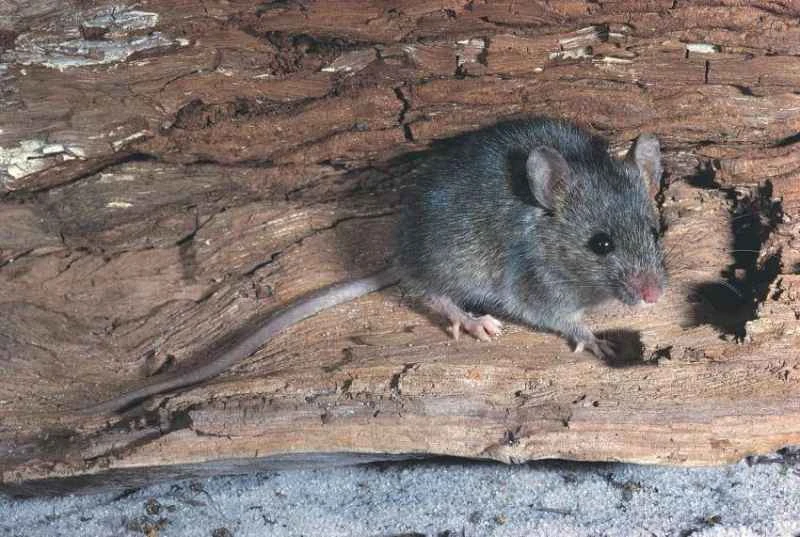
Basic Information
Scientific classification
- Chinese name: House mouse
- Scientific name: Mus musculus
- Classification: Rodentia
- Family and genus: Muridae, genus *Mice*
Vital signs data
- Body length: Head and body length approximately 6.5–9.5 cm, tail length approximately 6–10.5 cm (slight variations depending on individual and region).
- Weight: Adult weight is usually about 12–30 grams.
- Lifespan: In the wild, it usually does not exceed 12–18 months; under domestic/experimental conditions, it averages about 2 years, and some may live longer.
Significant features
One of the most adaptable and successful rodents to coexist with humans; it reproduces quickly and has a strong ability to spread.
Distribution and Habitat
They are now found almost all over the world, commonly in human settlements, farms and storage environments, and can also be found in farmland, grasslands and shrublands.
Appearance
It is small in size, with a pointed snout, large round ears, and a thin, long tail with little hair; its fur is mostly grayish-brown or brownish-gray, with a lighter underside.
Detailed introduction
The house mouse ( Mus musculus ) is one of the most common rodents in the world and most closely related to humans. They are adept at adapting to various environments, and especially prefer a "companion" lifestyle associated with human settlements, so they are commonly found in cities, countryside, farms, and warehouse areas.
It should be noted that the house mouse is not an endangered animal; the IUCN classifies it as "Least Concern (LC)". However, in many islands or fragile ecosystems, the house mouse may actually become an invasive species, putting pressure on native birds, insects, and plants.
Classification and nomenclature
The house mouse belongs to the genus *Mus * of the family Muridae in the order Rodentia. In Chinese, it is often simply called "house mouse," and in different regions, it also has other colloquial names such as "mouse."
Appearance features
It is small in size, with a pointed muzzle, large and rounded ears, and a long, thin tail with relatively little hair. The coat color is mostly grayish-brown or brownish-gray, with a lighter underside; however, the coat color can vary in captivity or in experimental strains.
Distribution range and habitat
Originally thought to be associated with Eurasia, house mice are now found almost globally due to human migration and trade. They can live both inside and outside buildings, as well as in farmland, grasslands, and scrubland; their numbers tend to be higher the closer they are to human settlements.
Lifestyle Habits and Behaviors
House mice are more active at dusk and night, and are adept at using narrow crevices to build nests and hide. They have a strong ability to explore and learn, will forage and patrol along fixed routes, and can quickly adapt to new food sources and habitats.
feeding habits
It is a typical omnivore, mainly feeding on grains, seeds, and fruits, but also eating insects and meat scraps. When living in human environments, kitchen food, animal feed, and garbage are often important sources of sustenance.
Reproduction and life cycle
They are highly prolific and can reproduce multiple times when food is plentiful and temperatures are suitable. In terms of lifespan, most individuals in the wild do not exceed 12–18 months; under captive or experimental conditions, they usually live for about 2 years, and some can live longer under special conditions.
Relationship with humans
House mice are both common pests and play an important role as model organisms in biomedical research. They can spread pathogens, contaminate food, and damage building materials, so management and control are usually necessary in residential and storage areas.
Protection of the status quo and management
Globally, the house mouse population is large and widely distributed, and it is listed as Least Concern (LC) by the IUCN. In conservation practice, the focus is often not on "conservation," but on how to effectively, compliantly, and as humanely as possible control it in human-inhabited environments, and to prevent it from causing ecological damage in sensitive ecosystems such as islands.
Frequently Asked Questions
Q1: Are house mice endangered animals?
No. House mice are widely distributed and abundant globally, and are assessed as Least Concern (LC) by the IUCN.
Q2: How long do house mice typically live?
In the wild, they usually live for no more than 12–18 months; in captivity or experimental conditions, they typically live for about 2 years, and some may live longer under special conditions.
Q3: What is the difference between a house mouse and a field mouse/forest mouse?
House mice prefer environments associated with human settlements, and are smaller in size, with larger ears and longer tails. Field mice or wood mice vary greatly in classification and habits in different regions, and identification needs to be based on local species.
Q4: How to deal with house mice in the home in a more humane way?
Prioritize sealing gaps, sealing food, and cleaning up debris and garbage; if necessary, use rat traps and follow local regulations to avoid improper poisoning that could pose risks to children, pets, and wildlife.