Basic Information
Scientific classification
- Chinese name: Water Spider
- Scientific name: Argyroneta aquatica (Clerck, 1757)
- Classification: Arthropoda
- Genus and species: Argyroneta (water spider)
Vital signs data
- Body length: Female spiders are about 8–15 mm in length, while males are slightly longer but more slender; they belong to the small to medium-sized spider category.
- Weight: The weight ranges from tens to hundreds of milligrams, varying slightly with individual size.
- Lifespan: Estimated to survive 1–2 years in the natural environment, the actual lifespan depends on water quality and food availability.
Significant features
The only spider that lives its entire life underwater, it carries air through the hairs on its body and weaves a "diving bell" silk nest in the water, feeding on freshwater insects and small crustaceans.
Distribution and Habitat
They are mainly distributed in freshwater bodies in temperate regions of Europe and parts of Asia, such as ponds, shallow lakes and slow-flowing ditches with abundant vegetation, and prefer clean environments rich in aquatic plants.
Appearance
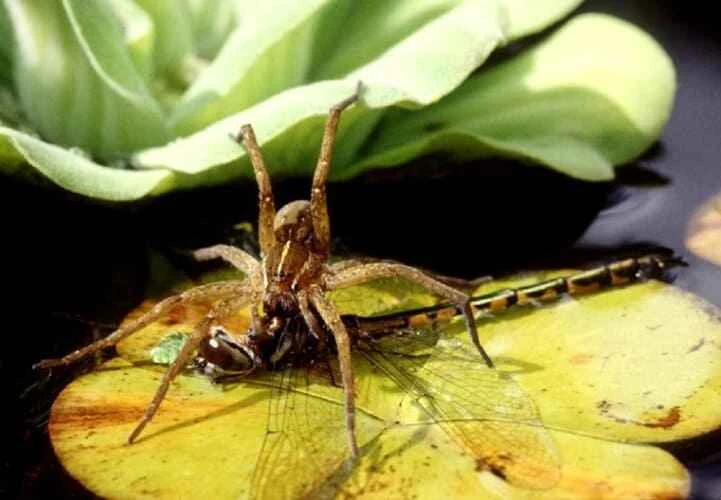
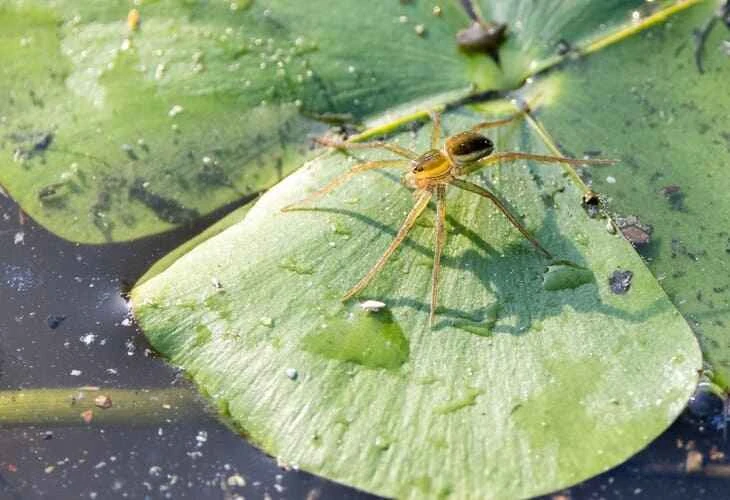
Its body is dark brown or grayish-brown, covered with fine down; when it is surrounded by air in the water, it appears silvery-white, giving it the visual effect of a "small silver ball".
Detailed introduction
Water spiders, usually referring specifically to the species with the scientific name * Argyroneta aquatica* , are also commonly known as diving bell spiders or diving bell water spiders . They are the only known spiders that live their entire lives underwater , famous for weaving "diving bell" shaped silk nests in the water, and are very unique predatory arthropods in freshwater environments.
Classification and nomenclature
Common Chinese names: Water spider, diving bell spider, diving bell water spider
Common English names: Water Spider / Diving Bell Spider
Scientific name: Argyroneta aquatica (Clerck, 1757)
Belongs to: Phylum Arthropoda → Class Arachnida → Order Araneae → Genus Argyroneta
Appearance and Identification Features
Water spiders are medium to small in size, but have a very distinctive appearance:
Size: Female spiders are about 8–15 mm long, while male spiders are usually slightly longer but more slender;
Body color: The body surface is mostly dark brown or grayish brown, and the abdomen is slightly rounded, but it is often surrounded by air bubbles in the water, so it looks silvery.
Body hair: The entire body is covered with fine downy hairs, which can capture and hold air bubbles , helping it carry air underwater.
Body structure: Similar to a typical spider, it has 8 eyes and 8 legs, but its four pairs of legs are adapted for swimming in water and attaching to aquatic plants.
When it moves in the water, the air layer surrounding its body makes it look like a small silver ball, hence the English genus name Argyroneta (meaning "silver net") is related to this.
Diving bell and breathing method
The most famous characteristic of water spiders is that they can build a diving bell underwater.
It weaves a bell-shaped or oval silken nest among aquatic plants and fixes it to the aquatic plants or other substrate;
Spiders bring back tiny air bubbles from the water's surface, wrapping them in their abdomens and hind legs to carry them back to their nests, "storing" the air in their diving bells.
As air is continuously replenished, a stable air space is formed inside the diving bell, where spiders can rest, molt, eat, and lay eggs.
Oxygen in the water will slowly diffuse through the wire walls into the diving bell, while carbon dioxide will diffuse outwards, thus the diving bell can maintain a breathable environment for a considerable period of time.
Water spiders spend most of their time near diving bells, swimming back and forth in the water to hunt for food, and only occasionally coming to the surface to refresh themselves.
Distribution range and habitat
Water spiders are mainly distributed in temperate regions of Europe and parts of Asia , and are mostly found in still or slow-moving freshwater environments, including:
Shallow water areas of ponds and lakes with abundant vegetation;
Ditches teeming with aquatic plants, and slowly flowing river bends;
Artificial water features or wetlands with abundant aquatic plants and minimal human interference.
They prefer clean, freshwater environments rich in aquatic plants and oxygen ; polluted or sparsely vegetated waters are not suitable for their survival.
Dietary habits and lifestyle
Water spiders are active underwater predators , primarily hunting:
Aquatic insects such as water fleas, small water beetles, and water mosquito larvae;
Small crustaceans, such as chironomid larvae and cladocerans;
Occasionally, they also prey on small fish fry or tadpoles that enter the vicinity of the diving bell.
Spiders typically lie in ambush near diving bells or swim among aquatic plants. Once they sense vibrations in the water or spot their prey, they quickly swim toward their target, bite it, and then drag it back to the diving bell or a quiet spot nearby to eat.
Reproduction and Development
Water spiders also court and mate underwater. The female lays her eggs in the diving bell and guards the egg sac . The young spiders stay near the diving bell, and after growing for a while, they disperse and build their own small diving bells among the aquatic plants.
Toxicity and its effects on humans
Water spiders possess venom glands used to subdue prey, but they are not currently considered to pose a significant danger to humans.
They are small in size, live underwater, and rarely have direct contact with humans;
If accidentally encountered while collecting aquatic plants or cleaning a pond, a startled individual may bite defensively.
Bites usually only cause mild local pain and swelling, and have little impact on healthy adults.
Generally, simply cleaning the wound and observing the symptoms is sufficient. If an allergic reaction occurs, seek medical attention promptly.
Ecological significance and protection
Water spiders are predators of small aquatic insects and crustaceans in freshwater ecosystems, and may also be food for fish and large invertebrates, forming part of the aquatic food web.
Because they depend on environments with good water quality and abundant aquatic plants, they can be considered, to some extent, indicator species of aquatic health . Protecting wetland and freshwater ecosystems and mitigating pollution helps maintain the diversity of water spiders and their associated communities.
Frequently Asked Questions
Q1: Do water spiders really live their entire lives underwater?
Yes, Argyroneta aquatica is considered the only spider that can live its entire life underwater.
It breathes using a diving bell and the air layer around its body, only occasionally surfacing to replenish its air supply.
Q2: Do water spiders glide across the water like water striders?
No. Water spiders primarily live underwater, moving among aquatic plants by walking and swimming.
Water striders, on the other hand, are insects that glide on the water surface using the surface tension of their feet; the two are completely different.
Q3: Is it dangerous to encounter water spiders in a pond?
They pose virtually no danger to most people. They do not approach humans unless provoked.
They may bite defensively only when caught or subjected to strong stimuli, and the symptoms are usually mild.
Q4: Do I need to clean out water spiders in my fish pond or water feature?
Generally, it's not necessary. However, if the body of water is large and rich in aquatic plants, water spiders can have a positive effect on the overall ecological balance.
It can also help control the population of some aquatic insect larvae. If you really don't want it to appear, you can appropriately reduce dense aquatic plants and avoid prolonged stagnant water and eutrophication.


