Basic Information
Scientific classification
- Chinese name: Elegant Leather Coral
- Scientific name: Sarcophyton elegans
- Classification: Echinoderms
- Family and Genus: Soft coral family, Coral genus
Vital signs data
- Body length: Umbrella diameter 10–30 cm (can reach 40–60 cm+)
- Weight: Varies greatly with group size; there is currently no uniform value.
- Lifespan: Perennial population, lasting from several years to several decades.
Significant features
Primarily photosynthetic with supplementary feeding; periodically molts for self-cleaning; can be sexually or asexually, and is easily damaged during reproduction.
Distribution and Habitat
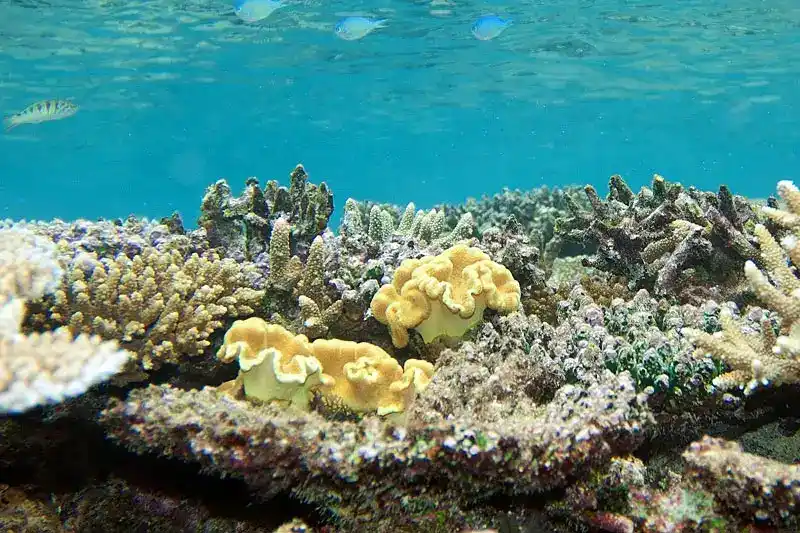
Indo-Pacific tropical coral reefs (reef flats, lagoons, upper outer reefs) 1–25 m, moderate current.
Appearance
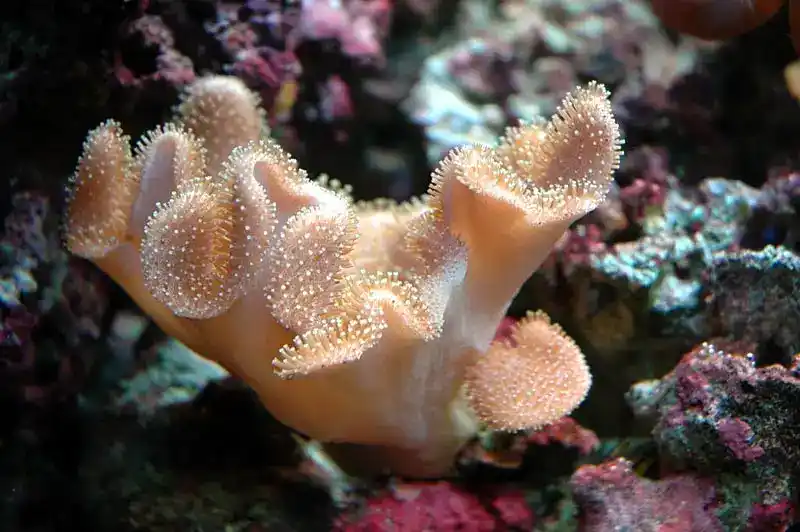
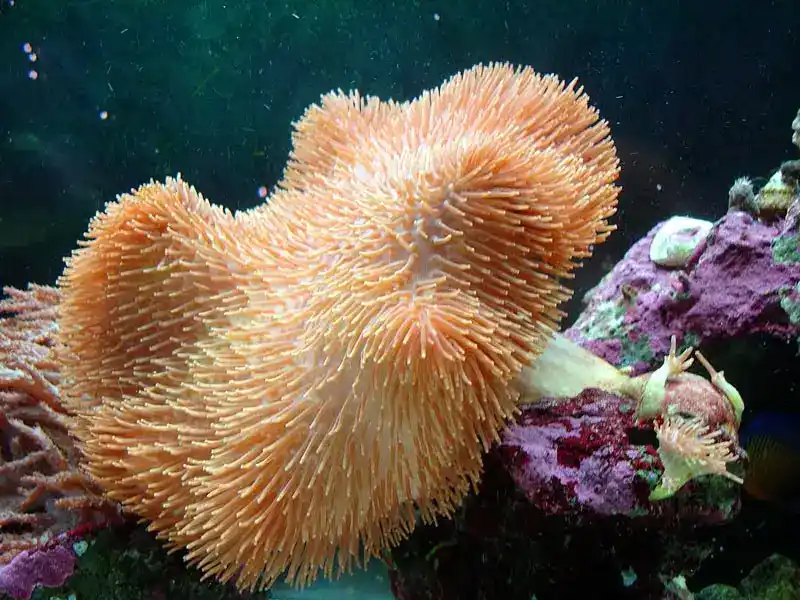
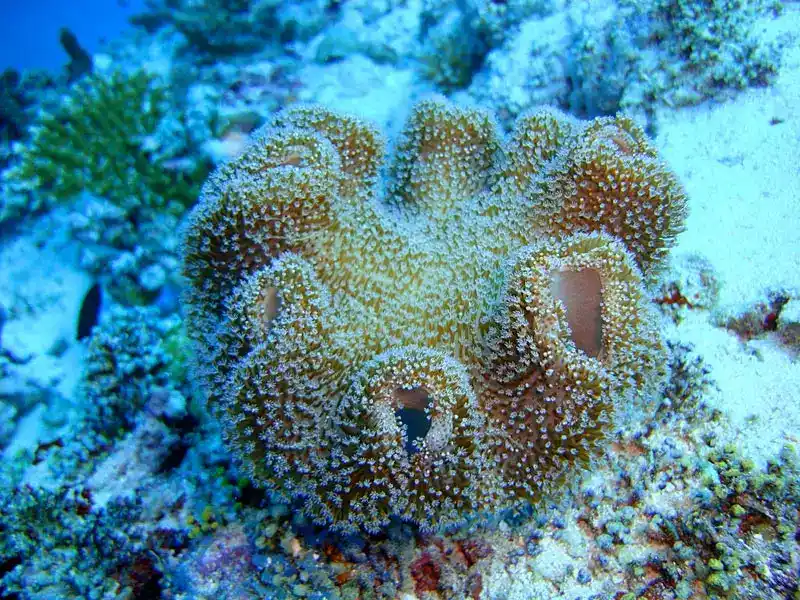
Mushroom-shaped; bright yellow to beige is common; tentacles extend like a floral carpet.
Detailed introduction
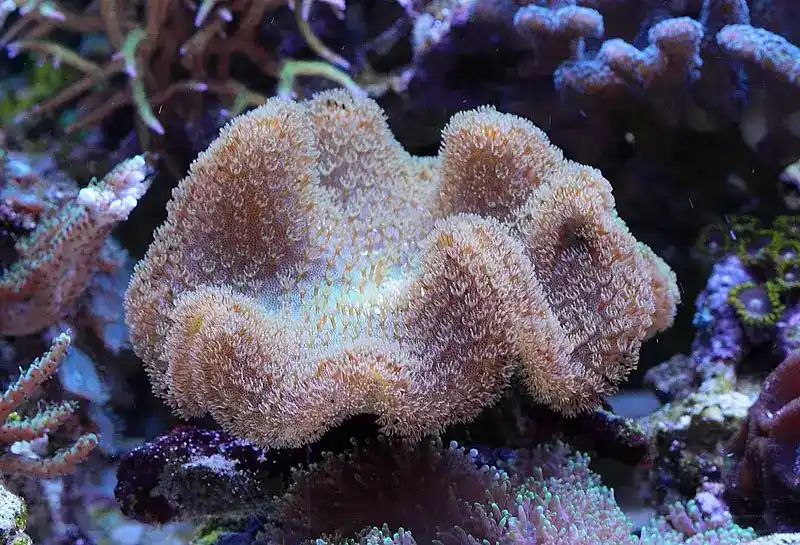
Elegant leather coral ( Sarcophyton elegans ), commonly known as mushroom leather coral, is a member of the genus Sarcophyton in the family Alcyoniidae of the subclass Alcyonacea . The colony resembles a mushroom: a stout "stalk" supports a flattened to cup-shaped "umbrella disc," the surface of which is densely covered with retractable, multi-fingered tentacles. It lives in symbiotic zooxanthellae , using photosynthesis for energy and supplementing its diet with suspended particles.
Ecology and Biology
Nutrition: Primarily photosynthetic, supplemented by microplankton and organic particles.
Reproduction: sexual (release of eggs and sperm/release of larvae) and asexual fragmentation (fracture, division, tissue regeneration).
Self-cleaning: Periodic shedding of the epidermis to remove algae and deposits; short-term closure is normal.
Morphology and Recognition
The mushroom cap has a distinct outline; the edge of the cap is often slightly upturned. The body color is commonly golden yellow, creamy white, or light brown ; the tentacles, when extended, resemble a dense floral carpet. Similar to other species in the same genus (such as S. glaucum ), this species is often brighter yellow and has a flatter umbel disc; strict identification requires a combination of microscopic sclerites and geographical location.
Body size and lifespan (group)
Umbrella diameter: 10–30 cm is common, and 40–60 cm+ can be achieved under good conditions.
Height: Approximately 8–30 cm.
Lifespan: Perennial populations, can survive for many years to decades in stable reef areas.
Distribution and Habitat
Widely distributed in tropical coral reefs of the Indo- Pacific (from the Indian Ocean to the western Pacific, Southeast Asia, northern Australia, etc.), they prefer shallow to medium-shallow water (about 1–25 m) reef flats, lagoons and upper parts of outer reefs , and require moderate water currents to carry away sediments.
Threats and Protection
Reef stress: warming/bleaching, subsidence and pollution, severe storms.
Collection: Improper collection for viewing can affect local communities; in vitro culture/decomposition can alleviate the demand for wild collection.
IUCN: Mostly Unassessed (NE) ; Protection relies on marine protected areas, water quality management, and sustainable trade.
Frequently Asked Questions
Q1: Is it normal for closed skin to turn gray? It is mostly caused by the skin shedding and self-cleaning or changes in the environment, and it usually opens again within a few days.
Q2: What kind of light and flow are needed? Medium to strong light combined with medium flow rate is beneficial for maintaining color and removing umbrella-shaped deposits.
Q3: Can it be artificially propagated? Yes, it can be done through aseptic cutting and fragmentation, fixing the base, and providing recovery flow rate and stable water quality.
Q4: How to distinguish it from other leather corals? Refer to color, umbrella shape, and tentacle density and distribution; strict identification requires microscopic spicules.


