Basic Information
Scientific classification
- Chinese name: Pearl Bubble Coral (Bubble Coral)
- Scientific name: Plerogyra sinuosa
- Classification: Echinoderms
- Family: Euphylliidae Plerogyra
Vital signs data
- Body length: Commonly 15–40 cm in groups; can reach 60 cm+
- Weight: Varies greatly with group size; there is currently no uniform value.
- Lifespan: Perennial reef-building coral, lasting from several years to several decades.
Significant features
Diurnal and nocturnal morphology differs greatly: it expands during the day and retracts and extends tentacles at night; it is mainly photosynthetic but also predatory; it can bud and divide into colonies.
Distribution and Habitat
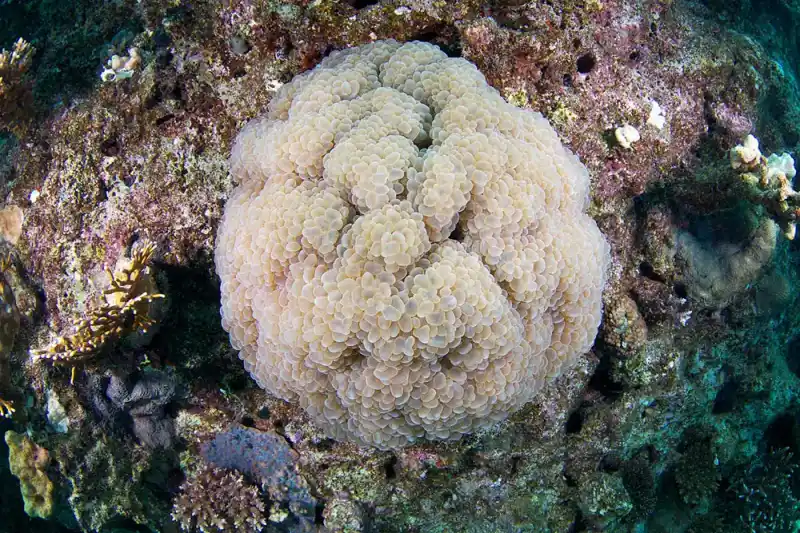
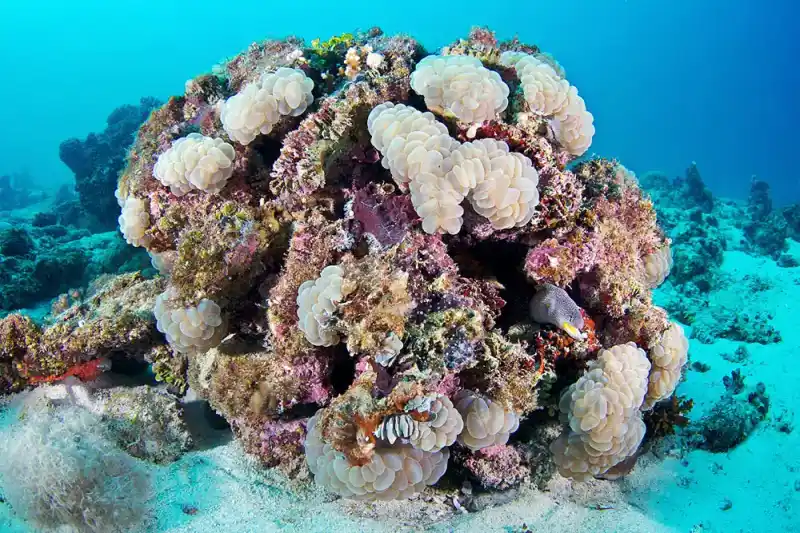
Indo-Pacific reef slopes, back wave surfaces, and openings are characterized by moderate to low-to-moderate light and current environments, approximately 5–30 m in depth.
Appearance
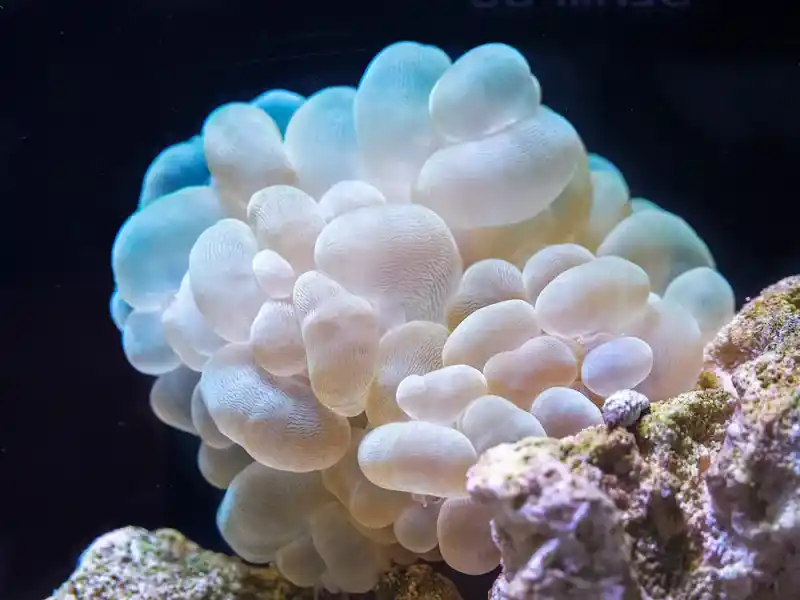
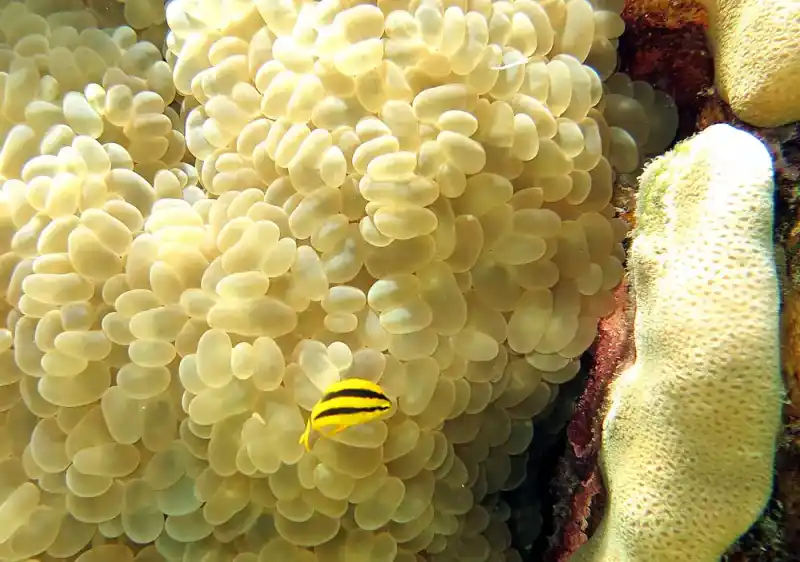
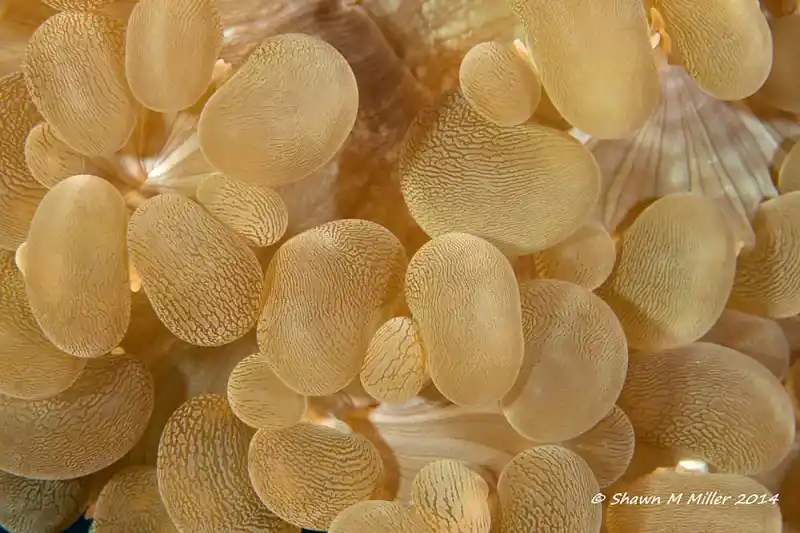
Milky white/beige/pale green translucent vesicles resemble pearls and grapes; wavy skeletons and tentacles are visible at night.
Detailed introduction
Pearl bubble coral ( Plerogyra sinuosa ) is a well-known ornamental reef-building coral belonging to the Euphylliidae family . During the day, its surface is covered with inflated, bubble-like vesicles ; at night, these vesicles retract, exposing tentacles and a mouth disc for feeding, resulting in a very distinct day-night appearance. It lives in symbiotic zooxanthellae and primarily relies on photosynthesis for energy, supplemented by suspended microparticles/zooplankton.
Ecology and Biology
Day and night phases: During the day, the bubbles inflate to increase the area exposed to light and protect the coral skeleton; at night, they retract and extend fine tentacles to actively hunt.
Nutrition mode: Primarily photosynthesis; it also captures micro-plankton and organic particles through mucus/tentacles.
Reproduction: Both sexual (egg release, sperm release/larval release) and asexual (budding, colony division) coexist; careful decomposition is possible in aquariums.
Morphology and Recognition
The colonies often grow in clumps or slowly along the base; during the day, the vesicles are translucent to milky white, beige, or pale green, resembling "pearl grapes"; at night , wavy (sinuous) septa and valley-like skeletal features are visible. Similar to Physogyra lichtensteini (grape-like coral), but the vesicles of this species are usually more rounded, and the skeletal ridges are more continuous; accurate differentiation requires consideration of skeletal details.
Body size and lifespan (group)
Group size: Commonly 15–40 cm, can reach 60 cm+ in ideal environments.
Individual vesicles: diameter is usually 0.5–2 cm, which can vary depending on light and flow rate.
Lifespan: Perennial reef-building coral, which can survive for many years to decades in stable reef areas.
Distribution and Habitat
Widely distributed in tropical Indo-Pacific waters, it exists in medium-light to low-to-medium current environments such as reef slopes, reef platform backs, and still-water cave entrances, at depths of approximately 5–30 m; it is sensitive to strong direct sunlight and strong sedimentation.
Threats and Protection
Heat stress and bleaching: Rising sea temperatures lead to the loss of symbiotic algae.
Sedimentation and pollution: Turbidity and sediment cover can compress vesicles and affect photosynthesis.
Physical damage: anchoring, trampling, moving and incorrect aquarium handling (excessive water flow/light or frequent touching).
IUCN: Database records are not entirely consistent; to avoid confusion, this section is treated as Unassessed (NE) . Recommendations: Protect key reef sections, control nutrient and sediment loads, and regulate the ornamental trade and transport.
Frequently Asked Questions
Q1: Does the swelling of bubbles during the day indicate illness? No, this is a normal daytime form, used to increase light exposure and protect the skeleton; at night, the bubbles retract and tentacles extend to feed.
Q2: Which corals can it be kept with? Its tentacles can extend at night and are somewhat stinging, so it is recommended to keep a distance from other corals to avoid contact.
Q3: Key aquarium conditions? Moderate light, gentle to moderate water flow, stable alkalinity and calcium and magnesium; avoid strong direct sunlight, strong currents, and sediment buildup.
Q4: How to distinguish it from Physogyra? Plerogyra vesicles are more rounded and have more continuous skeletal ridges; confirmation requires examination of the skeleton and geography.


