Basic Information
Scientific classification
- Chinese name: Yellow sea fan
- Scientific name: Subbergorgia suberosa
- Classification: Echinoderms
- Family: Alcyonacea Subbergorgia
Vital signs data
- Body length: Fan height is typically 30–100 cm; can reach ~150 cm+
- Weight: Population weight varies greatly with size and spur density; there is currently no uniform value.
- Lifespan: Perennial; in stable reef areas, it can last for many years to decades.
Significant features
It settles on a hard substrate, with branches that are pinnately branched in one plane; it feeds by suspending itself in water; and it can reattach itself after breaking apart.
Distribution and Habitat
In the Indo-Pacific outer reefs, reef slopes, and cliffs, the currents are moderate to strong, typically 10–40 m deep.
Appearance
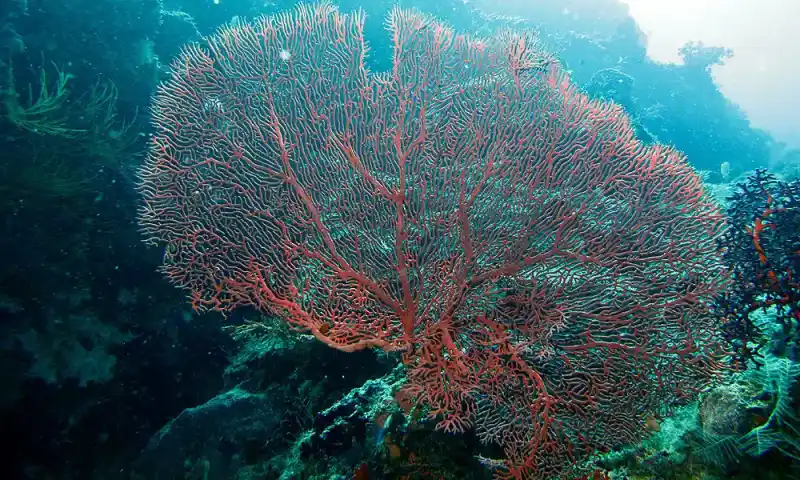
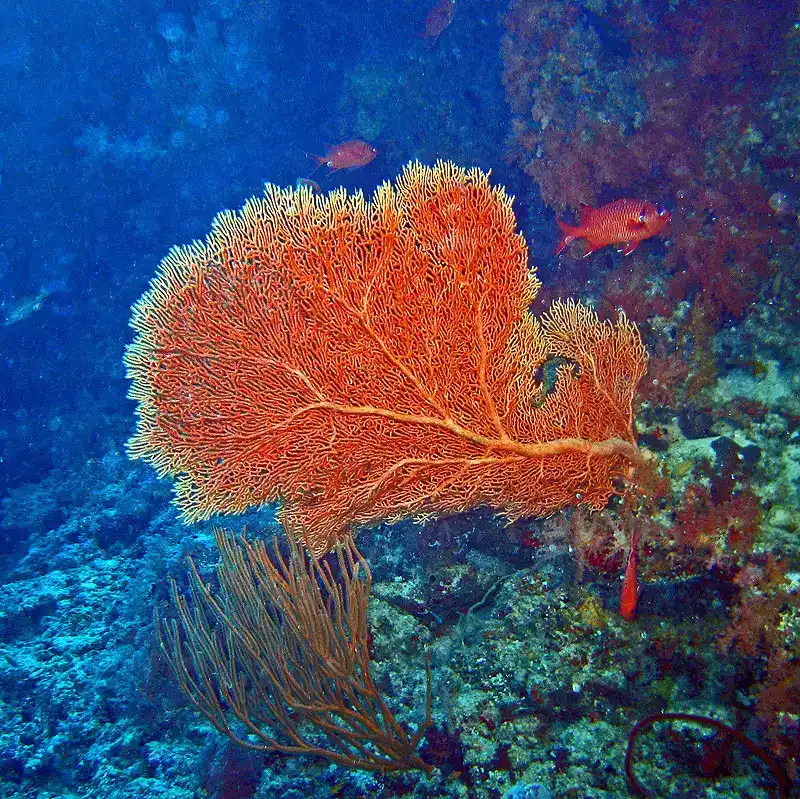
The fan-shaped surface ranges from yellow to orange, with a thick main stem and feathery branches; the pores are uniform, and the insect is small with many retractable tentacles.
Detailed introduction
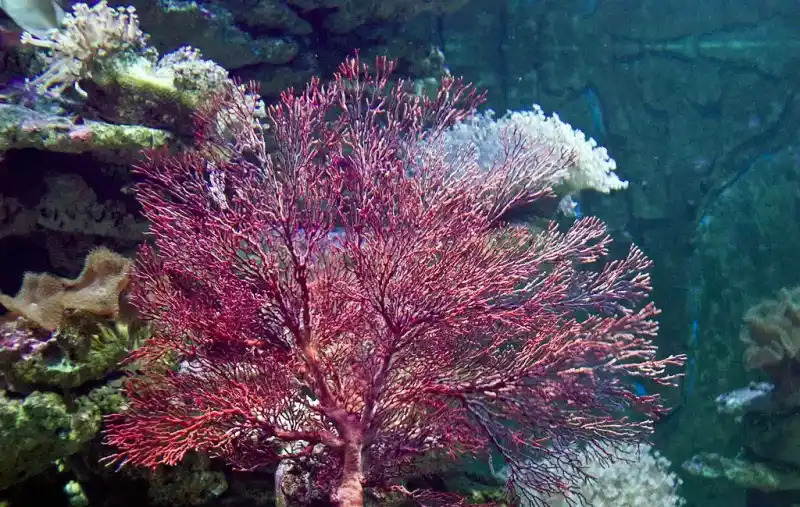
Yellow sea fan ( Subergorgia suberosa ) is a typical soft coral of the fan type (a fan-shaped colony in the class Alcyonacea, octocorcoral class). The colony typically branches in a flat, fan-shaped pattern on a single plane to efficiently filter suspended plankton in ocean currents. Individuals are commonly found in environments with stable currents, such as the outer edges of coral reefs, reef slopes, or reef platform edges , making them highly identifiable and visually appealing to divers.
Ecology and Behavior
Feeding: It relies on its multi-fingered tentacles to suspend and feed on planktonic crustaceans, planktonic larvae, and organic particles in water flow; it does not rely on symbiotic algae for energy.
Reproduction: Sexual (seasonal release of eggs and sperm/release of larvae) and asexual (breakage regeneration, basal lateral buds) coexist, and the colony can be reattached to the substrate by breaking apart.
Settlement and orientation: Settles on hard substrates (rocks, dead coral skeletons), with branches spreading out along planes perpendicular to the main current to increase predation efficiency.
Morphology and Recognition
The most common color ranges from yellow to orange (though it can also lean towards beige or light brown); the main trunk is stout, with pinnate branching from bottom to top forming a single or a few fan-shaped sections; the branches are covered with equidistant pores, each containing a small, retractable polydactylous polyp. The skeleton consists of a horny axis and tiny sclerites , giving it both toughness and hardness.
Body size and lifespan (group)
Fan height: Commonly 30–100 cm; can reach ~150 cm or more under ideal conditions.
Fan width: Commonly 20–80 cm (varies depending on environmental flow rate and space).
Lifespan: Perennial soft coral, can survive for many years to decades in stable reef areas.
Distribution and Habitat
Found on outer reefs and slopes, cliffs and channels in tropical to subtropical Indo-Pacific waters ; mostly in areas with moderate to strong currents , commonly at depths of about 10–40 m, but can also be deeper. Prefers clear waters and environments with low sediment loads.
Threats and Protection
Physical damage: Strong storms, anchoring, entanglement in fishing gear, and branches breaking due to contact with divers.
Sedimentation/turbidity: High sediment loads reduce feeding efficiency and cover the surface.
Climate stress: Ocean warming and acidification may affect spicule deposition and colony stability.
IUCN: Currently, there is no globally unified assessment; this site will treat it as Unassessed (NE) . Recommendations: Manage outer reef buffer zones, restrict anchoring, and regulate diving distances and photographic contact.
Frequently Asked Questions
Q1: Why do sea fans always grow "sideways to the wind"? The branches are perpendicular to the main current, which maximizes the interception and filter feeding of plankton passing through.
Q2: Can artificial colonization be done? It is feasible under scientific and aquarium conditions, but a stable water flow and a clean, hard substrate are required to help reattach the colony.
Q3: Will they turn white? Sea fans are not usually dependent on strong symbiotic algae, and the classic "whitening" is not as typical as that of stony corals, but turbidity, injury or stress can cause tissue discoloration and necrosis.
Q4: How to distinguish it from other sea fans? Combine body color (yellow-orange) , branching pattern, fan surface flatness and geographical distribution; strict identification requires combination of spicule morphology and genus-level characteristics.


