Basic Information
Scientific classification
- Chinese name: Stone Pine Soft Coral (Carnation Soft Coral)
- Scientific name: Dendronephthya sp.
- Classification: Echinoderms
- Family: Alcyonacea Dendronephthya
Vital signs data
- Body length: Group height 10–40 cm (can be larger)
- Weight: Varies greatly with group size; there is currently no uniform value.
- Lifespan: Can last for many years in high-flow/high-particle supply environments.
Significant features
Non-symbiotic algae; dependent on strong currents for suspension feeding; extremely sensitive to flow fields and food sources.
Distribution and Habitat
Indo-Pacific outer reef slopes, strait passages and headlands (medium to strong currents, clear water), 10–40+ m.
Appearance
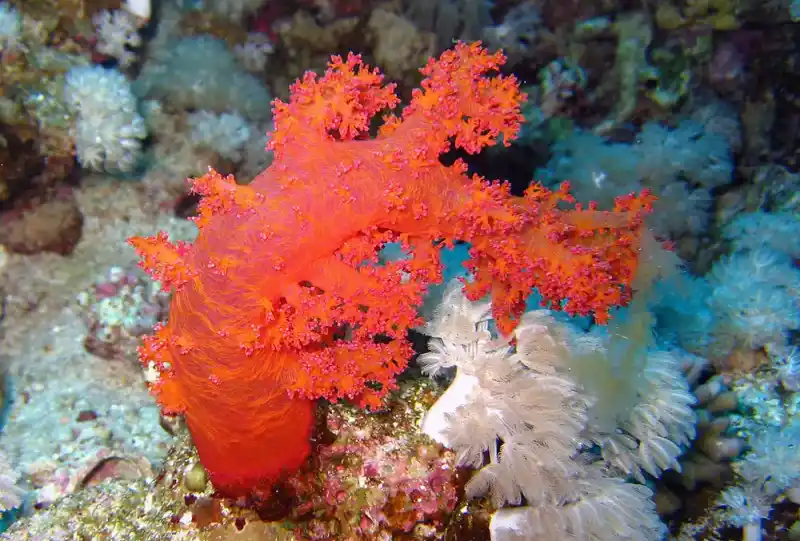
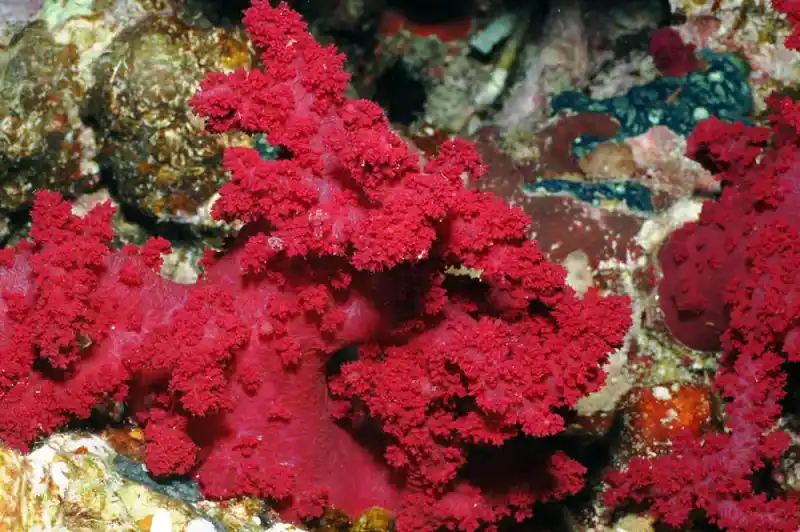
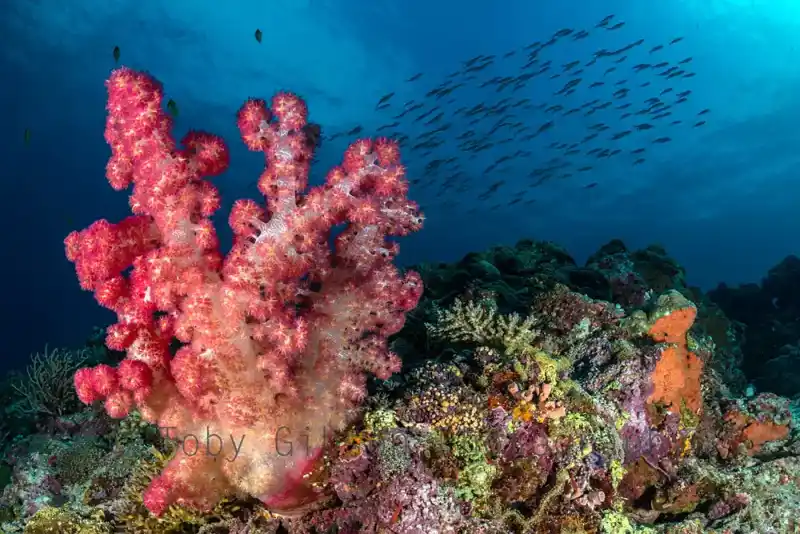
Branching tree-like structure; translucent/semi-translucent flesh with a granular, bony texture; vibrant and diverse colors.
Detailed introduction
Dendronephthya sp. is a typical non-symbiotic algae (non-infectious yellow algae) octagonal soft coral . It mainly relies on preying on zooplankton and organic particles in medium to strong currents to obtain energy. It has bright colors, commonly red, pink, orange, yellow, white, and purple.
Ecology and Biology
Feeding: Suspended feeding on copepods, amphipods, larvae, and organic detritus.
Energy budget: Due to the lack of symbiotic algae, it requires a continuous high-density granular feed and a stable flow field, and is extremely sensitive to changes in nutrients and water quality.
Reproduction: sexual (release of eggs and sperm/release of larvae) and asexual (branches break off and then attach).
Morphology and Recognition
The colony is branched and tree-like , with transparent/semi-transparent commensal flesh containing sclerites of various shapes, giving it a granular texture; the color often varies (the branches, commensal flesh, and worms/tentacles may have different colors), which is distinctly different from symbiotic algal soft corals with brownish tones.
Body size and lifespan
Population height: Commonly 10–40 cm, ideal sites can be larger.
Lifespan: Can last for many years in high-flow, high-particle supply environments; however, it is prone to degradation when disturbed.
Distribution and Habitat
Widely distributed in tropical to subtropical Indo-Pacific outer reef slopes, straits, and headlands in medium to strong currents and clear waters , commonly found at depths of 10–40+ m; commonly found in low light locations, often coexisting with sea fans and black corals.
Threats and Protection
Deposition and turbidity: Covers the multi-fingered tentacles and inhibits feeding.
Weakened flow field/insufficient bait source: causing energy deficit and shrinkage.
Collection and transportation: Due to the low survival rate of in vitro samples, collection and transportation should be regulated and restricted.
IUCN: Most items were not individually evaluated; this site treats them as unevaluated (NE) .
Frequently Asked Questions
Q1: Is it suitable for beginners? Not recommended. It lacks symbiotic algae and requires a constant supply of pellet food and a strong/pulsating current; otherwise, it is prone to dying.
Q2: Is it normal for the multi-fin tentacles not to open during the day? This is related to the flow rate and bait source; they usually fully open during high tide or low tide.
Q3: How to distinguish it from Nephthea/Gorgon coral? Dendronephthya is more transparent and has more vibrant colors, lacking the brown symbiotic algae tone; the spicule structure is different.
Q4: Does it need strong light? No, it prefers low light and high flux ; strong light can cause algae to grow and hinder feeding.