Basic Information
Scientific classification
- Chinese name: Open brain coral (Folded brain coral)
- Scientific name: Trachyphyllia geoffroyi
- Classification: Echinoderms
- Family: Merulinidae Trachyphyllia
Vital signs data
- Body length: Commonly 8–20 cm in diameter when spread out, but can reach 25–35 cm+
- Weight: Varies greatly from person to person; there is currently no uniform value.
- Lifespan: Perennial reef-building coral, lasting from several years to several decades.
Significant features
Large, single-celled LPS; expands during the day for photosynthesis and extends tentacles to hunt at night; can live freely on sandy bottoms.
Distribution and Habitat
Indo-Pacific lagoon, upper sandy/broken coral bottom of back reef and outer reef, 3–30+ m, moderate light and gentle to moderate current.
Appearance
Crescent-shaped to ring-shaped bony ridges; thick oral discs; bright colors such as green, red, and orange-red with stripes; distinct radial textures on the septa.
Detailed introduction
Open brain coral ( Trachyphyllia geoffroyi ) is a typical large solitary stony coral (LPS), often existing in a free-living manner on sandy bottoms or in depressions of reef flats. In its larval stage, it can attach to the substrate, but as it grows, its skeleton thickens at the base and can detach from the substrate. Like most reef-building corals, it has symbiotic zooxanthellae within its body, relying on photosynthesis during the day and extending its tentacles at night to prey on microplankton and organic particles.
Ecology and Biology
Nutrition mode: Primarily photosynthetic, supplemented by nocturnal predation of suspended particles/zooplankton; able to ingest food of appropriate particle size through the oral disc.
Living type: mostly composed of single large coral polyps (single), they can live freely on the sandy bottom and move slightly when pushed by waves and currents.
Reproduction: Sexual (seasonal release of eggs and sperm/release of larvae) and asexual (budding and regeneration, schizostome) coexist.
Morphology and Recognition
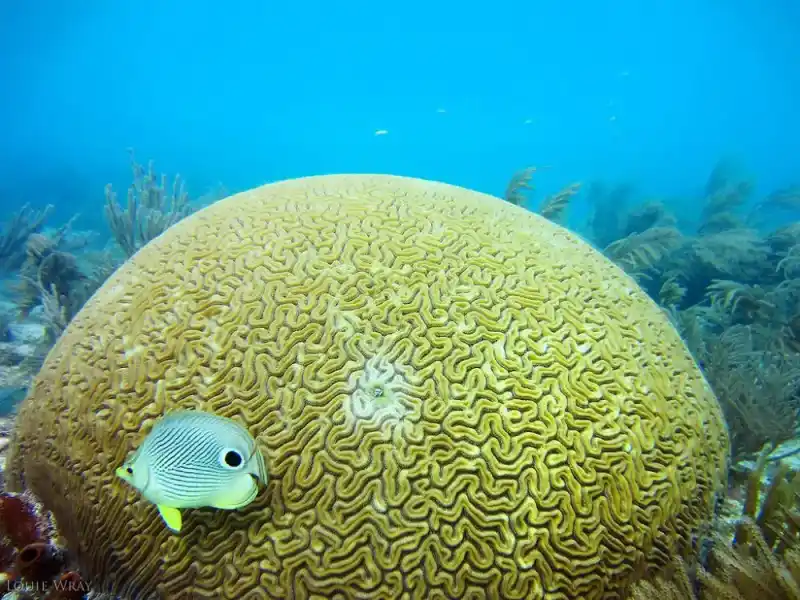
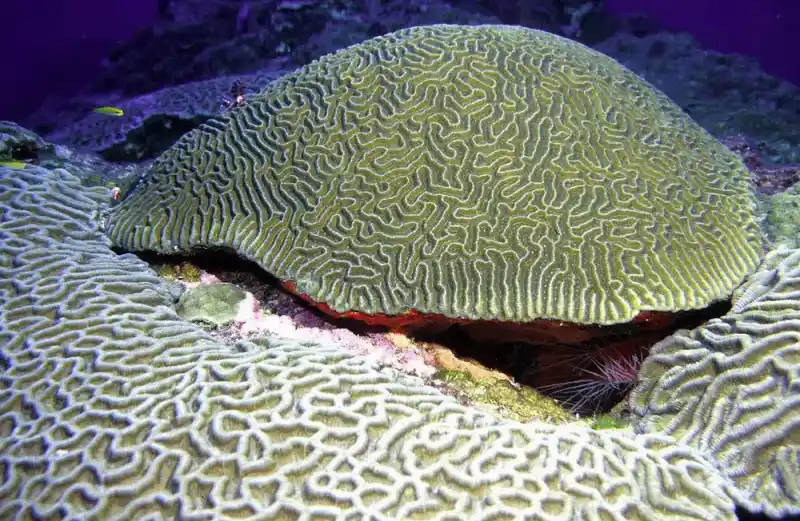
The skeleton exhibits a crescent-shaped to annular ridge-like structure, with a thick oral disc that swells considerably during the day. Common colors include green, red, orange-red, magenta, stripes, or a "rainbow" combination. The surface displays septa patterns radiating outwards from the mouth. Unlike "brain corals," these are mostly solitary rather than connected in elongated "valley-like" patterns.
Body size and lifespan
Diameter (unfolded): Commonly 8–20 cm, can reach 25–35 cm or more in favorable environments.
Thickness: The bones and flesh are thick, and the hard bony ridges can be seen after the body retracts at night.
Lifespan: Perennial reef-building coral, can survive for many years to decades in stable reef areas.
Distribution and Habitat
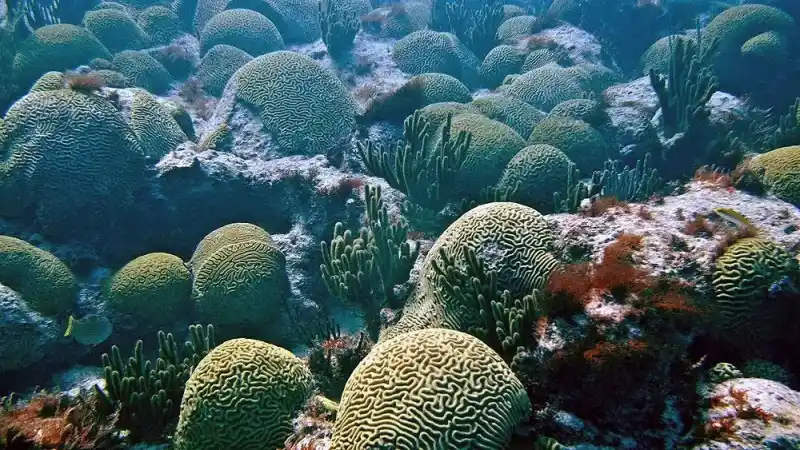
Widely distributed in tropical Indo-Pacific waters (Indian Ocean to Western Pacific, Southeast Asia, northern Australia, etc.); commonly found on sandy or broken coral bottoms of lagoons, back reefs, and outer reefs , at depths of approximately 3–30+ m; prefers moderate light and gentle to moderate currents , and avoids strong sediment cover.
Threats and Protection
Heat stress and bleaching: Rising sea temperatures lead to the loss of symbiotic algae.
Sedimentation/Pollution: Silt and eutrophication reduce light exposure and stimulate disease.
Collection and Trade: The collection and transportation of ornamental items need to be regulated; artificial propagation and breeding can reduce the pressure of wild collection.
IUCN: Records vary significantly across different versions; to maintain consistency, this site has treated it as Unassessed (NE) . Recommendations: Protect healthy reef sections, manage nutrients and sediment, and regulate the diving and sightseeing trade.
Frequently Asked Questions
Q1: What is the difference between this species and "brain coral"? This species is mostly a large, solitary coral polyp with a thick oral disc that expands during the day; while "groove brain coral" is mostly a valley-like structure with multiple interconnected bodies.
Q2: Why does it swell during the day and thin at night? Expanding during the day helps with photosynthesis and protects the skeleton; at night, the vesicles retract and extend tentacles to actively feed.
Q3: What kind of environment is suitable? Medium light, gentle-medium water flow, clean sand/broken coral bottom; avoid strong direct sunlight and sediment cover.
Q4: Can it be artificially bred? It can be cultured by fragmentation and bone fragmentation under breeding conditions, but strict aseptic operation and stable water quality are required.