Basic Information
Scientific classification
- Chinese name: Chrysanthemum coral (potted coral)
- Scientific name: Goniopora lobata
- Classification: Echinoderms
- Genus and family: Poritidae Goniopora
Vital signs data
- Body length: Common group diameter is 20–60 cm (can reach 1 m+).
- Weight: Varies greatly with group size; there is currently no uniform value.
- Lifespan: Perennial reef-building coral, lasting from several years to several decades.
Significant features
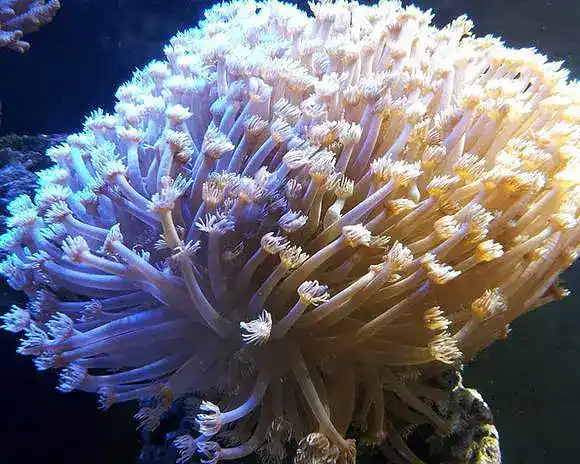
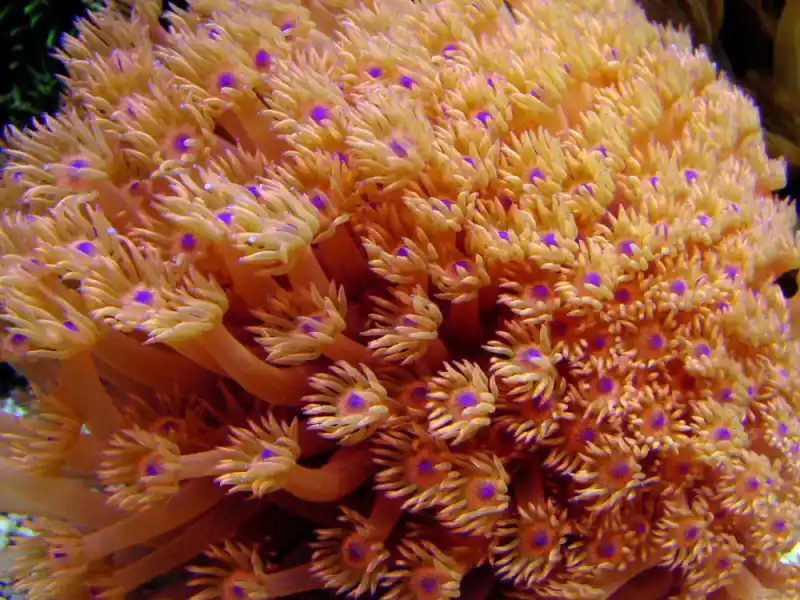
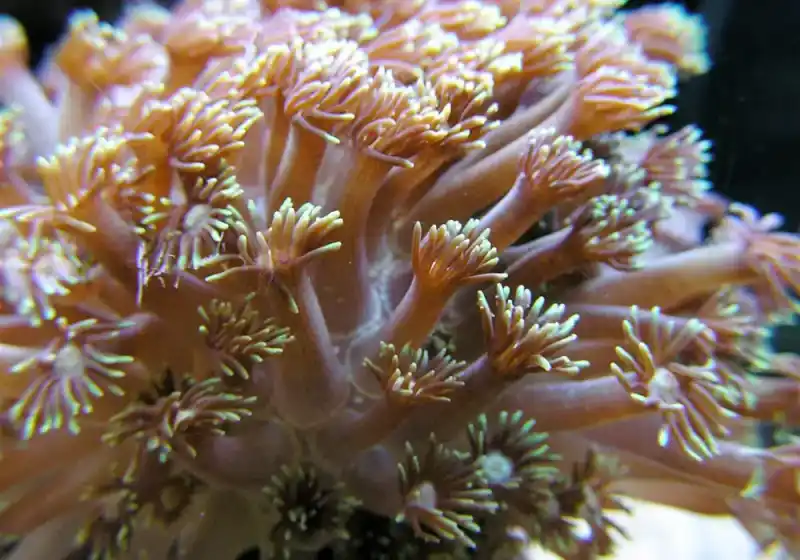
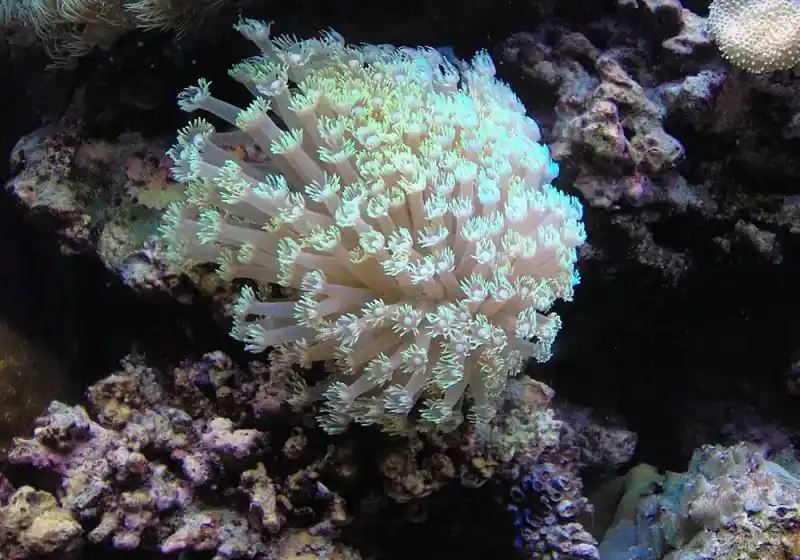
During the day, it has long tentacles that extend in large numbers like flowers; it feeds on symbiotic algae through photosynthesis and granular feeding; its colonies are mostly blocky to hemispherical.
Distribution and Habitat
The upper part of the Indo-Pacific lagoon, back reef, and outer reef is 3–25+ m, with moderate light and gentle to moderate currents.
Appearance
The insect usually has 24 tentacles; its skeleton is covered with fine pores and is light green/brownish-green in color; when disturbed, it retracts to expose the pore-like surface.
Detailed introduction
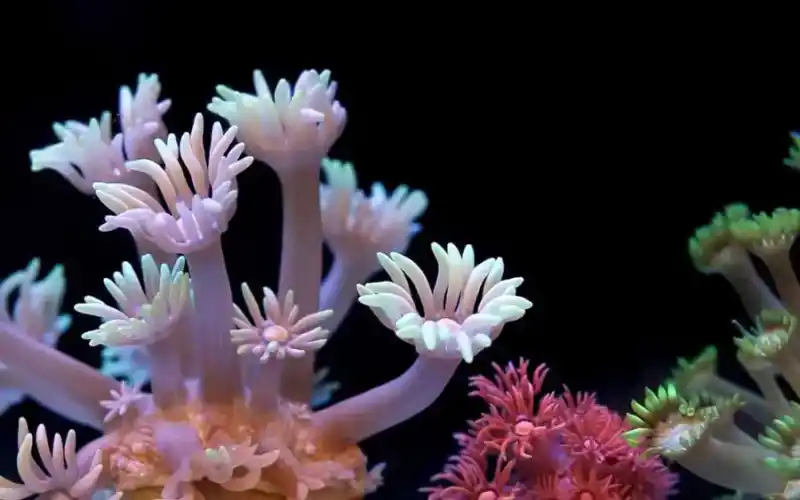
Goniopora lobata is a well-known member of the " flowerpot coral" group , belonging to the class Anthozoa, subclass Hexacorala, order Scleractinia, family Poritidae, and genus Goniopora . Its flower-like polyps with many long tentacles extend extensively during the day, appearing as if they are "blooming" from a distance.
Ecology and Biology
Nutrition mode: It lives in the body as a symbiotic zooxanthellae and relies on photosynthesis for energy; at night, it can also extend its tentacles to prey on micro-plankton and organic particles.
Growth type: The population is often lumpy, hemispherical or with blunt "leaf/tumor-like" protrusions (lobate) .
Reproduction: Sexual (seasonal release of eggs and sperm/larvae) and asexual budding coexist; the population can be perennial.
Morphology and Recognition
Individual coral polyps possess long-stalked tentacles with corolla-like terminals; each polyp typically has 24 tentacles (a genus-level characteristic; distinguishable from Alveopora's 12 tentacles). The colony's skeletal pores are arranged relatively regularly, with the mouth visible in the center of the oral disc; the overall color is commonly light green, brownish-green, grayish-brown, or yellowish-brown , and fluorescent green oral discs are also observed. When disturbed or at night, the tentacles retract, exposing the porous skeletal surface.
Body size and lifespan (group)
Group diameter: Commonly 20–60 cm; can reach 1 m+ in healthy reef areas.
Single insect tentacle length: approximately 1–5 cm (depending on light and flow rate).
Lifespan: Perennial reef-building coral, which can live for many years to decades.
Distribution and Habitat
Widely distributed in tropical Indo-Pacific waters (from the Indian Ocean to the western Pacific, Southeast Asia, northern Australia, etc.), commonly found on sandy/broken coral bottoms or hard substrates in lagoons, back reefs, and upper outer reefs , at depths of approximately 3–25+ m; prefers moderate light and gentle to moderate currents , and is sensitive to long-term strong sedimentary cover.
Threats and Protection
Heat stress and bleaching: Abnormal sea temperatures lead to the loss of symbiotic algae.
Deposition and pollution: Turbidity/silt cover hinders photosynthesis and induces disease.
Physical damage: storms, anchoring, trampling, and improper harvesting.
IUCN: Discrepancies exist between different databases; to ensure consistency with existing coral entries, this entry is treated as Unassessed (NE) . Management recommendations: Protect healthy reef sections, control nutrient levels and sediment, and regulate tourism and viewing trade.
Frequently Asked Questions
Q1: How to distinguish it from Alveopora? Goniopora usually has 24 tentacles per insect, while Alveopora usually has 12 tentacles;
Furthermore, the density of pores in the bones differs from the shape of the oral disc.
Q2: Why do the tentacles "open" during the day and "close" at night? They expand during the day to facilitate photosynthesis and feeding, and retract at night or when disturbed.
Q3: Is it sensitive to water quality and sediment? It requires stable water quality and moderate flow rate; long-term strong sedimentation will cover the rim and pores, affecting health.
Q4: Common colors? Most commonly light green/brownish-green/grayish-brown, but there are also variations such as fluorescent green rimmed plates.