Basic Information
Scientific classification
- Chinese name: Megamouth Shark
- Scientific name: Megachasma pelagios
- Classification: Large fish
- Family and Genus: Megamouthidae, genus Megamouth
Vital signs data
- Body length: Commonly 4–5.5 meters, with a maximum of approximately ~7 meters.
- Weight: Approximately 750–1500 kg (estimated)
- Lifespan: Estimated 30–50 years
Significant features
A rare filter-feeding large shark; with a huge mouth and thick lips; suspected of diurnal vertical migration; discovered in 1976.
Distribution and Habitat
Global tropical-subtropical offshore and continental slope upper-middle layers.
Appearance
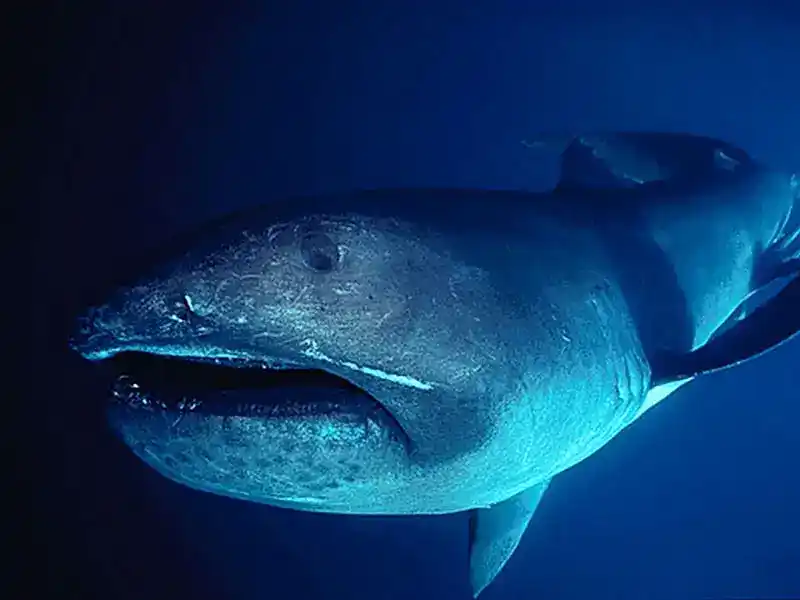
Back brownish-gray to dark brown, belly light-colored; mouth very large, two dorsal fins without spines; swimming speed slow.
Detailed introduction
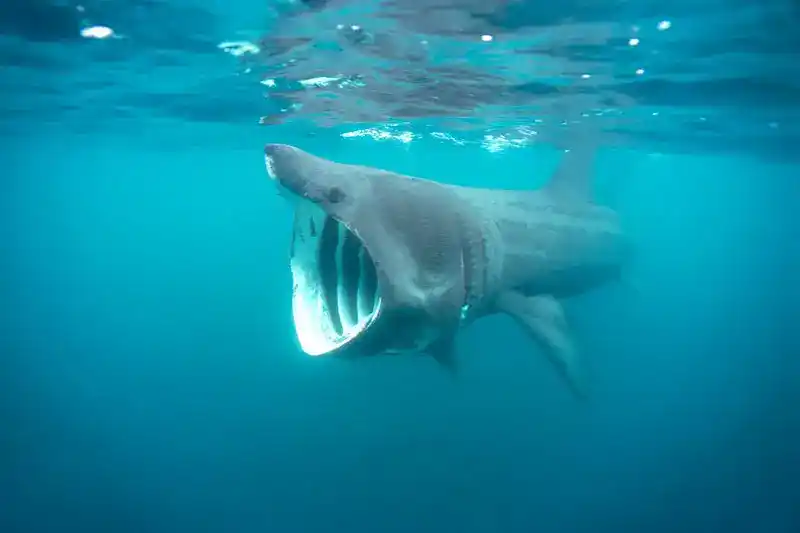
The megamouth shark ( Megachasma pelagios ) is a rare filter-feeding large shark belonging to the family Megachasmidae . It was only officially recorded by the scientific community in 1976. It mainly inhabits the upper to middle layers of the ocean and may undertake diurnal vertical migrations to chase plankton.
Ecology and Behavior
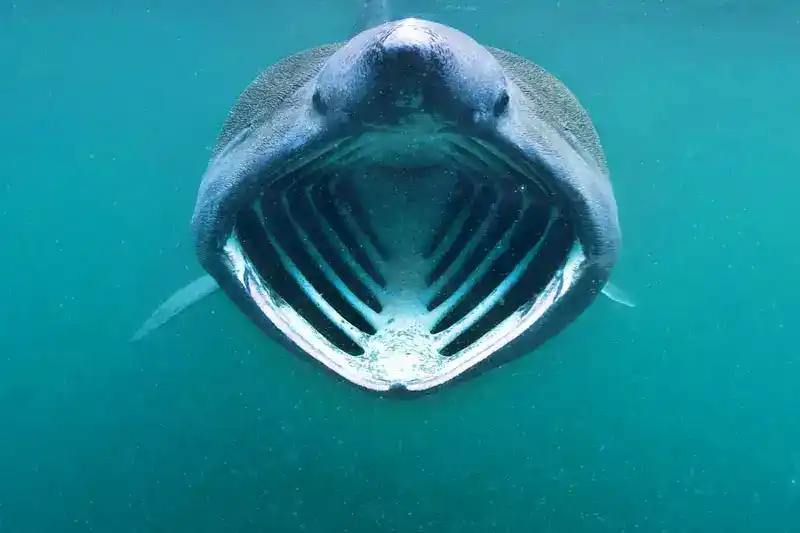
It primarily feeds on planktonic crustaceans such as copepods and krill; it feeds by slowly opening its mouth and filtering . It is presumed to be ovoviviparous with a small number of offspring; its lifespan and reproductive data are limited.
Morphology and Recognition
Body length typically ranges from 4 to 5.5 meters (extreme values around 7 meters); mouth is very large with thick lips , snout is short and blunt; back is brownish-gray to dark brown, belly is light-colored, creating a distinct contrast; both dorsal fins lack spines. Oral mucosa is light-colored and may contain weakly luminescent/reflective tissue (still under investigation).
Distribution and Habitat
Records have been made in both warm offshore and continental waters worldwide, with tropical and subtropical regions being more common; the western Pacific, Southeast Asia and the eastern Pacific have been reported more frequently.
Threats and Protection
Secondary catches (longline fishing, gillnetting); some areas have them on display or used.
Insufficient data leads to management uncertainty.
Nearshore nighttime activities may be affected by light fields/ship interference (speculation).
IUCN: Least Concern (LC) . Recommendations: Standardized documentation and rapid release, minimal sampling, coastal mitigation operations, and citizen science reporting.
Frequently Asked Questions
Q1: Relationship with whale sharks and basking sharks? They are all filter feeders but belong to different families; the megalomouth shark is the only extant species in the megalomouth shark family.
Q2: Is it dangerous? It is not aggressive towards humans, swims slowly, and feeds on plankton.
Q3: Why are they so rare? They inhabit the upper and middle layers of the open sea and are few in number; most records come from by-fish catches and strandings.
Q4: Does it glow? Oral mucosa may have weak luminescence/reflection to attract prey, but evidence is limited.