Basic Information
Scientific classification
- Chinese name: Great White Shark
- Scientific name: Carcharodon carcharias
- Classification: Large fish
- Family and genus: Scombridae, genus Shark
Vital signs data
- Body length: Commonly 3.5–5.5 meters, with the largest individuals reaching ~6+ meters.
- Weight: Commonly 700–1100+ kg (larger individuals weigh even more).
- Lifespan: Approximately 40–70 years (estimated, varies by region).
Significant features
Top predator; regional warm-blooded; high-speed ambush and leap-hunting; ovoviviparous with low reproduction rate; long-distance migration and site loyalty.
Distribution and Habitat
They are commonly found in temperate coastal areas and continental shelf margins worldwide, in seal/sea lion colonies and upwelling zones.
Appearance
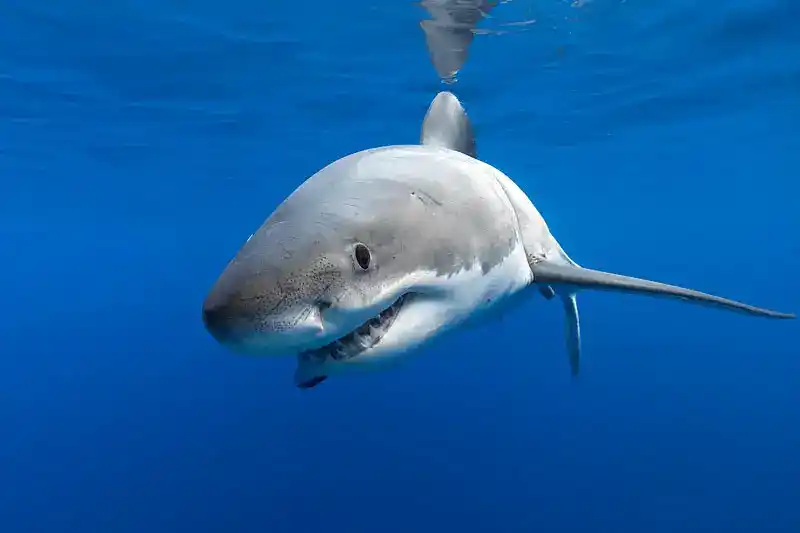
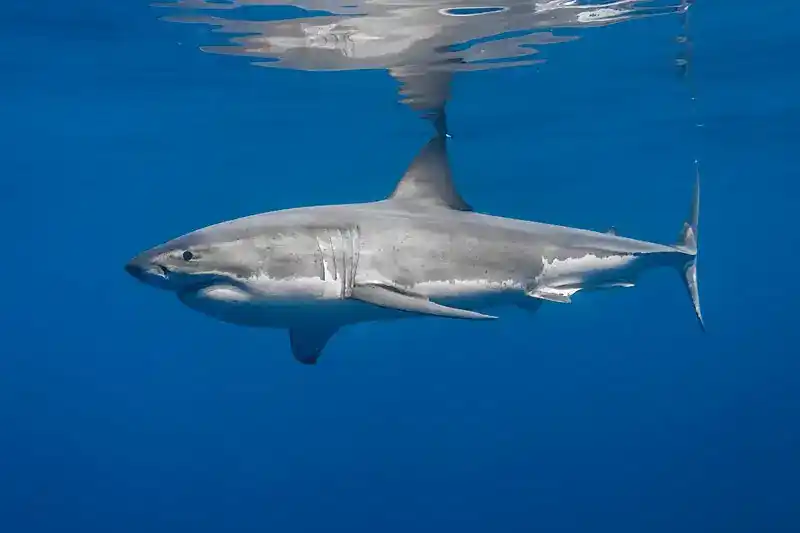
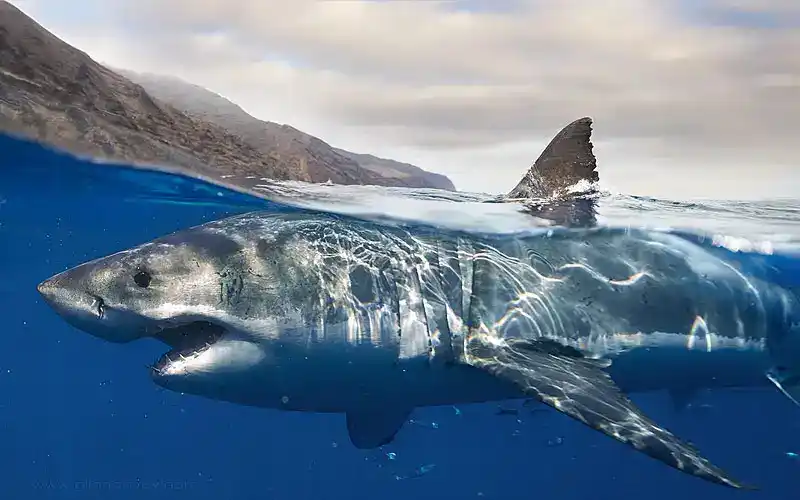
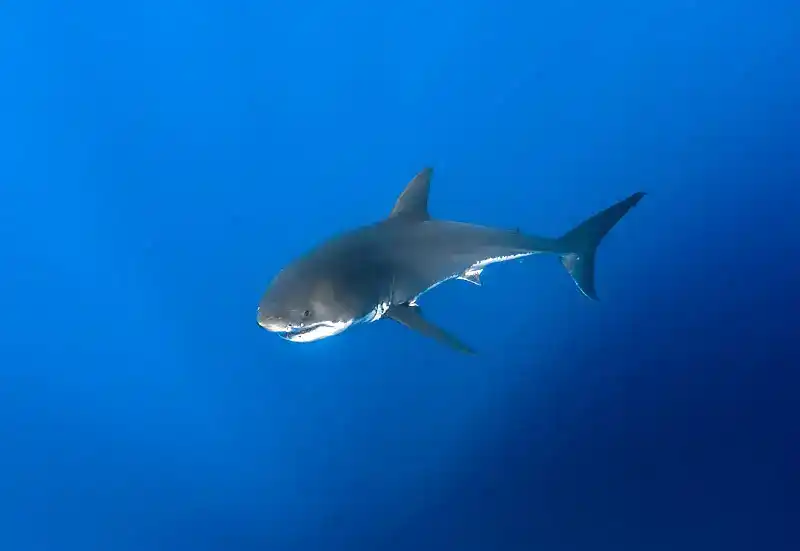
Slate-gray back/white belly with reverse shading; large triangular dorsal fin and crescent-shaped caudal fin; triangular serrated teeth; conical head and short, wide snout.
Detailed introduction
The great white shark ( Carcharodon carcharias , also known as the man-eating shark ) is a top predator in temperate to subtropical coastal waters, belonging to the family Lamnidae . It possesses regional warm blood ( reticulate azygos vein ) that raises the temperature of its muscles and brain. It feeds on seals, sea lions, bony fish, and other sharks, and also consumes carrion. The IUCN Global Assessment is Vulnerable (VU) .
Ecology and Behavior
They often ambush prey near sea lion/seal breeding grounds, frequently employing high-speed attacks and leaping out of the water to hunt ; they exhibit long-distance seasonal migration and site loyalty. They are ovoviviparous , with embryos undergoing yolk-ovophagy ; they have low litter numbers, mature late, and have a low reproductive rate.
Morphology and Recognition
It has a robust body, a conical head, a short and broad snout, a slate-gray back, a white belly, and distinct reverse shading on its sides. The first dorsal fin is large and triangular, and the caudal fin is crescent-shaped. The triangular serrated teeth are suitable for cutting large prey.
Distribution and Habitat
Records show that they are found in many sea areas around the world, with the most common locations along temperate coasts and continental shelf edges, such as South Africa, Australia, California-Baja California, Chile, New Zealand, Japan, and the Mediterranean Sea; they often utilize islands, capes, and upwelling/dolphin and seal gathering areas.
Threats and Protection
Fisheries stress and by-catch: longline fishing, gillnetting, nearshore fishing gear; historical target fishing was once severe.
Illegal trade: shark fins, jawbones and teeth, etc.; most countries have listed them as controlled items, CITES Appendix II.
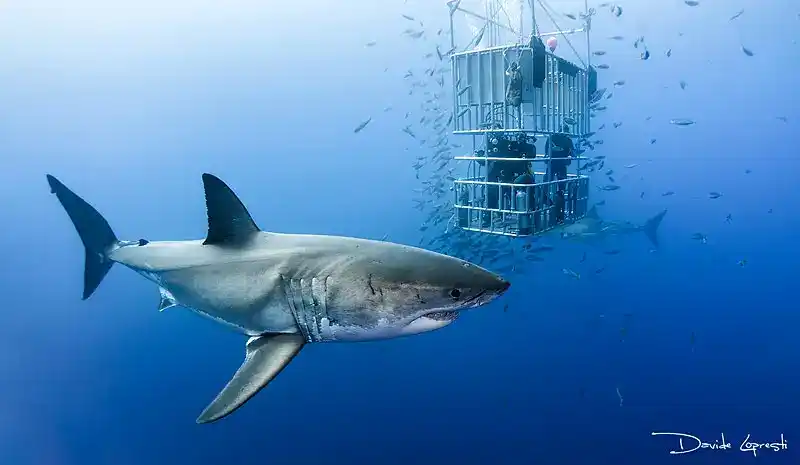
Misconceptions and shark prevention measures: Drum traps/nets cause deaths; tourist disturbances and inadequate management of baiting behavior.
Key management points: fishing ban and enforcement , reduction of by-product catches (weak hooks/magnetic repulsion/directed release), spatiotemporal protection of key breeding and gathering areas, scientific labeling and citizen scientific monitoring, and behavioral norms for shark watching activities (no touching, limited number of people/distance).
Frequently Asked Questions
Q1: Will great white sharks attack people unprovoked? Most incidents are due to misidentification or curiosity; avoiding swimming when seals are active, visibility is poor, or during dawn and dusk can significantly reduce the risk.
Q2: Why is it called a "warm-blooded shark"? Its circulatory system can recover metabolic heat, increase the temperature of red muscle and brain/eyes, and increase explosive power and perception.
Q3: What about lifespan and reproduction? Lifespan can reach several decades (studies show it can reach ~70 years); late maturity, fewer offspring, and slow recovery.
Q4: Protecting the status quo? Many countries have banned fishing and listed it on CITES; however, illegal trade and by-products remain major sources of pressure.