Basic Information
Scientific classification
- Chinese name: Whiskers
- Scientific name: Orectolobidae (family)
- Classification: Large fish
- Family and genus: Carpet sharks, genus *Scutigera*
Vital signs data
- Body length: approximately 0.8–3.2 meters (depending on species)
- Weight: ranging from several kilograms to tens of kilograms
- Lifespan: Estimated 15–25 years (species variation)
Significant features
Benthic ambush; camouflage carpet pattern; barbels around the mouth; polyzygotic; nocturnal.
Distribution and Habitat
The Western Pacific-Australia region is the richest in marine resources, and also found in the eastern Indian Ocean and parts of the western Pacific island chain; it features diverse reefs, sandy bottoms, and shallow seas with seaweed belts.
Appearance
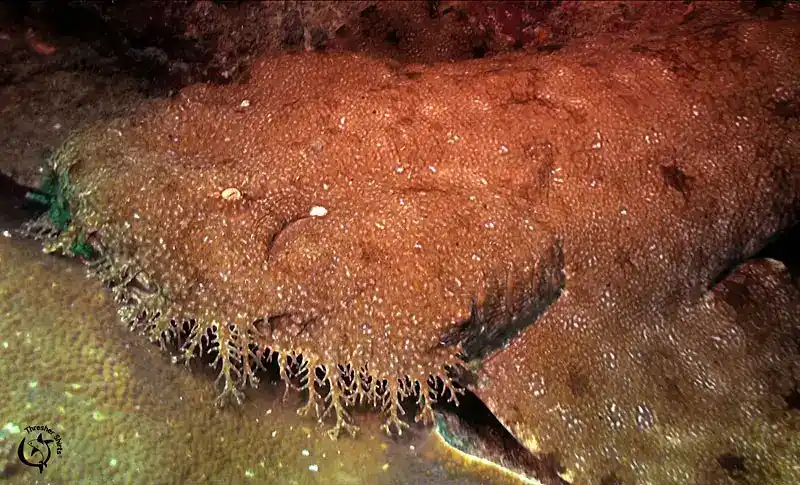
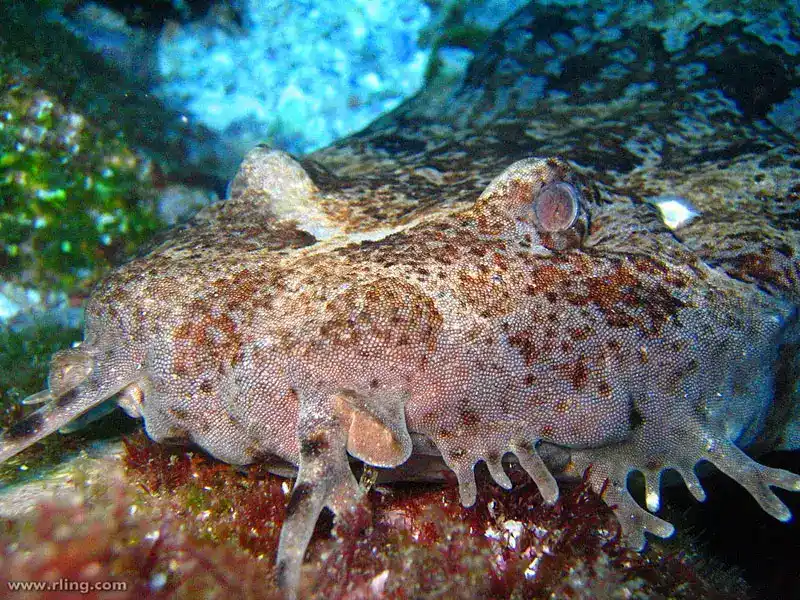
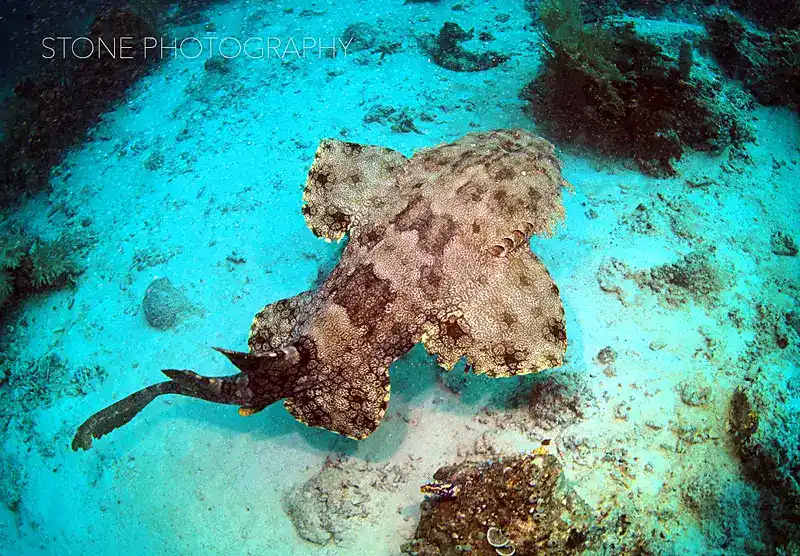
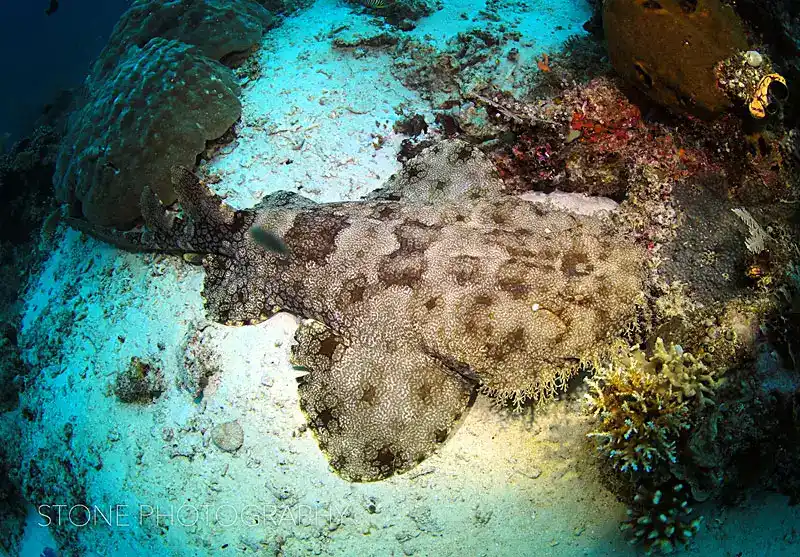
The body is flattened and the head is wide; the mouth and barbels are large on the ventral side; the two dorsal fins have no spines; the body surface has brownish-yellow to gray mottled patterns.
Detailed introduction
The family Orectolobidae ( often referred to as the "carpet shark" family ) belongs to the order Orectolobiformes . Members are known for their intricately patterned, mimicking markings and barbels around their mouths, and are nocturnal and ambush predators. Representative genera include Orectolobus , Eucrossorhinus , and Sutorectus , commonly known as "carpet sharks" or " wobbegongs ."
Ecology and Behavior
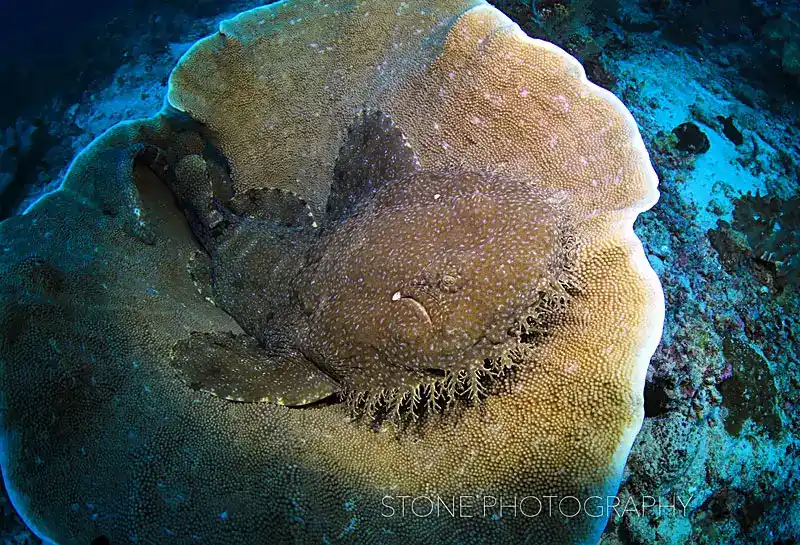
Most are benthic ambush predators, camouflaging themselves during the day among reefs, seaweed, and sandy bottoms, and active at night; they feed on reef fish, crustaceans, and cephalopods. Most species are ovoviviparous , with the number of offspring per birth varying by species. They mostly inhabit temperate to tropical shallow seas, coral reefs, and rocky reef platforms, with some venturing into estuaries or deeper waters.
Morphology and Recognition
The body is flattened with a broad head; the mouth is located on the ventral side, surrounded by prominent barbels and skin flaps; the body surface is covered with brownish-yellow to gray carpet-like markings with white spots/saddle spots; there are two dorsal fins without spines; the upper lobe of the caudal fin is well-developed. It belongs to the same order but different family as other carpet sharks such as whale sharks/bamboo sharks.
distributed
The highest diversity is found in the western Pacific Ocean around Australia, and also in the eastern Indian Ocean, parts of the western Pacific island chain, and the nearshore waters of the northwestern Pacific.
Humans and Conservation
Impact on fisheries: by-fishing from bottom longline fishing and gillnetting; limited use by local fisheries.
Risks of accidental contact during diving tourism: Due to their good camouflage, close proximity or stepping on them can easily trigger a defensive bite; therefore, a safe distance should be maintained.
Habitat pressures: nearshore reef degradation, disturbance of seagrass/algae belts, and coastal engineering and pollution.
Management recommendations: Spatial and temporal protection of key reef habitats and breeding seasons; improved fishing gear/fishing ban buffer zones; and public education to reduce trampling and touching.
Frequently Asked Questions
Q1: What is the relationship between it and other "carpet sharks"? The baleen shark family belongs to the order Carpet Sharkidae, which is a different family from whale sharks and bamboo sharks, which are in the same order.
Q2: Is it dangerous to people? It is usually secretive and does not attack unprovoked; however, because of its excellent camouflage, it may bite defensively if you get too close or step on it, so you should keep your distance.
Q3: How to identify a baleen shark? It has barbels and skin flaps around its mouth, carpet-like markings, a flattened body, a wide head, and often lies on the seabed.
Q4: What is the conservation status? This page provides an overview at the family level and is "unassessed" overall; IUCN status varies for each species, please refer to the species page for details.