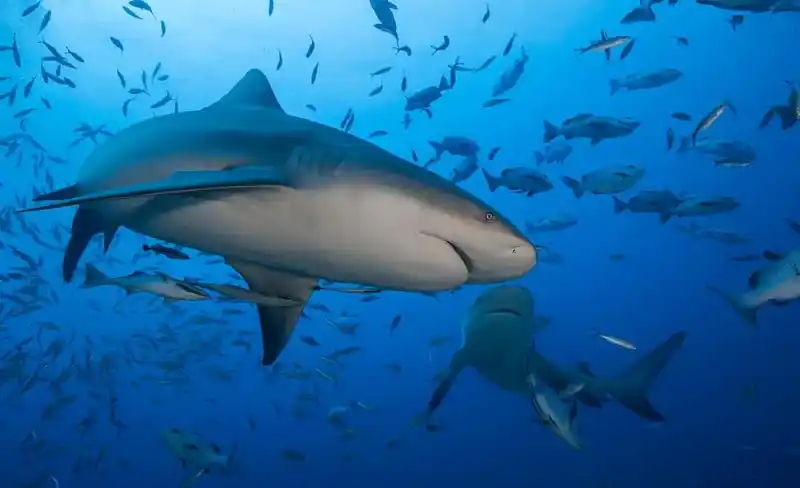
Basic Information
Scientific classification
- Chinese name: Bull Shark (or Bull Shark)
- Scientific name: Carcharhinus leucas
- Classification: Large fish
- Family and Genus: Carcharodontidae
Vital signs data
- Body length: Females typically 2.2–3.3 m; males 2.1–2.6 m (extreme values may be larger).
- Weight: Commonly 90–230 kg (large regional and individual variations).
- Lifespan: Approximately 20–24 years (estimated)
Significant features
It can remain in freshwater for extended periods; it has a placental viviparous birthing system; it is a nearshore apex predator; it serves as a estuarine nursery for young sharks; and it carries a higher risk of human-shark conflict than pelagic species.
Distribution and Habitat
Global tropical and subtropical coasts, estuaries, lagoons, and upstream freshwater rivers and lakes.
Appearance
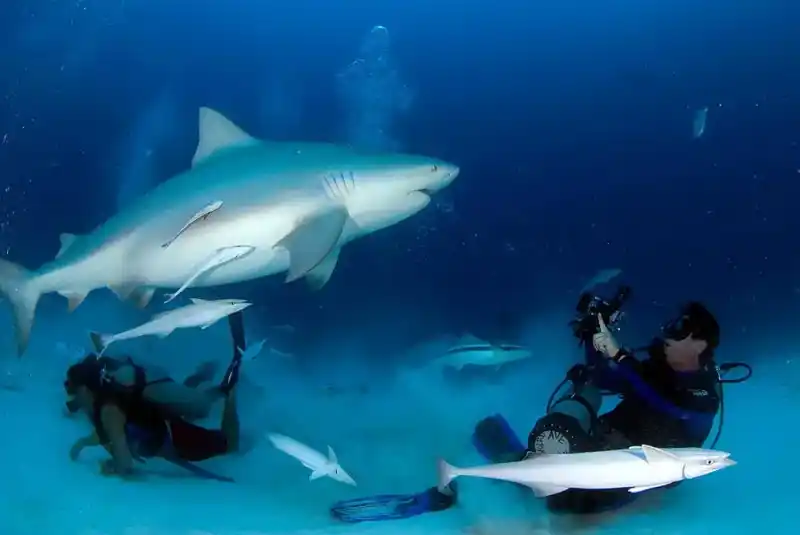
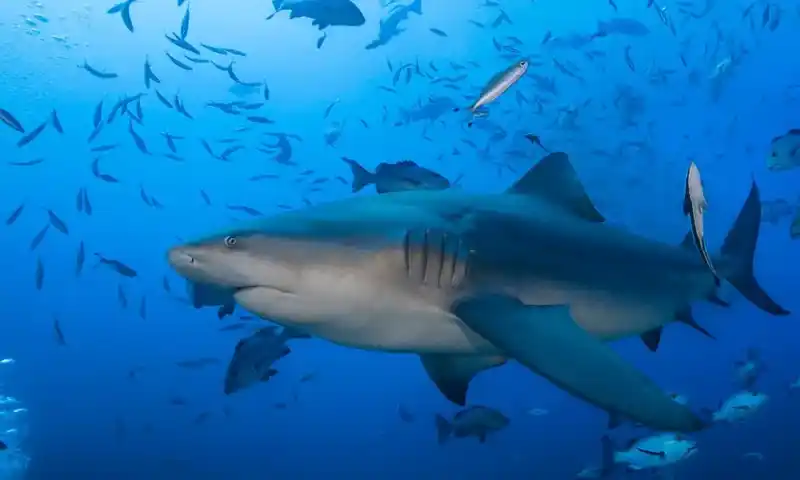
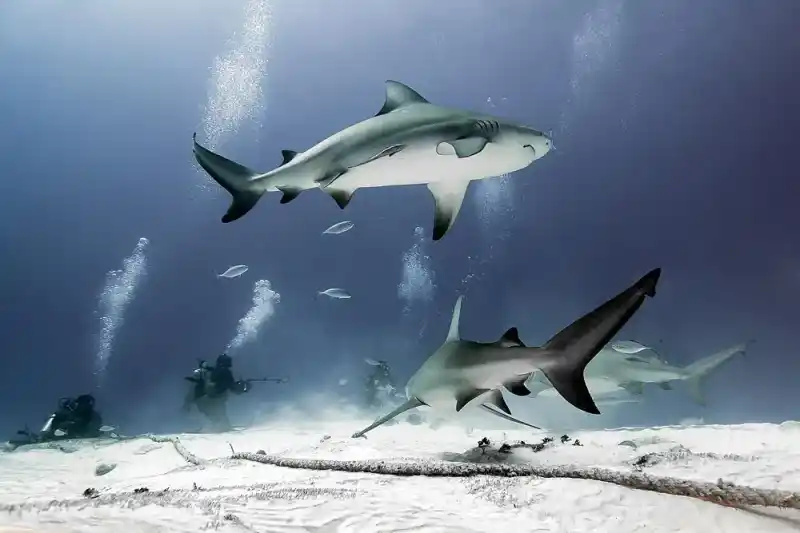
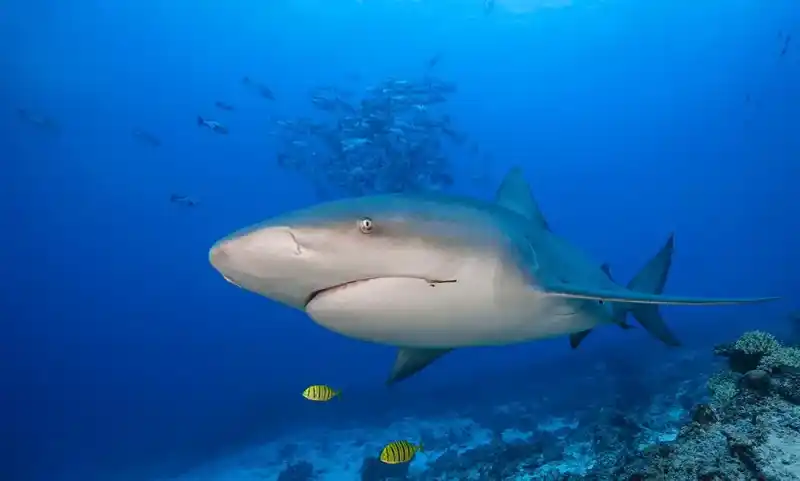
It has a robust body and a short, broad snout; a large, triangular first dorsal fin; a gray back and a white belly; slightly dark edges on the pectoral/caudal fins; and thick teeth with fine serrations.
Detailed introduction
The bull shark ( Carcharhinus leucas ) is a large, nearshore shark widely distributed in tropical and subtropical regions. It is known for its ability to survive for extended periods in low-salinity or even freshwater , often migrating upstream into inland rivers and lakes (such as the Zambezi River and Lake Nicaragua). Its fisheries and ecological niche are important, but its proximity to waters frequented by humans also poses a high risk of conflict. It is classified as Near Threatened (NT) by the IUCN Global Assessment.
Ecology and Behavior
They are viviparous, with female sharks establishing nurseries for their juveniles in estuaries, lagoons, and shallow coastal waters. Most populations have a reproductive cycle of 1–2 years, a gestation period of approximately 10–11 months, and a litter size of approximately 1–13 (usually 6–10). Their diet is broad: bony fish, cartilaginous fish, crustaceans, cephalopods, and they also prey on waterfowl and small marine mammals.
Morphology and Recognition
It has a robust body and a short, broad snout; the first dorsal fin is large and triangular, and there is a distinct pre-spike groove in front of the anal fin (without spines); the body color is gray on the back and white on the belly, with the caudal edge of the pectoral fin slightly darker. The teeth are thick with fine serrations on the edges, suitable for biting and cutting.
Salinity adaptation
Through isotonic regulation mechanisms of the kidneys and rectal glands, as well as regulation by urea/trimethylamine oxide (TMAO), it achieves isotonic regulation from seawater to freshwater; it is one of the few large sharks that can enter freshwater for extended periods.
Threats and Protection
Fisheries pressures: target fishing and by-catch (longline fishing, gillnetting), shark fin and fish meat trade.
Habitat degradation: estuary/riparian pollution, mangrove destruction, and riverbanks blocking migration.
Human-shark conflict: Overlapping nearshore activities bring safety and accidental killing issues.
Management recommendations: temporal and spatial protection of estuaries and nurseries; design of netting size and weak points along the riverbanks; best handling practices for releasing live animals; risk communication and public education for key river sections.
Frequently Asked Questions
Q1: Can bull sharks really live in freshwater for extended periods? Yes. Their osmoregulation ability allows them to stay and forage in low-salinity freshwater environments.
Q2: Are bull sharks dangerous? Being near waters with human activity and being large does pose a risk; following local water safety guidelines and avoiding entering the water at dusk or in murky water can significantly reduce the risk.
Q3: In which regions are they mainly distributed? They are found along tropical to subtropical coasts and estuaries worldwide, along the western Atlantic, eastern Atlantic, Indian Ocean, and Pacific coasts, as well as in the basins of many major rivers.
Q4: Why is it rated as Near Threatened? Fishery stress, loss of juvenile shark breeding habitats, and water engineering disruptions have put pressure on its population, which is already declining in some areas.


